

Goddess of Water
Goddess of Water by Russian Painter Konstantin Makovskij (1839 – 1915); specialiĝanta pri rusaj Historiaj pentraĵoj montrantaj idealigitan vidon de rusa vivo en pasintaj jarcentoj.
La pentraĵo “Goddess of Water” is a masterful depiction of the divine beauty and power of water through classical mythology. The artist’s rich use of color, drama lumigado, and careful attention to detail create a vivid and serene representation of the goddess of water as she is transported by swans across a vast oceanic expanse.
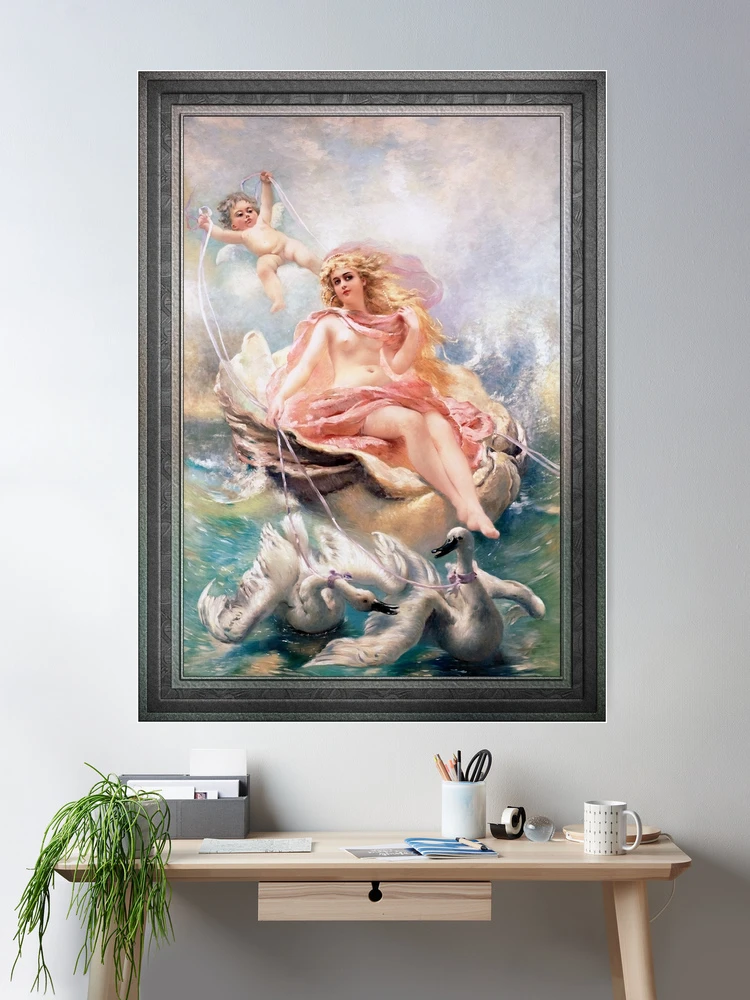
The central figure in the artwork is the goddess herself, a beautiful woman with flowing golden locks, her body partially draped in a pink and soft mauve sheer cloth that clings delicately to her form, revealing the curves of her body.
The goddess is seated serenely in a boat-like structure made of what appears to be soft seashells, floating on undulating waves, with a faint glow surrounding her, symbolizing her divine nature. Ŝia vizaĝo, calm and composed, carries an air of grace and timeless beauty, reinforcing the ethereal nature of her character.
Malantaŭ ŝi, keruba figuro, a child-like angel, is tethered to the goddess by ribbons, symbolizing a divine connection between the mortal and the immortal. This child, whose face expresses innocence and purity, seems to guide or assist in the goddess’s journey across the waters.
The angel holds onto ribbons that extend out into the air, tethering the goddess to the swans pulling her vessel. The gentle hands of the cherub grasp the flowing ribbons with precision, and his childlike features lend a sense of playful innocence to the otherwise tranquil scene.
The swans, regal and powerful, are the carriers of the goddess, their long necks extending gracefully through the scene, and their white feathers rendered with a soft, almost glowing light, enhancing their majestic appearance.
The swans pull the boat forward, seemingly in motion as the ripples of water, shown through the smooth, soft waves, reflect the calmness of the scene. The swans’ presence in mythology often symbolizes purity and spiritual grace, which complements the goddess’s serene and powerful nature.
The background of the painting is a vast and dreamy oceanic landscape, bathed in soft, warm light, as if the sun itself is fading into the horizon. La akvo, although calm and peaceful, seems to ripple with the movement of the swans, adding life and a sense of motion to the otherwise still moment. The sky above is filled with soft, billowy clouds, reminiscent of a serene and timeless world where the goddess’s presence is natural and eternal.
The mood of the painting is peaceful, serena, and divine. The soft pastel colors used in the piece lend a sense of tranquility, while the glowing light surrounding the goddess and the angel enhances the mystical nature of the scene. There is a harmony in the painting that speaks to the balance of the elements—water, air, and earth—through the goddess’s gentle interaction with the swans, the water, and the sky.
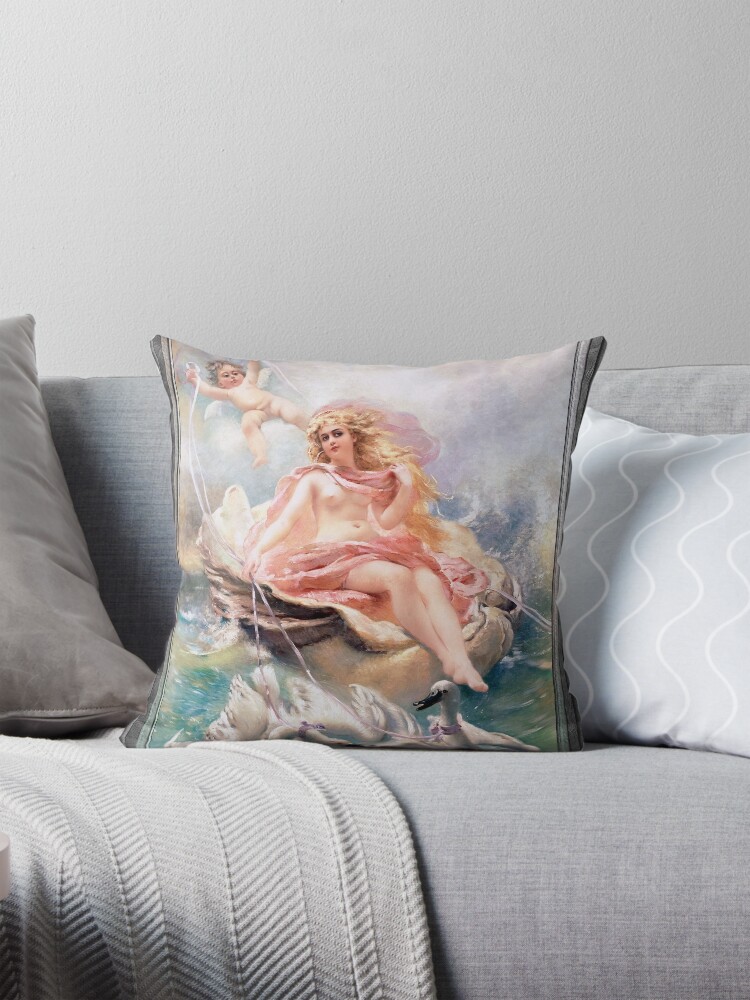
Makovsky’s mastery of classical techniques shines through in the detailed depiction of the figures, textures, and natural elements. The soft texture of the goddess’s flowing hair, the delicate folds of her clothing, and the smoothness of the swans’ feathers all demonstrate his skill in bringing the ethereal into the visual realm. The light, radiant atmosphere throughout the artwork communicates the theme of purity, dieco, and the eternal cycle of nature.
The theme of water as a symbol of life, pureco, and fertility is prevalent in the painting. The goddess of water, accompanied by the cherubic guide and the swans, creates a powerful and harmonious image of nature’s beauty and divine intervention.
Water in mythological contexts often represents fluidity, ŝanĝi, and the nurturing aspects of life, all of which are conveyed through the painting’s serene depiction of the goddess as she floats effortlessly across the waters.
This painting embodies the 19th-century Russian fascination with classical themes, blending mythological subjects with a refined and sophisticated approach to realism. It showcases a period of artistic exploration that was both romantic and idealized, drawing on ancient mythological figures to embody ideals of beauty, Graco, and divine connection with nature.
Konklude, “Goddess of Water” is a masterpiece that combines the beauty of nature with the divine, creating a serene, mystical atmosphere that is both timeless and transcendent. The detailed execution, the symbolic presence of the goddess, angel, and swans, kaj la mola, flowing colors make this piece a vivid representation of classical mythology, encapsulating the quiet power of water as an eternal, life-giving force.
Informoj Malsupre Derivita De Vikipedio.org
Konstantin Makovsky estis influa rusa farbisto, aligita kun la “Peredvizhniki (Vagantoj)”. Multaj el liaj historiaj pentraĵoj, kiel ekzemple Sub la Krono (1889) ankaŭ konata kiel La Rusa Novedzino Vesto kaj Antaŭ la Geedziĝo, montris idealigitan vidon de rusa vivo de antaŭaj jarcentoj. Li ofte estas konsiderita reprezentanto de Akademia arto.
Konstantin Makovsky naskiĝis en Moskvo. Lia patro estis la rusa artfiguro kaj amatora farbisto, Jegor Ivanoviĉ Makovskij. Lia patrino estis komponisto, kaj ŝi esperis, ke ŝia filo iam sekvos ŝiajn paŝojn. Liaj pli junaj fratoj Vladimir kaj Nikolay kaj lia fratino Alexandra ankaŭ daŭriĝis por iĝi farbistoj.
En 1851 Makovsky eniris la Moskvan Lernejon de Pentraĵo, Skulptaĵo kaj Arkitekturo kie li iĝis la ĉefa studento, facile ricevi ĉiujn disponeblajn premiojn. Liaj instruistoj estis Karl Bryullov kaj Vasilij Tropinin. La inklinoj de Makovsky al Romantikismo kaj dekoraciaj efikoj povas esti klarigitaj per la influo de Bryullov.
Kvankam arto estis lia pasio, li ankaŭ pripensis kion lia patrino volis ke li faru. Li ekiris serĉi komponistojn, kiujn li povus rilati, kaj unue iris al Francio. Antaŭe, li ĉiam estis klasika muzikamanto, kaj aŭskultis multajn pecojn. Li ofte deziris ke li povu ŝanĝi la melodion, aŭ stilo de kelkaj el ili por igi ilin pli ĝuaj. Poste en lia vivo ĝi realiĝis.
En 1858 Makovsky membrigis la Imperian Akademion de Arto en Sankt-Peterburgo. De 1860 li partoprenis la ekspoziciojn de la Akademio kun pentraĵoj kiel Curing of the Blind (1860) kaj Agentoj de la Falsa Dmitry mortigas la filon de Boris Godunov (1862). En 1863 Makovsky kaj dek tri aliaj studentoj okazigis proteston kontraŭ la fikso de la Akademio de temoj de skandinava mitologio en la konkurso por la Granda Ora Medalo de Akademio.; ĉiuj forlasis la akademion sen formala diplomo.
Makovskij iĝis membro de kooperativo (artel) de artistoj gvidataj de Ivan Kramskoi, tipe produktante Wanderers-pentraĵojn pri ĉiutageco (Vidvino 1865, Haringo-vendisto 1867, ktp.). De 1870 li estis fondmembro de la Society for Traveling Art Exhibitions kaj daŭre laboris pri pentraĵoj dediĉitaj al ĉiutaga vivo.. Li ekspoziciis siajn verkojn ĉe kaj la Academia-ekspozicioj kaj la Vojaĝantaj Artekspozicioj de la Vagantoj.
Signifa ŝanĝo en lia stilo okazis post vojaĝado al Egiptujo kaj Serbio en la mez-1870-aj jaroj. Liaj interesoj ŝanĝiĝis de sociaj kaj psikologiaj problemoj al la artaj problemoj de koloroj kaj formo.
En la 1880-aj jaroj li iĝis moda aŭtoro de portretoj kaj historiaj pentraĵoj. En la Monda Ekspozicio de 1889 en Parizo li ricevis la Grandan Oran Medalon pro siaj pentraĵoj Morto de Ivano la Terura, La Juĝo de Parizo, kaj Demono kaj Tamara. Li estis unu el la plej alte aprezitaj kaj tre pagitaj rusaj artistoj de la tempo. Multaj demokrataj kritikistoj konsideris lin renegato de la Vagantoj’ idealoj, produktante (kiel Henryk Siemiradzki) frapantaj sed malprofundaj verkoj,[2] dum aliaj vidas lin kiel antaŭulo de rusa impresionismo.
Makovskij estis mortigita en 1915 kiam lia kaleŝo estis trafita per elektra tramo en Sankt-Peterburgo.