

The Shepherdess With Seashell
De portret artwork titled The Shepherdess With Seashell was created by the renowned Dutch painter Paulus Moreelse (1571 – 1638). This exquisite piece exemplifies the artist’s deft handling of light, weefselstruktuer, and the portrayal of delicate feminine beauty, encapsulating the ideals of Dutch Baroque portraiture. Moreelse, known for his masterful use of light and shadow, imbues this painting with a unique vibrancy and tenderness that both charms and captivates the viewer. The portrait reflects the growing interest in naturalism and the sensuality of the female form during the Golden Age of Dutch art.
Ynhâldsopjefte
Underwerp en komposysje
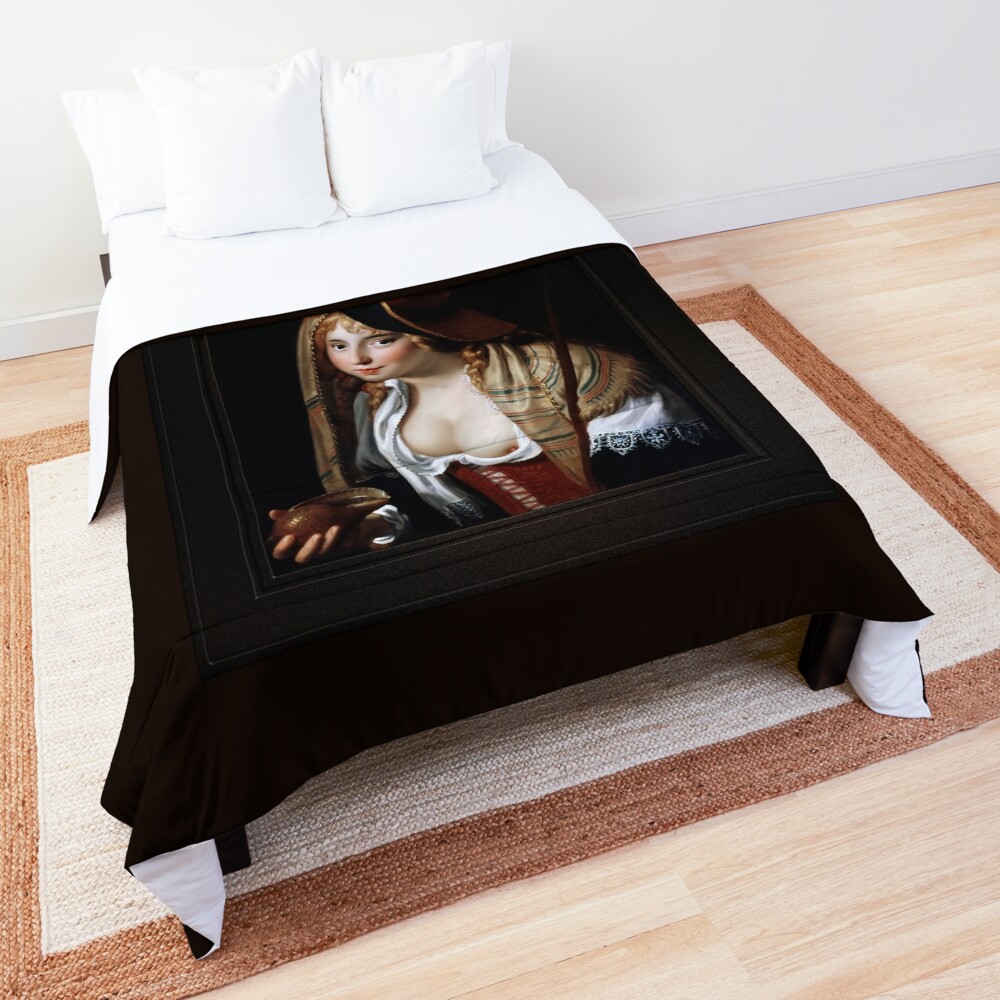
It ûnderwerp fan The Shepherdess With Seashell is in jonge frou, elegantly adorned in a lavish outfit that reflects the artistic conventions of the time. She is presented in a three-quarter view, gazing directly at the viewer with a slightly tilted head. Her eyes are warm and inviting, yet there is a hint of contemplation, as if caught in a moment of quiet reverie. The softness of her facial features, her rounded cheeks, delicate nose, and full lips—are painted with remarkable precision, highlighting Moreelse’s skill in capturing the human face with great realism.
She wears a striking hat decorated with a large feather and a few flowers, adding a touch of delicacy and grace. The vibrant colors of her attire contrast with the dark, shadowed background, further drawing the viewer’s attention to her serene expression and the soft textures of her clothing. The finely embroidered lace of her blouse and the layered, richly textured shawl over her shoulders demonstrate the artist’s attention to detail and an understanding of fabric. The fabric’s softness and fluidity are expertly depicted, creating a tactile sense of realism that is characteristic of Dutch Baroque painting.
Held gently in her hand is a seashell, a symbolic element often associated with beauty, froulikens, and the sea. The seashell adds an intriguing layer to the painting, possibly alluding to the mythological associations with Venus, the goddess of love, whose emblem was the shell. This motif could suggest that the woman in the portrait is a symbol of purity or allure, but the choice of such an object also invites speculation about the deeper significance of the woman’s role. Whether a shepherdess or a figure of mythology, Moreelse elevates her to the status of an iconic image of femininity and grace.
The Setting and Mood
Unlike many of the artist’s contemporaneous works that feature elaborate outdoor or urban landscapes, this painting focuses purely on the figure of the woman against a dark, almost void-like backdrop. The background seems to dissolve into shadow, creating a sharp contrast with the illuminated subject. This technique of chiaroscuro, masterfully applied by Moreelse; emphasizes the sitter’s physicality and presence. The light falls gently on her face and upper body, sêfte skaden smite dy't de kontoeren fan har funksjes ferbetterje en it skilderij in gefoel fan djipte jaan.
It ûntbrekken fan in ûnderskate ynstelling of objekten op 'e eftergrûn leit de klam folslein op it ûnderwerp, markearje har klean en it yntime, kontemplative útdrukking sy hâldt. Dit fuortheljen fan bûtensteande eleminten skept in meditative stimming, dêr't de fokus bliuwt op de stille weardichheid fan de frou sels, jout har in etheryske kwaliteit. De stimming fan it skilderij is dus serene, mei in touch fan elegânsje en wistfulness dat sprekt ta de skientme fan in momint beferzen yn de tiid.
Materiaal en technyk
De materialen brûkt by it meitsjen fan dit portret binne oaljes op doek, in mienskiplik medium fan 'e tiid, wêrtroch Moreelse in hege graad fan realisme koe berikke. De technyk fan 'e keunstner is glêd en ferfine, benammen yn it werjaan fan hûdtones en de tekstuer fan stoffen. De sêfte oergongen tusken ljocht en skaad suggerearje in behearsking fan it oaljemedium, om't it Moreelse mooglik makket om de skaaimerken fan 'e frou en de plooien fan har klean te modellearjen mei opfallende lifelike presyzje.
It skilderij is ryk oan detail, en de feardigens fan 'e keunstner is benammen evident yn syn ôfbylding fan 'e seashell yn' e hân fan 'e frou. Elke kromme fan 'e shell is sekuer skildere, as wie Moreelse fassinearre troch de tekstuer en foarm fan it objekt. It glêde oerflak fan de shell stiet yn kontrast mei de rest fan it portret, it meitsjen fan in yntrigearjende fisuele ynteraksje tusken it organyske en it sêfte, fleisige skaaimerken fan 'e sitter.
Styl en ynfloed
Paulus Moreelse wie in wichtige figuer yn de Nederlânske Gouden Iuw, and his works reflect the stylistic tendencies of the Baroque period. The use of vivid contrast between light and dark, as well as the heightened realism, aligns the painting with the typical characteristics of Dutch Baroque portraiture. lykwols, unlike some of his contemporaries, Moreelse often portrayed his subjects in a more intimate, personal manner, drawing the viewer into the emotional world of the individual depicted.
Yn The Shepherdess With Seashell, Moreelse’s delicate rendering of his subject’s features and his treatment of the light suggests an awareness of both Flemish and Italian Renaissance influences. The artist’s ability to combine these elements with his own distinctive style allowed him to produce portraits that were both lifelike and imbued with a sense of tranquility and timeless beauty.
Konklúzje
The Shepherdess With Seashell is a remarkable example of the Dutch Baroque portrait tradition, displaying both technical brilliance and emotional depth. Through his precise use of light and shadow, Paulus Moreelse transforms the simple depiction of a woman into a powerful symbol of grace, skientme, and contemplation. The seashell, combined with the softness of the sitter’s expression, imbues the piece with an air of mystery and timeless elegance, inviting viewers to reflect on the delicate balance between external beauty and inner thought.
Dit is in remastered digitale keunst âlde masters reproduksje fan in ôfbylding yn it iepenbier domein dy't te krijen is as doekprint online.
Artist Bio ôflaat fan Wikipedia.org
Paulus Moreelse wie in bekende portretskilder dy't berne waard en libbe it measte fan syn libben yn Eltracht, Nederlân, Untfangende kommisjes oer de Nederlânske Republyk foar syn portretten, lykas ek foar it meitsjen fan histoaryske skilderijen yn 'e manneristyske styl, en pastorale sênes fan keppels, hoeders en hoeder; dy't him ien fan 'e pear Nederlânske skilders makke om sokke sênes te skilderjen.
Hy wie ek in archictekt (Bouwe fan CatharijePoort Utrecht 1626; dat waard sloopt 224 jierren letter), en mooglik fan 'e Vleeshuis op Voorstraat; In learaar en in wichtich lid fan 'e gemeenterried, ek ien fan 'e oprjochters fan' e st. Lucasgild (Painters Guild) yn 1611.