

Der Sturm auf dem See Genezareth
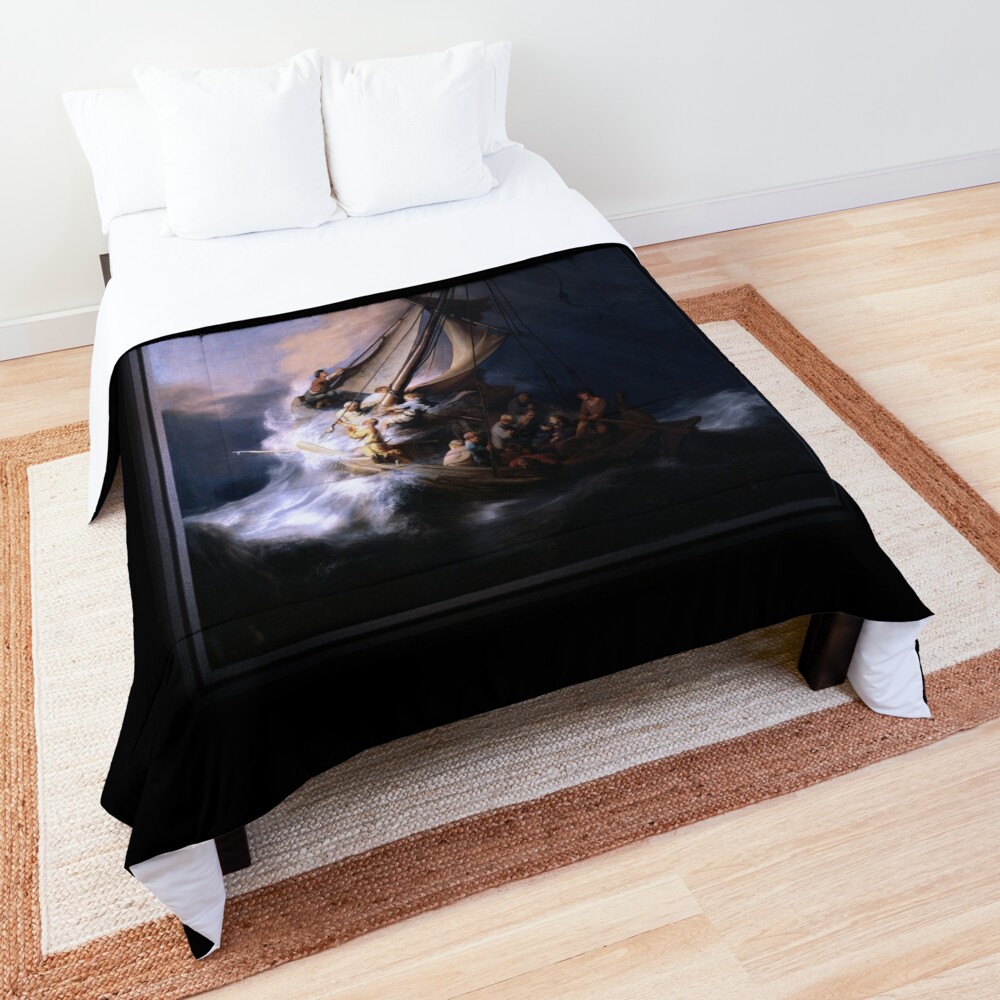
Der Sturm auf dem See Genezareth, erstellt in 1633 by Dutch painter Rembrandt van Rijn (1606 – 1669), stands as one of the most celebrated works of the artist’s early career. This monumental painting captures a pivotal biblical moment with striking realism, Emotion, and drama, showcasing the artist’s extraordinary talent in portraying light, Schatten, and human emotion. The painting was commissioned as part of a set of paintings for a wealthy patron and depicts the moment when Christ and his disciples, aboard a small boat, are caught in a violent storm on the Sea of Galilee, as described in the Gospel of Mark, Chapter 4. The turbulent scene resonates with powerful themes of faith, Furcht, and divine intervention.
Inhaltsverzeichnis
Hauptthema: Christ and His Disciples
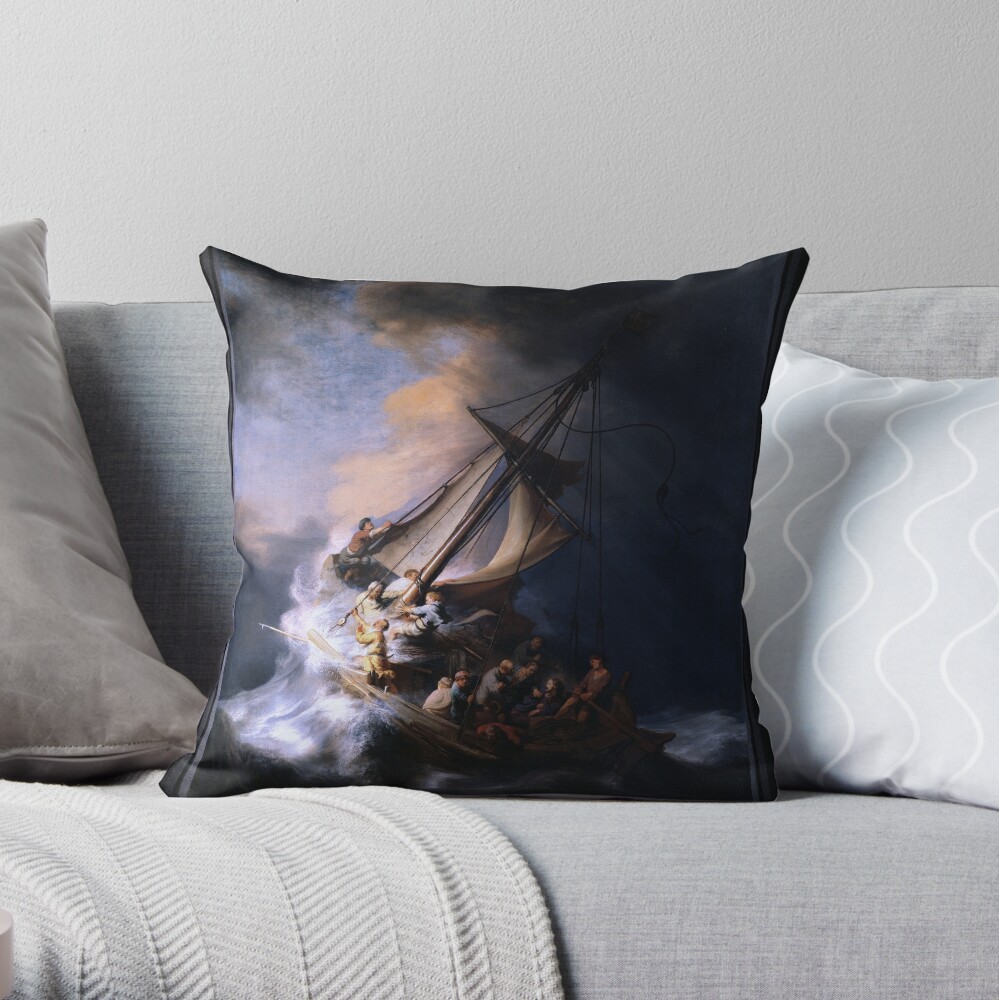
At the center of this chaotic scene is the figure of Jesus Christus, whose calm and serene posture provides a stark contrast to the raging storm surrounding him. He is depicted sitting at the stern of the boat, his hands resting on the side, unfazed by the wind and waves crashing against the boat. Christ’s gaze is forward, embodying a sense of divine assurance that transcends the chaos. Seine Kleidung, a simple tunic and robe, are rendered with fine detail, reflecting the painter’s skill in portraying fabric textures. The light falling on his face highlights his central role in the narrative, symbolizing his divine nature and the peace he offers amidst turmoil.
Around Christ are the disciples, each responding to the storm in their own distinct ways. Some are visibly frightened, their faces contorted with fear and anxiety, while others are actively attempting to control the boat. One disciple, gripping the sail tightly, appears as if he is trying to maintain control, while another, kneeling by the side of the boat, prays desperately for safety. The diversity of expressions adds to the intensity of the composition, emphasizing the human emotions that contrast with Christ’s calm demeanor. Rembrandt uses the disciples’ fear as a visual representation of mankind’s vulnerability in the face of the unknown, drawing viewers into the emotional heart of the scene.
Objekte: The Boat, The Sea, and the Storm
The boat in the painting is a small fishing vessel, realistically depicted as a sturdy craft designed for traversing the turbulent waters of the Sea of Galilee. The boat’s detailed construction, including the visible planks of wood and ropes, is a testament to Rembrandt’s skill in capturing intricate textures. The boat tilts precariously to one side as the storm surges, with water pouring over the edges and into the boat, emphasizing the perilous nature of the situation.
Das Meer itself is depicted with dramatic intensity. Rembrandt masterfully renders the waves, using sweeping brushstrokes that convey their movement and violence. The water is frothy and turbulent, crashing against the boat and adding to the sense of impending disaster. The waves appear almost alive, reflecting the raw power of nature as it responds to the storm. The artist uses contrasting light and dark elements to heighten the drama, with the turbulent waters on the left side of the painting being darker and more menacing, while the right side of the composition contains a hint of light breaking through the clouds, suggesting hope and divine presence.
Im Hintergrund, das storm clouds swirl ominously in shades of dark blue and gray, filling the sky with an oppressive and foreboding atmosphere. The turbulence of the clouds mirrors the emotional storm taking place within the boat, as the disciples’ anxiety is mirrored by the chaotic environment around them. A small hint of light peeks through the clouds, but it is minimal, further reinforcing the tumultuous mood of the scene. The use of light and dark is a key feature of Rembrandt’s style, bekannt als Chiaroscuro, which he utilizes here to create a stark contrast between the dark, stormy elements and the calm serenity of Christ.
Materialien und Technik: Oil on Canvas
Rembrandt’s choice of Öl auf Leinwand as his medium allows him to achieve a level of depth and detail that is both striking and evocative. His skillful use of oil paint enables him to render both the fine details of the figures and the broader, sweeping elements of the storm with equal precision. The light falling on the figures and the texture of the water are achieved through layered application of paint, with light hues reflecting the effects of the storm’s light and shadows giving depth to the scene. The dynamic quality of the painting, particularly the movement of the waves and the figures, is achieved through brushstrokes that appear energetic and alive, contributing to the intensity of the composition.
Das Textur of the painting also serves to heighten the emotional impact. Das Rough, tumultuous sea is contrasted by the soft, almost ethereal rendering of Christ’s figure, whose calmness and serenity are made even more pronounced by the surrounding chaos. The figures of the disciples are given individual attention, with their expressions and movements captured with a remarkable sense of realism. Their facial expressions, the folds of their clothing, and their body language are portrayed with the utmost care, allowing the viewer to feel their fear, struggle, and desperation.
Stil, Thema, und Stimmung: Dramatic Realism
Rembrandt’s signature style of dramatic realism is fully displayed in this painting. The focus on emotional depth and psychological complexity is a hallmark of his work, und in Der Sturm auf dem See Genezareth, he uses the moment of crisis to explore profound themes of faith, göttliches Eingreifen, and human frailty. The storm is not just a physical event but a metaphor for the turmoil that can engulf the human spirit, while Christ represents the unwavering presence of divinity that offers comfort and peace.
Das Stimmung of the painting is one of tension and contrast. The disciples’ fear and desperation are palpable, while Christ’s calmness offers a sense of hope and divine assurance. The viewer is drawn into the storm, both in terms of the physical intensity of the scene and the emotional struggle of the figures. The contrasting elements of light and dark, calm and chaos, invite reflection on the nature of faith and the way in which belief can offer solace in times of greatest distress.
Abschluss
Im Der Sturm auf dem See Genezareth, Rembrandt van Rijn captures a biblical moment of profound significance with both artistic mastery and emotional depth. Through his dramatic use of light and shadow, Liebe zum Detail, and careful portrayal of human emotion, the painting becomes more than just a visual narrative, it is a meditation on the nature of divine intervention and the power of faith in the face of fear. The emotional intensity of the storm and the tranquil presence of Christ invite viewers to contemplate their own responses to life’s storms, whether internal or external.
The Storm on the Sea of Galilee is a retouched digital art old masters reproduction of a public domain image that is available as a gerollter Druck online.
Diese digitale Kunstschöpfung, Wie alle Kunstwerke, die auf der Xzendor7-Website zu finden sind, können sie online in einer Vielzahl von Materialformaten einschließlich Leinwanddrucken erworben werden, Acryldrucke, Metalldrucke, Holzdrucke, gerahmte Drucke, Plakate, und als gerollte Leinwanddrucke in verschiedenen Größen von 12 Zoll zu 72 Zoll, abhängig von der Größe des tatsächlichen Kunstwerks und dem Print-on-Demand-Shop, in dem Sie das Kunstwerk kaufen möchten.
Das Kunstwerk ist auch auf einer breiten Palette von Herren- und Damenbekleidung erhältlich, Tassen, Tragetaschen, Schals, Notizbücher und Tagebücher sowie viele Heimdekorationsprodukte.
Biografie des Künstlers
Info unten von Wikipedia.org
Die neue niederländische Republik war die wohlhabendste Nation in Europa und führte den europäischen Handel, Wissenschaft, und Kunst. The northern Netherlands provinces that made up the new state had traditionally been less important artistic centers than cities in Flanders in the south. Die Umwälzungen und groß angelegten Bevölkerungsverschiebungen des Krieges, und der scharfe Bruch mit den alten monarchistischen und katholischen Kulturtraditionen, bedeutete, dass sich die niederländische Kunst neu erfinden musste. Die Malerei religiöser Motive ging stark zurück, aber es entstand ein großer neuer Markt für viele weltliche Themen.
Obwohl die niederländische Malerei des Goldenen Zeitalters in die allgemeine europäische Periode der Barockmalerei eingeordnet wird, und zeigt oft viele seiner Eigenschaften, most lacks the idealization and love of splendor typical of much Baroque work, including that of neighboring Flanders. Die meiste Arbeit, einschließlich des Zeitraums, für den der Zeitraum am besten bekannt ist, reflects the traditions of detailed realism inherited from Early Netherlands painting.
Ein charakteristisches Merkmal dieser Zeit ist die Verbreitung verschiedener Gemäldegattungen, wobei die Mehrheit der Künstler den Großteil ihrer Werke in einem dieser Bereiche produziert. Die volle Entwicklung dieser Spezialisierung ist ab den späten 1620er Jahren zu beobachten, und die Zeit von da an bis zur französischen Invasion 1672 ist der Kern der Malerei des Goldenen Zeitalters. Künstler verbrachten die meiste Zeit ihrer Karriere damit, nur Porträts zu malen, Genreszenen, Landschaften, Seestücke und Schiffe, oder Stillleben, und oft ein bestimmter Untertyp innerhalb dieser Kategorien. Viele dieser Motivtypen waren neu in der westlichen Malerei, und die Art und Weise, wie die Niederländer sie in dieser Zeit malten, war entscheidend für ihre zukünftige Entwicklung.