

Artizarraren komuna
Erritu sorgindua: François Boucher-en "Venusen komuna" aztertzen
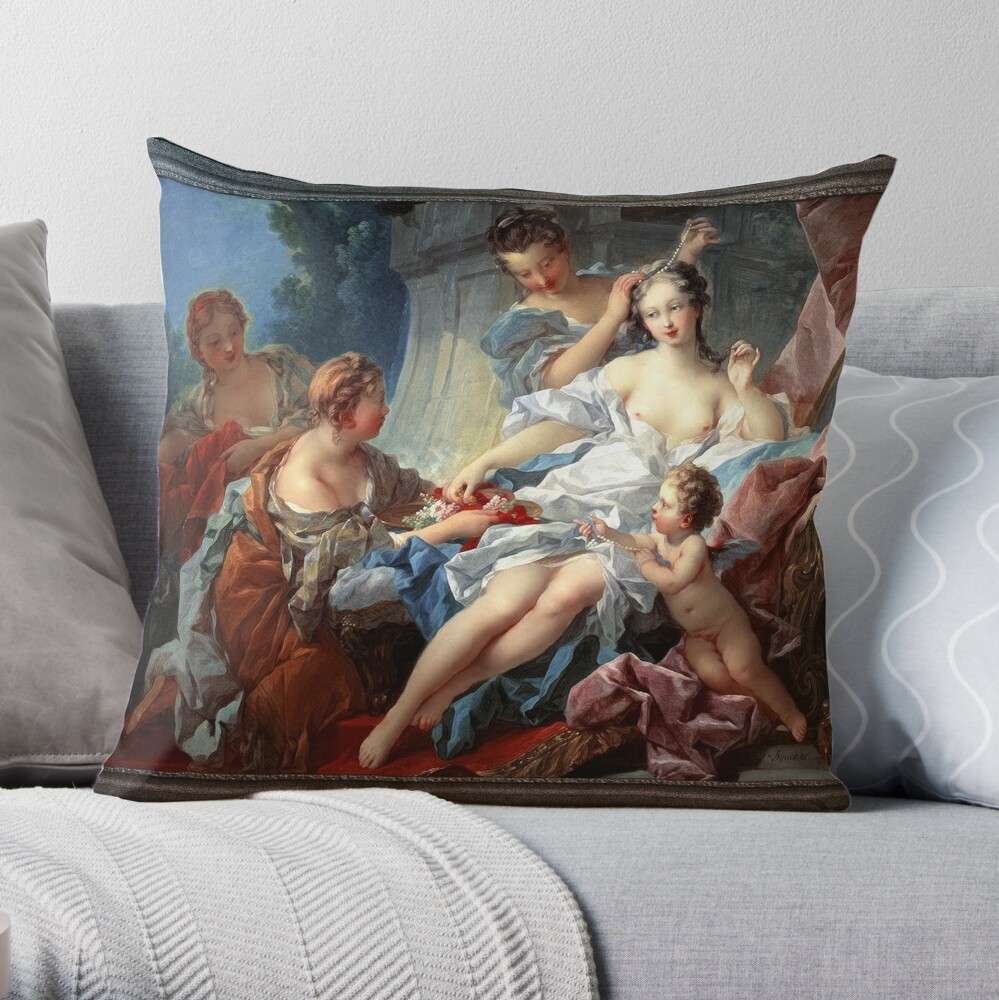
Artizarraren komuna, François Boucher-ek margotua (1703 – 1770) inguruan 1746, arte rococoaren adibide bikaina da, bere arintasun ezaugarria gorpuzten duena, sententzia, eta dekorazio-dotorezia. Tamaina handiko mihise hau, gaur egun Louvre museoan dago, ikusleak idiliko batera garraiatzen ditu, ametsezko erreinua non Venus jainkosak ninfek hartzen baitute bere goizeko komunean. Margolana ez da bainuaren irudikapena soilik; arreta handiz orkestratutako eszena bat da, plazerra sorrarazteko diseinatua, edertasuna, eta aisialdi finduaren zentzua.
Edukien taula
Konposizio Harmonia & Ezarpena
The composition unfolds within a shallow, theatrical space defined by classical architectural elements – columns, pilasters, and an arched niche – that frame the central action. These structures are rendered with a soft focus, appearing more as decorative backdrops than structurally significant components. The setting itself is deliberately ambiguous; it’s neither explicitly earthly nor entirely divine, contributing to the painting’s ethereal quality. Lush foliage spills in from the left side of the canvas, further blurring the boundaries between reality and fantasy. A rich red curtain drapes behind Venus, adding a touch of opulent warmth to the scene. The overall effect is one of secluded intimacy within a timeless paradise.
Venu: Erdiko Irudia
Venu, the goddess of love and beauty, occupies the focal point of the painting. Languidly etzanda dago chaise lounge apaindu batean, bere gorputza ezkutatzen duena baino askoz gehiago erakusten duen oihal urdin lehorrez estalia partzialki. Bere jarrera lasaia eta dotorea da, esfortzurik gabeko erakargarritasun sentsazioa transmitituz. Boucherrek maisuki harrapatzen du bere haragiaren leuntasuna pintzelkada delikatuen eta argi eta itzalen graduazio sotilen bidez.. Bere espresioa lasaia da, ia aldenduta, inguratzen dituen laguntzaileekin aritzen baita. Ez da aktiboki parte hartzen komunean; baizik, arretaz eta momentuko edertasunaz gozatzen ari dela dirudi.
Laguntzaileak: Ninfak & Ekarritako
Artizarraren inguruan hainbat emakumezko irudi daude - ninfa - bakoitzak bere goizeko erritualarekin lotutako zeregin zehatz batean dihardutenak.. Ninfa batek arretaz antolatzen ditu loreak sorta batean, beste batek, berriz, Artizarrari ispilu bat eskaintzen dio ikuskatzeko. A third gently tends to her hair with a comb and brush. These attendants aren’t portrayed as servants; they appear more like companions or handmaidens, sharing in the goddess’s pleasure and contributing to the overall atmosphere of indulgence. In the lower right corner, Cupid playfully observes the scene, his presence reinforcing the theme of love and desire that permeates the painting. He is depicted with a mischievous grin, adding a touch of lightheartedness to the composition.
Kolore Paleta & Argia
Boucher’s use of color is integral to the painting’s aesthetic appeal. The palette is dominated by soft pastels – pinks, urdina, berdeak, and creams – creating a harmonious and visually pleasing effect. These colors are applied with a delicate touch, resulting in a luminous quality that enhances the sense of dreamlike beauty. Light plays a crucial role in shaping the forms and defining the mood. It emanates from an unseen source, softly illuminating Venus and her attendants while leaving portions of the background shrouded in shadow. This chiaroscuro effect accentuates the figures’ sensuality and creates a sense of depth within the shallow space.
Rococo Estiloa & Boucher-en eragina
“Artizarraren komuna” is a prime example of Rococo style, which emerged in France during the 18th century as a reaction against the more formal and grandiose Baroque aesthetic. Rococo art emphasized grace, dotorezia, and playful sensuality. Boucher was one of the leading exponents of this style, and his paintings were highly sought after by members of the French aristocracy. His work helped to define the Rococo aesthetic, influencing countless artists and shaping the taste of the era. The painting’s focus on pleasure, edertasuna, and refined leisure reflects the values and aspirations of the French court during the reign of Louis XV.
Maisutasun teknikoa & Ondarea
Boucher’s technical skill is evident in every detail of “The Toilet of Venus.” His ability to render flesh tones with such subtlety and realism was remarkable for his time. The painting’s composition, kolore paleta, and lighting all contribute to its overall effect of beauty and enchantment. “Artizarraren komuna” remains a celebrated masterpiece of Rococo art, admired for its exquisite beauty, sensual allure, and masterful execution. It continues to inspire artists and captivate viewers with its timeless depiction of feminine grace and idyllic pleasure.
Artistaren biografia Wikipedia.org
Pariskoa jaiotzez, Boucher ezezaguna den Nicolas Boucher margolari baten semea zen, hark eman zion lehen prestakuntza artistikoa. Hamazazpi urterekin, Boucheren margolan bat miresten zuen François Lemoyne margolariak. Geroago, Lemoynek Boucher izendatu zuen bere ikastun, baina hiru hilabeteren buruan, Jean-François Cars grabatzailearentzat lanera joan zen.
In 1720, elite Grand Prix de Rome margolaritzagatik irabazi zuen, baina ez zuen Italian ikasteko ondoriozko aukera aprobetxatu bost urte geroago arte, Pintura eta Eskultura Errege Akademian izandako arazo ekonomikoengatik.[1] Italian ikasketetatik bueltan Académie de peinture et de sculpture on birfundatu zenean onartu zuten 24 Azaroa 1731. Bere harrera pieza (harrera pieza) bere Rinaldo eta Armida zen 1734.
Boucher Marie-Jeanne Buzeaurekin ezkondu zen 1733. Bikoteak hiru seme-alaba izan zituen elkarrekin. Boucher fakultateko kide bihurtu zen 1734 eta bere ibilbidea bizkortu egin zen puntu horretatik aurrera, Akademiako Errektore eta Katedradun izendatu baitzuten, Royal Gobelins Manufactory-ko ikuskatzaile bihurtuz eta, azkenik, Premier Peintre du Roi (Erregearen lehen margolaria) urtean 1765. Marie-Louise O'Murphyren erretratua c. 1752
Boucher hil zen 30 Maiatza 1770 bere jaioterrian Parisen. Bere izena, bere patroiaren Madame de Pompadourarekin batera, Frantziako Rococo estiloaren sinonimo bihurtu zen, Goncourt anaiak idaztera eramanez: “Mende bateko zaporea adierazten duten gizon horietako bat da Boucher, adierazten dutenak, pertsonifikatu eta gorpuztu.”
Boucher famatua da natura dela esateagatik “berdeegiak eta gaizki argituta” (berdeegi eta gaizki argituta).
Boucher Jacques Guay harribitxi grabatzailearekin lotuta zegoen, marrazten irakatsi zion. Martin Ferdinand Quadal margolari moravia-austriarrari eta Jacques-Louis David margolari neoklasikoari ere tutore izan zituen. 1767.[4] Geroago, Boucherrek Guayren lanen marrazki sorta bat egin zuen, Pompadour andreak ondoren grabatu eta ederki loturiko bolumen gisa banatu zituen gortesain gogokoei.
The Toilet of Venus is a retouched digital art reproduction of a public domain image which you can purchase as a ijetzitako mihise inprimatu sarean.