

The Yellow Bonnet
“The Yellow Bonnet,” created by American illustrator Roy Best (1892 – ?), is a stunning example of mid-20th-century American illustration, capturing the essence of youthful charm and beauty. This artwork is painted with skillful precision, embracing a pastel color palette that complements the soft, ethereal mood of the portrait.
The piece features a young woman adorned with a large yellow bonnet, her gentle, radiant smile exuding confidence and warmth, while her wistful, slightly coy pose invites a connection with the viewer. The subject is positioned centrally within the composition, offering a vibrant focus of attention while surrounded by soft, blurred hues that suggest a delicate, almost dreamlike atmosphere.
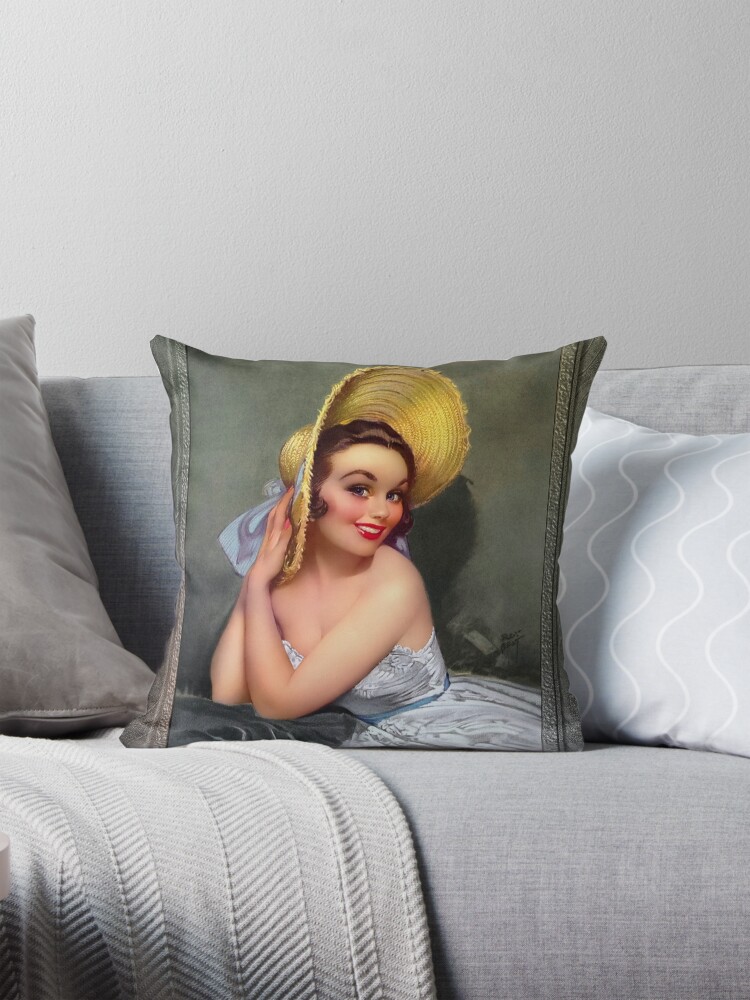
Table of Contents
Style and Technique
Roy Best was known for his ability to blend elements of realism with the graceful stylization of the early 20th century illustration movement. His works often captured moments of femininity, highlighting the softness of the human form, and this painting exemplifies those qualities perfectly. The technique employed in “The Yellow Bonnet” is reflective of the artist’s fine control over color and light, rendering a sense of depth and texture in the depiction of the woman’s face and clothing.
The smooth application of paint creates an almost velvety finish to the skin and fabric, adding a soft glow that enhances the overall warmth of the piece. The play of light, particularly on the yellow bonnet, is masterfully handled, drawing attention to the most prominent feature of the artwork. The subtle highlights on the woman’s face, especially around her eyes and lips, add a dimension of realism that contrasts beautifully with the simplicity of the background.
Theme and Mood
The theme of the painting revolves around beauty, femininity, and charm. The woman in the artwork is presented as a figure of innocence and allure, captured in a moment of serene elegance. The bonnet she wears, a symbol of a bygone era, suggests a connection to a more traditional, rural aesthetic, evoking nostalgia for a time when such accessories were commonplace in women’s fashion.
The lighthearted mood of the portrait is enhanced by the soft, pastel colors used throughout, which create a serene environment around the subject, inviting the viewer to bask in the quiet beauty of the scene. There is no sense of urgency or harshness in the artwork; instead, the woman gazes softly towards the viewer with a subtle smile, allowing her presence to fill the space with a calm, peaceful atmosphere.
Materials and Medium
“The Yellow Bonnet” was created using traditional painting materials typical of the time period. The artist’s use of oil paints allowed him to achieve a rich depth in color, especially in the woman’s skin tone and the delicate folds of her dress. The smoothness of the brushwork suggests that Best worked with a technique that emphasized blending, rather than distinct, visible brushstrokes, to create a soft, almost luminous finish.
The background, a muted blend of soft greys and greens, further elevates the main subject by providing a gentle contrast, ensuring that the viewer’s attention remains focused on the woman in the yellow bonnet. The gold and yellow hues of her hat stand out as the central visual element, symbolizing both warmth and hope.
The Subject and Composition
The subject of “The Yellow Bonnet” is a young woman, likely in her late teens or early twenties, whose facial features are rendered with great care. Her dark, wavy hair is tucked beneath a large, wide-brimmed yellow bonnet, which forms a striking contrast with her light complexion. The bonnet itself, made of straw or similar material, is intricately detailed, with a light ribbon tied at the back. The playful use of blue ribbon in the woman’s attire provides a subtle contrast against the warm yellow of the bonnet, adding a touch of delicacy to the overall composition.
The woman’s pose is soft and inviting, her hand gently resting against the side of her head, as if adjusting the bonnet. This posture conveys a sense of elegance and grace, with the subject appearing both poised and approachable. The subtle tilt of her head adds to the overall impression of grace, as if she is caught in a moment of quiet contemplation or engaging in a pleasant conversation with the viewer. The background, which is softly blurred and non-descriptive, ensures that the focus remains solely on the figure of the woman, emphasizing her delicate beauty.
Conclusion
In “The Yellow Bonnet,” Roy Best masterfully captures a moment of timeless beauty, showcasing his exceptional skill in blending realism with a gentle, idealized aesthetic. The artwork evokes feelings of nostalgia, warmth, and serenity, inviting viewers to appreciate the softness and elegance of a moment frozen in time. With its harmonious composition, soft lighting, and delicate color palette, this portrait remains a remarkable example of American illustration from the early 20th century.
This is a retouched digital art old masters reproduction of a public domain image.
Artist Bio
Info Below Derived From Wikipedia.org
Roy was a student of the Art Institute of Cincinnati, and then he later attended the Art Institute of Chicago; and at the beginning of his career he was represented by American artist in New York City in the 1920s.
During his time in New York he painted several covers for The Saturday Evening Post which was established in 1897 and is still published as of this writing.
Then in 1931, Roy was creating pinup girl calendar art for the Joseph C. Hoover & Sons calendar company; and later in that same year he was commissioned by the Whitman Publishing Company to illustrate The Peter Pan Picture Book, based on J. M. Barrie’s play Peter Pan.
This led to him illustrating many other children’s books, including “Little Friends from Many Lands” by Mary Windsor (Whitman Publishing Company, 1935).
In 1942 the Treasury’s Section of Painting and Sculpture commissioned Roy to paint a post office mural, called Arrival of Packet, in his hometown of Waverly, Ohio.
In that same year he was hired by Brown and Bigelow the famous publishing company, which lead him into a career producing calendar pin-ups.
In his career he would also paint a number of well known actresses, such as Grace Kelly; and in his later years he became known for his corporate commissioned oil portraits and watercolor landscapes of Cape Cod.