

ונוס על הגלים
ונוס על הגלים: A Rococo Dreamscape
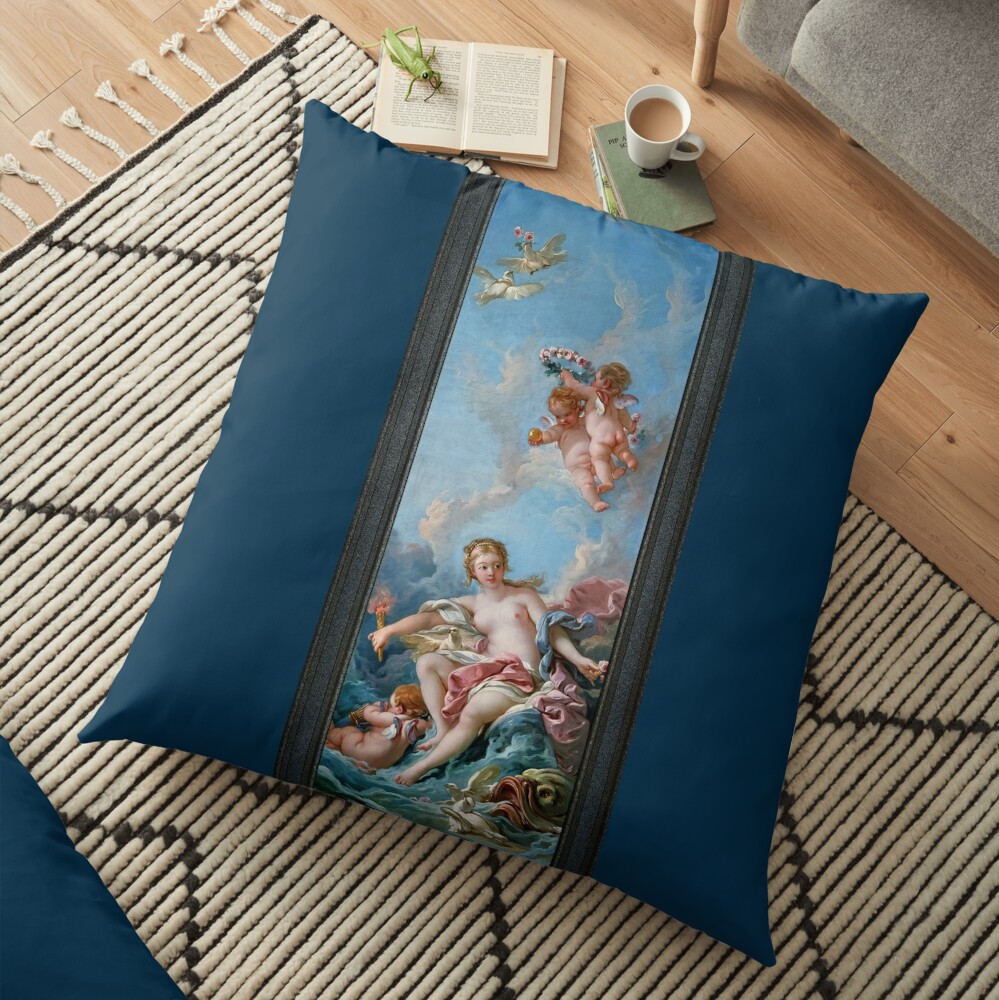
פרנסואה בושר' (1703 – 1770) “Venus on the Waves,"צבוע סביב 1769, exemplifies the quintessential Rococo style that flourished in France during the mid-18th century. This vertical format painting, a testament to Boucher’s mastery of color and composition, depicts the Roman goddess Venus, or Aphrodite as she is known in Greek mythology, emerging from the sea amidst a swirling panorama of clouds, כרובים, and marine motifs. The work was commissioned by Madame de Pompadour, המאהבת המשפיעה של לואי ה-15, reflecting the era’s taste for mythological subjects rendered with elegance and sensuality.
תוכן העניינים
אלמנטים קומפוזיציוניים & Narrative Absence
The composition is vertically oriented, drawing the viewer’s eye upwards from the turbulent sea towards the celestial realm above. Venus occupies a central position, seated upon a shell-like structure that rises from the waves. She appears serene and composed, her gaze directed slightly downwards, as if acknowledging the surrounding spectacle but not actively participating in it. The lower portion of the painting is dominated by the churning ocean, rendered with a palette of blues and greens, punctuated by whitecaps suggesting movement and energy. מעל ונוס, a swirling sky filled with clouds provides a backdrop for several cherubic figures engaged in playful activities.
שרובס & Symbolic Details
Several cherubs populate the scene, each contributing to the overall atmosphere of lightness and grace. One cherub floats above Venus, scattering rose petals – a traditional symbol of love and beauty associated with the goddess. Another group of cherubs is depicted weaving a garland, adding a touch of pastoral charm to the composition. A winged putto flies overhead carrying a bouquet of flowers, further reinforcing the theme of affection and celebration. The shell upon which Venus sits isn’t merely decorative; it’s a symbolic representation of her birth from the sea foam – a foundational myth in classical mythology.
Boucher’s Rococo Style: צֶבַע & טֶכנִיקָה
Boucher’s artistic style is immediately recognizable through his use of soft, pastel colors and delicate brushstrokes. The painting lacks sharp lines or dramatic contrasts; במקום זאת, it relies on subtle gradations of color to create a sense of ethereal beauty. His technique emphasizes fluidity and movement, particularly evident in the depiction of the waves and clouds. Boucher’s mastery of light is also apparent – Venus appears bathed in a soft, diffused glow that enhances her luminous quality. The overall effect is one of dreamy tranquility, characteristic of Rococo art’s pursuit of pleasure and escapism.
הֶקשֵׁר & Historical Significance
“Venus on the Waves” was created during a period when mythological subjects were highly fashionable among the French aristocracy. Boucher’s interpretation of Venus departs from earlier depictions that emphasized her power or authority; במקום זאת, he presents her as an embodiment of beauty, חן, and sensuality – qualities prized by the court of Louis XV. The painting reflects the Rococo era’s shift away from the grandeur of the Baroque towards a more intimate and decorative style. It served not only as a work of art but also as a symbol of refined taste and aristocratic patronage.
Examination of Venus’s Pose & הַבָּעָה
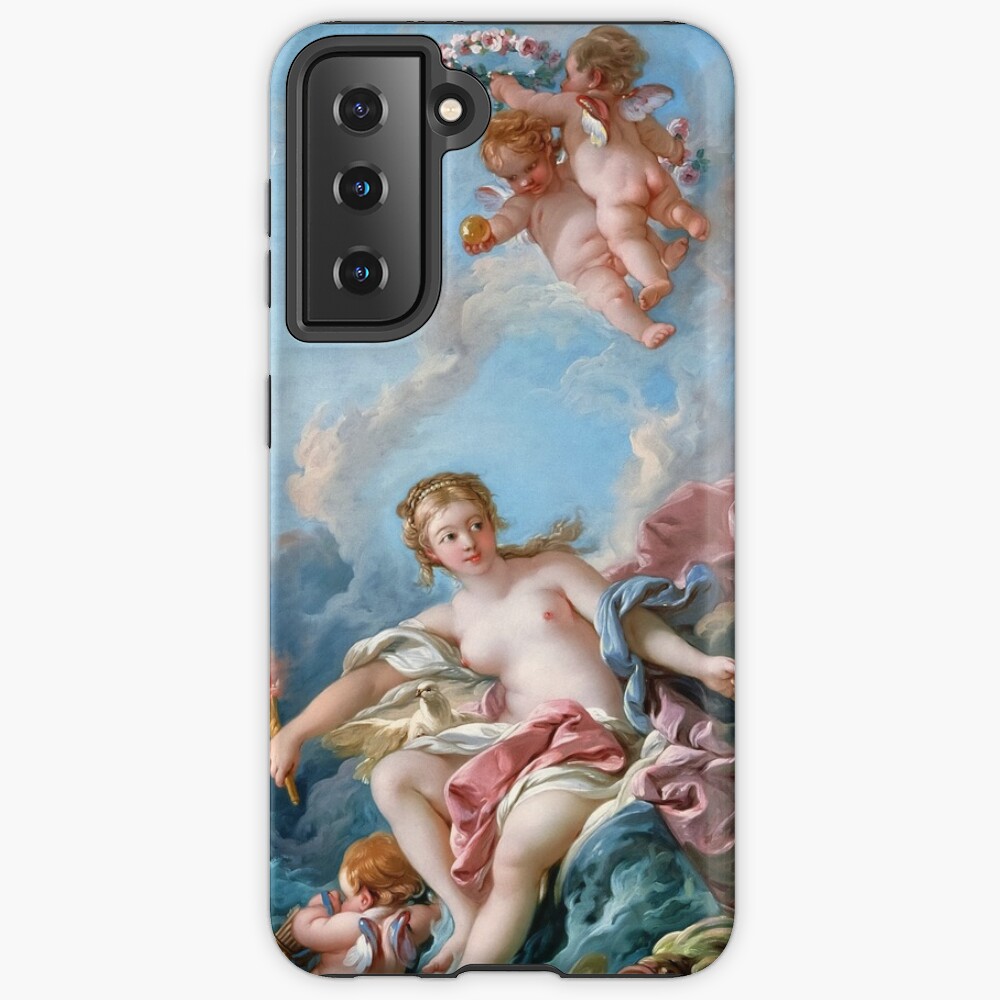
Venus is depicted in a relaxed, almost languid pose. Her body curves gently, suggesting both softness and vitality. She holds a single torch aloft, its flame casting a warm glow on her face and hands. The torch itself carries symbolic weight; it represents the divine spark of love and beauty that Venus embodies. הביטוי שלה שלווה ומהורהרת, conveying a sense of inner peace and detachment from the surrounding activity. This lack of overt emotion contributes to the painting’s overall atmosphere of tranquility and grace.
לוח צבעים & השפעות אטמוספריות
The color palette in “Venus on the Waves” is dominated by soft blues, ורודים, יְרָקוֹת, וזהב. These colors contribute to the painting’s ethereal quality and evoke a sense of warmth and light. Boucher skillfully uses atmospheric perspective – rendering distant objects with less detail and paler colors – to create a sense of depth and space within the composition. The swirling clouds and turbulent waves add dynamism to the scene, while the soft lighting enhances the overall feeling of dreamlike beauty.
השפעות אמנותיות & מוֹרֶשֶׁת
Boucher’s work was influenced by earlier masters such as Peter Paul Rubens and Jean-Antoine Watteau, both renowned for their depictions of mythological subjects and their mastery of color and composition. למרות זאת, Boucher developed his own unique style that became synonymous with the Rococo movement. “Venus on the Waves” is considered one of his most iconic works and has had a lasting impact on Western art, inspiring countless artists to emulate its elegance and sensuality. The painting remains an important example of Rococo aesthetics and a testament to Boucher’s artistic genius.
אמן ביו שמקורו Wikipedia.org
יליד פריז, בוצ'ר היה בנו של צייר פחות מוכר ניקולא בושר, שנתן לו את הכשרתו האמנותית הראשונה. בגיל שבע עשרה, ציור של בוצ'ר נערץ על ידי הצייר פרנסואה למוין. למויין מינה מאוחר יותר את בוצ'ר כשוליה שלו, אך לאחר שלושה חודשים בלבד, הוא הלך לעבוד אצל החרטה ז'אן פרנסואה מכוניות.
ב 1720, הוא זכה בגרנד פרי דה רומא העילית על ציור, אך לא ניצל את ההזדמנות כתוצאה מכך ללמוד באיטליה אלא כעבור חמש שנים, בגלל בעיות כלכליות באקדמיה המלכותית לציור ופיסול.[1] בשובו מלימודיו באיטליה הוא התקבל לפסל האקדמי המחודש והמחודש של 24 נוֹבֶמבֶּר 1731. קטע הקבלה שלו (חתיכת קבלה) היה רינאלדו וארמידה שלו 1734.
בושה התחתן עם מארי-ז'אן בוזו בשנת 1733. לזוג נולדו שלושה ילדים יחד. בוצ'ר הפך לחבר סגל ב 1734 והקריירה שלו הואצה מנקודה זו כשהוא הועלה לפרופסור אז לרקטור האקדמיה, להיות מפקח במפעל רויאל גובלינס ולבסוף ראש הממשלה פיינטרה דו רועי (צייר המלך הראשון) ב 1765. דיוקנה של מארי לואיז או'מורפי ג. 1752
בוצ'ר מת ביום 30 מאי 1770 במולדתו פריז. השם שלו, יחד עם זו של פטרונו מאדאם דה פומפדור, הפך לשם נרדף לסגנון הרוקוקו הצרפתי, מה שהוביל את האחים גונקורט לכתוב: “בוצ'ר הוא אחד מאותם גברים המייצגים את טעם המאה, שמבטאים, לגלם ולגלם אותו.”
בוצ'ר מפורסם באומרו כי הטבע הוא “ירוק מדי ולא מואר” (ירוק מדי ותאורה גרועה).
בוצ'ר היה מזוהה עם חרט אבן החן ז'אק גואי, את מי הוא לימד לצייר. הוא גם הדריך את הצייר המורבי-אוסטרי מרטין פרדיננד קוודל כמו גם את הצייר הניאו-קלאסי ז'אק לואי דייויד 1767.[4] מאוחר יותר, בוצ'ר ערך סדרת רישומים של יצירות מאת גואי שאותם חרטה מאדאם דה פומפדור והפיצה בהיקף כרוך היטב לחצרות מועדפות.
ונוס על הגלים הוא רפרודוקציה אמנותית דיגיטלית מחודשת של תמונה ברשות הרבים הזמינה בתור הדפס מגולגל באינטרנט.