

Victoria, Duchess of Kent (1786 – 1861) c1935
The portrait titled “Victoria, Duchess of Kent (1786 – 1861) c1935” was created by the British painter George Hayter (1792 – 1871) during the early 19th century, capturing the likeness of the Duchess of Kent in a dignified and regal fashion. Known for his ability to render portraits with great accuracy and lifelike quality, Hayter’s painting demonstrates his mastery in depicting not just the physical appearance of his subjects, but their character and presence as well. Painted during a pivotal time in British history, this piece serves as a historical record of the Duchess of Kent, the mother of Queen Victoria, and as an artistic reflection of the royal court’s fashion and elegance in the 19th century.
Ynhâldsopjefte
Underwerp en komposysje
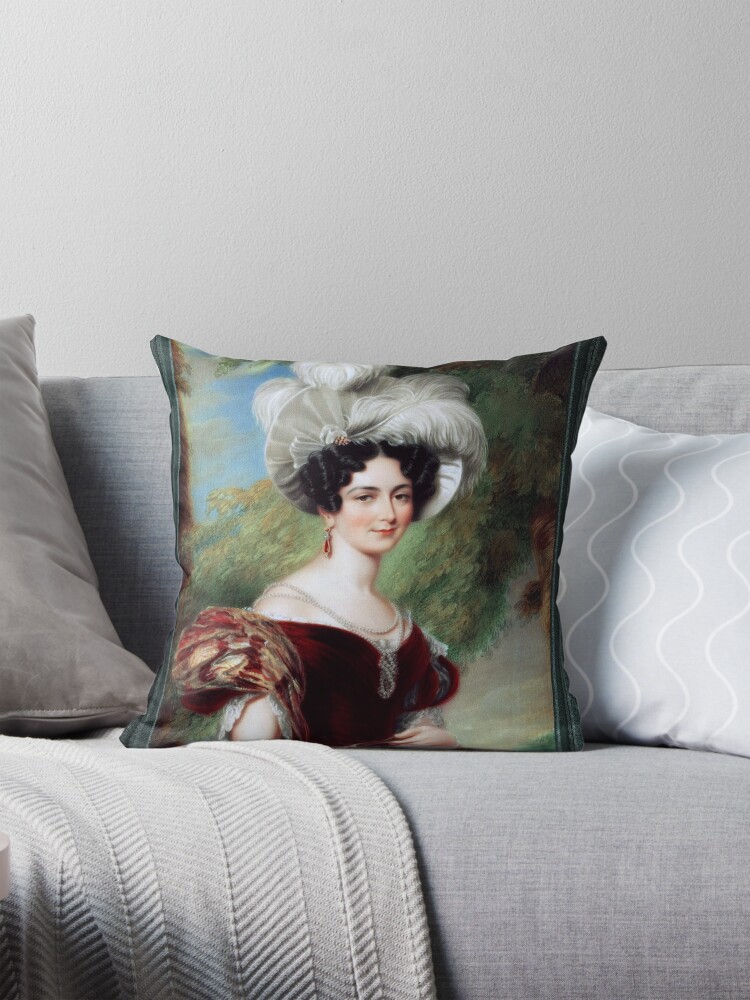
The central figure in the portrait is Victoria, Duchess of Kent, whose refined countenance and noble demeanor are captured in stunning detail. The Duchess is presented in a half-length pose, wearing an elegant gown made of luxurious velvet in a rich shade of crimson. The gown features intricate folds and delicate textures that are indicative of the high-fashion styles of the period. The neckline of the gown is cut low, revealing a soft lace trim and a double row of pearls that encircle her neck, adding a touch of opulence to the overall attire. Her shoulders are draped with a lavish shawl, which flows loosely and elegantly from her arms, accentuating the royal grace and aristocratic finesse of her presence.
The Duchess’ face, with its soft yet commanding expression, radiates both warmth and authority. Her features are finely painted with a gentle glow, accentuating her serene yet regal expression. The soft curve of her cheeks, the delicate arch of her eyebrows, and the finely detailed curls of her hair all contribute to a sense of aristocratic beauty. Har hier, styled in a voluminous arrangement, is crowned with a large feathered hat, which adds a touch of drama and height, symbolizing the height of fashion and elegance in the royal circles of the time.
The Duchess’ juwielen, including a pair of red earrings and a multi-strand pearl necklace, further elevate her status and reflect her aristocratic background. The gleaming red of the earrings adds a striking contrast to the rich colors of her gown and the serene background, drawing the viewer’s attention to the details of her ensemble.
Eftergrûn en ynstelling
The background of the portrait features a tranquil natural setting, with soft green foliage and hints of blue sky visible through the trees. The delicate rendering of the landscape contrasts the opulence of the Duchess’ attire and creates a serene and almost dreamlike atmosphere. The natural elements in the background seem to symbolize the Duchess’ connection to both the royal household and the British land, invoking a sense of timelessness and continuity. The balance between the opulent attire and the tranquil scenery adds a sense of harmony, reinforcing the calm yet commanding presence of the Duchess.
Artistike styl en technyk
George Hayter’s style is characterized by his meticulous attention to detail, which is evident in the rendering of fabrics, juwielen, and facial expressions in the portrait. The artist’s use of light and shadow plays a significant role in bringing the Duchess to life, with soft highlights illuminating her face and gown, contrasting with deeper shadows that give the piece a sense of depth. Hayter’s technique reflects the classical approach of 19th-century portraiture, where realism was emphasized through careful observation of the human form and surroundings.
The fine details of the velvet gown, the textured shawl, and the fluidity of the Duchess’ hair are all rendered with precision, showcasing Hayter’s ability to capture the textures of fabric and the softness of the skin. The careful brushwork on the background foliage adds depth and realism, enhancing the portrait’s three-dimensionality. It opnimmen fan sa'n eftergrûndetail suggerearret in ferbining tusken it ûnderwerp en har omjouwing, fierder de klam op 'e hertoginne’ woartele yn har keninklike kontekst.
Tema en stimming
It portret vangt in tema fan keninklike elegânsje en weardichheid. De hertoginne fan Kent, as mem fan 'e takomstige keninginne Victoria, wurdt ôfbylde mei in gefoel fan stille krêft en genede. Har kalme ekspresje en rjochte posysje wjerspegelje har aristokratyske status en har rol binnen de keninklike famylje. Der is in lucht fan adel yn har portret, net allinnich de status fan har posysje oerbringe, mar ek de ferantwurdlikheden dy't dêrmei kamen. De stimming fan it keunstwurk is ien fan sereniteit en gearstalde elegânsje, mei in subtile ûnderstream fan macht oerbrocht troch har poised útdrukking en keninklike klean.
De stimming is ek ien fan refleksje, as it portret liket te fangen in momint beferzen yn de tiid. De sêfte, ljochte kleuren fan 'e jurk, it sêfte ljocht dat op har gesicht falt, en de freedsume eftergrûn suggerearret in sfear fan yntrospeksje, as soe de hartochinne de takomst fan har famylje en har rol yn 'e monargy oerwaget. Dit gefoel fan poised refleksje foeget in laach fan emosjonele djipte ta oan it wurk, makket it mear dan allinich in fisuele foarstelling fan har fysike uterlik, mar ek in ferkenning fan har ynderlike weardichheid en krêft.
Materialen en techniken
It medium dat brûkt wurdt foar dit portret liket oalje op doek te wêzen, in mienskiplik medium foar keninklik portret yn de 19e ieu. De glêde tekstuer fan it doek lit Hayter in heech nivo fan detail berikke yn sawol de klean as de gesichtsfunksjes fan 'e hertoginne. De lagen fan oaljeferve is evident yn de djipte fan de kleuren, benammen yn 'e fluwelen jurk en it subtile model fan' e hertoginne’ face. It delikate gebrûk fan 'e keunstner fan glazuren foeget in gefoel fan ljochtheid ta oan it skilderij, it ferbetterjen fan it realistyske byld fan it ûnderwerp.
Konklúzje
“Victoria, Duchess of Kent (1786 – 1861)” troch George Hayter is in prachtich foarbyld fan 19e-ieuske keninklike portretten, it fêstlizzen fan sawol de fysike likenis as de weardige oanwêzigens fan ien fan 'e meast foaroansteande keninklike figueren fan Brittanje. De keunstner syn betûfte gebrûk fan ljocht en skaad, omtinken foar stof tekstueren, en de harmonieuze kombinaasje fan regale klean en serene natuerlike omjouwing drage allegear by oan de tiidleaze kwaliteit fan it portret. De hartochinne fan Kent wurdt net allinich ôfbylde as in frou fan skientme en genede, mar ek as in figuer fan krêft en ynfloed, wjerspegelje har rol as de mem fan keninginne Victoria en har plak yn it bredere ferhaal fan 'e Britske skiednis.
Dit is in retouchearre reproduksje fan âlde masters fan digitale keunst fan in ôfbylding yn it iepenbier domein.
Artist Bio Courtesy Wikipedia.org
George Hayter wie de soan fan Charles Hayter (1761 – 1835), in miniatuerskilder en populêre tekenmaster en learaar fan perspektyf dy't beneamd waard ta heechlearaar Perspektyf en Tekening fan Prinses Charlotte en publisearre in bekende ynlieding oer perspektyf en oare wurken.
Yn earste ynstânsje leard troch syn heit, hy gie betiid nei de Royal Academy Schools 1808, mar yn itselde jier, nei in ûnienichheid oer syn keunststúdzjes, rûn fuort nei see as Midshipman yn de Royal Navy. Syn heit befeilige syn frijlitting, en hja kamen ta in oerienkomst dat Hayter him bystean soe by it folgjen fan syn eigen stúdzje.
Oan de Royal Academy Schools studearre er ûnder Fuseli, en yn 1815 waard beneamd ta skilder fan miniatueren en portretten troch prinses Charlotte. Hayter waard de preemje fan 'e Britske ynstelling takend foar skiednisskilderij foar de profeet Ezra (1815; Downton Castle), kocht troch Richard Payne Knight.