

Young Woman with Flowers in Her Hair c1734
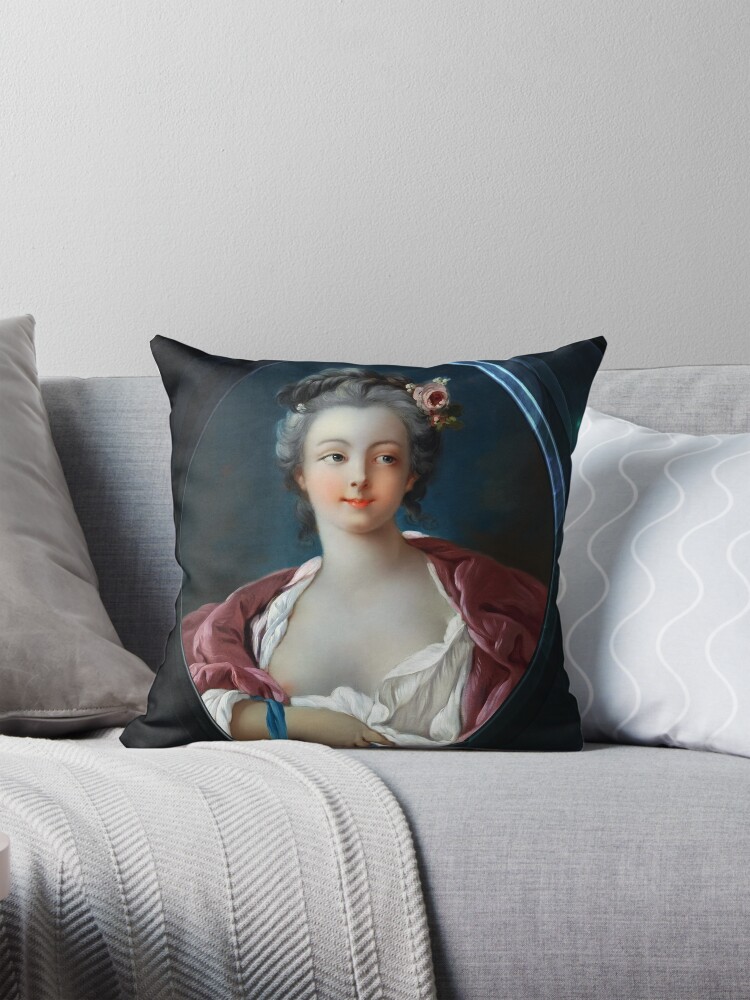
Artelana Young Woman with Flowers in Her Hair was created in 1734 by the renowned French painter Francois Boucher (1703 – 1770). Boucher, celebrated for his role in the Rococo movement, presents in this painting a portrait of youthful beauty and elegance, characteristic of his ability to capture both the grace and sensuality of his subjects. This work is a delicate and refined depiction of a young woman, bathed in soft light and surrounded by elements that evoke a sense of opulence and ease, typical of the Rococo era. The artist’s brushwork, combined with the vivid detail of the subject’s attire and facial features, places the painting firmly within the context of 18th-century French aristocracy and fashion.
Edukien taula
Gaia eta osaera
Erretratu honetan, Boucher expertly showcases a young woman dressed in a luxurious ensemble of flowing fabrics, with her face framed by soft curls and adorned with flowers. The woman is depicted in an intimate and almost wistful pose, her soft gaze directed slightly off-center, as if lost in contemplation. The simplicity of her pose, with one hand resting gently at her chest, invites the viewer to focus on her delicate features and the grace of her attire. The subtle contrast between the intricate folds of her luxurious robe and the softness of her skin enhances the natural elegance of the subject.
Ilea, styled in an elaborate updo, is adorned with vibrant roses and delicate blossoms, Mundu naturala eta feminitatearen edertasuna goraipatzen dituen Boucher-en lanaren sinadura xehetasuna. Bere ilean loreen antolaketa, bere aurpegiko espresio leunarekin konbinatuta, Edertasun idealizatuaren eta sentsualtasunaren rokoko gaiari buruz hitz egiten du, naturaren eta graziaren mundu baten barruan kokatuta.
The Use of Color and Light
Erretratu honetan Boucherrek kolorearen erabilera nabarmena da bere sotiltasuna eta aberastasunagatik. Bere jantziaren pastel tonu leunak, arrosa itzalez osatua, zuriak, eta kremak, ederki kontrastea sakonagoarekin, atzeko planoaren tonu ilunagoak. Kolore-aukera hauek gaiaren gazteen edertasuna hobetzeko balio dute, bere aurpegia eta jantziak iluntasunaren aurka ia dirdira egiten duela dirudi, atzeko plano lausoa. Bere azalean eta ehunean argi joko leunak sakontasuna ematen dio konposizioari, highlighting the textures of her clothing and the soft contours of her face. The muted tones of the background also create a sense of ethereal space, focusing all attention on the subject’s figure and face.
The Rococo Style and Mood
François Boucher's Young Woman with Flowers in Her Hair encapsulates the defining characteristics of the Rococo style, which flourished in France during the early 18th century. Rococo, marked by its ornate, playful, and often sensual aesthetic, sought to evoke lightness and pleasure, moving away from the more somber tones of the Baroque period. Margolan honetan, the delicate treatment of the subject’s features, jarioa, almost billowy fabrics, and the soft color palette all exemplify Rococo’s emphasis on grace and beauty.
The mood of the portrait is one of calm and serenity, with a hint of coquettish charm. Subjektuaren irribarre leunak eta urrutiko begiradak pentsamenduaren barne mundua iradokitzen du, bere jarrera dotorea, berriz, konfiantza eta feminitatea dario. Bere ilean dauden loreek gaztetasunaren eta edertasunaren metafora gisa jokatzen dute, plazer-une iragankorrekiko eta edertasunaren lantzearen rokoko lilura indartuz.
Symbolism and Materiality
Emakume gaztearen janzkera eta margolanaren inguruko elementuak bere gizarte-egoeraren isla ez ezik, garaiko gustuen sinbolo ere badira.. Bere soinekoa, luxuzko ehunez egina, hala nola zeta edo belusezkoa, ehundurari arreta handiz irudikatuta dago, gaiaren aberastasuna eta fintasuna azpimarratuz. Ehunaren tolesturak eta drapeak zehaztasunez margotzen dira, Boucherrek materiala ukigarria balitz bezala errendatzeko duen trebetasuna erakutsiz.
The flowers in her hair carry additional meaning, often seen as symbols of youth, edertasuna, and transience in 18th-century art. Arrosak, bereziki, have long been associated with love and passion, and their inclusion here suggests a connection between the subject’s outward beauty and the emotions she may evoke. Konposizio orokorra, with its focus on beauty and sensuality, aligns with the themes of ephemeral pleasure and the celebration of youth that were central to the Rococo movement.
Bukaera
François Boucher's Young Woman with Flowers in Her Hair is an exemplary work of Rococo portraiture, capturing the essence of the period through its delicate portrayal of feminine beauty and sensuality. The artist’s ability to blend texture, argia, and color creates an image that not only reflects the fashion and ideals of 18th-century French aristocracy but also invites the viewer into a world of serene grace and elegant charm. Margolan honen bitartez, Boucher immortalizes the subject’s youth, edertasuna, eta feminitatea, while also showcasing the opulent tastes and refined aesthetics of the time.
Young Woman with Flowers in Her Hair is a retouched digital art reproduction of a public domain image.
Artistaren biografia
Informazioa Behean Deribatua Wikipedia.org
Pariskoa jaiotzez, Boucher ezezaguna den Nicolas Boucher margolari baten semea zen, hark eman zion lehen prestakuntza artistikoa. Hamazazpi urterekin, Boucheren margolan bat miresten zuen François Lemoyne margolariak. Geroago, Lemoynek Boucher izendatu zuen bere ikastun, baina hiru hilabeteren buruan, Jean-François Cars grabatzailearentzat lanera joan zen.
In 1720, elite Grand Prix de Rome margolaritzagatik irabazi zuen, baina ez zuen Italian ikasteko ondoriozko aukera aprobetxatu bost urte geroago arte, Pintura eta Eskultura Errege Akademian izandako arazo ekonomikoengatik.[1] Italian ikasketetatik bueltan Académie de peinture et de sculpture on birfundatu zenean onartu zuten 24 Azaroa 1731. Bere harrera pieza (harrera pieza) bere Rinaldo eta Armida zen 1734.
Boucher Marie-Jeanne Buzeaurekin ezkondu zen 1733. Bikoteak hiru seme-alaba izan zituen elkarrekin. Boucher fakultateko kide bihurtu zen 1734 eta bere ibilbidea bizkortu egin zen puntu horretatik aurrera, Akademiako Errektore eta Katedradun izendatu baitzuten, Royal Gobelins Manufactory-ko ikuskatzaile bihurtuz eta, azkenik, Premier Peintre du Roi (Erregearen lehen margolaria) urtean 1765. Marie-Louise O'Murphyren erretratua c. 1752
Boucher hil zen 30 Maiatza 1770 bere jaioterrian Parisen. Bere izena, bere patroiaren Madame de Pompadourarekin batera, Frantziako Rococo estiloaren sinonimo bihurtu zen, Goncourt anaiak idaztera eramanez: “Mende bateko zaporea adierazten duten gizon horietako bat da Boucher, adierazten dutenak, pertsonifikatu eta gorpuztu.”
Boucher famatua da natura dela esateagatik “berdeegiak eta gaizki argituta” (berdeegi eta gaizki argituta).
Boucher Jacques Guay harribitxi grabatzailearekin lotuta zegoen, marrazten irakatsi zion. Martin Ferdinand Quadal margolari moravia-austriarrari eta Jacques-Louis David margolari neoklasikoari ere tutore izan zituen. 1767.[4] Geroago, Boucherrek Guayren lanen marrazki sorta bat egin zuen, Pompadour andreak ondoren grabatu eta ederki loturiko bolumen gisa banatu zituen gortesain gogokoei.