

Young Woman with Flowers in Her Hair c1734
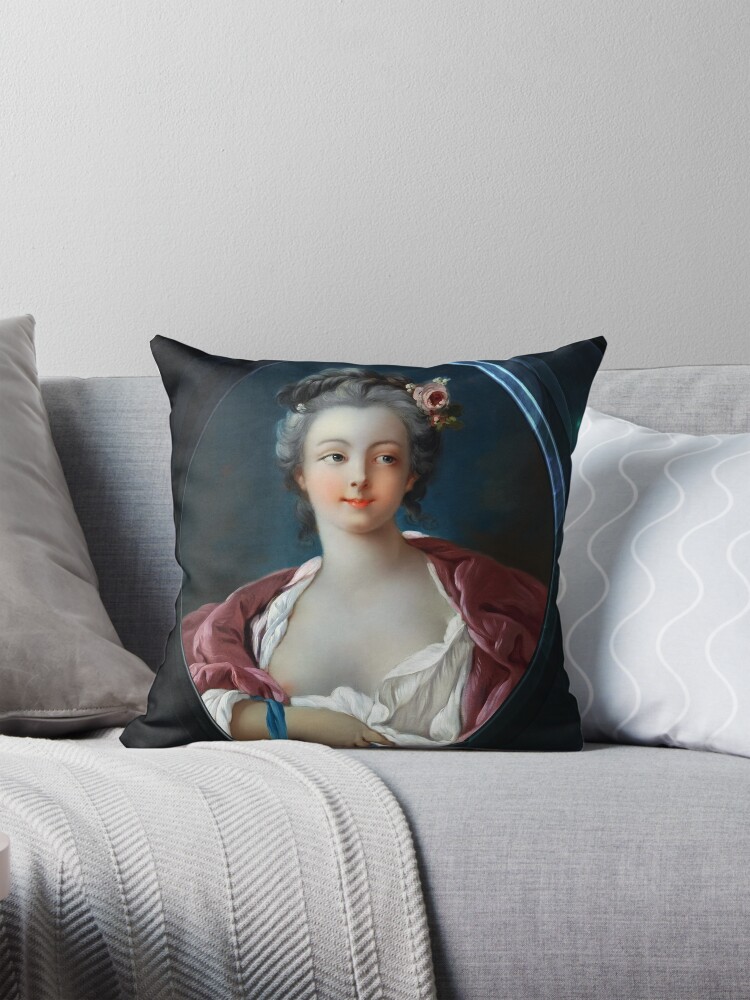
Taideteos Nuori nainen kukilla hiuksissaan luotiin vuonna 1734 by the renowned French painter Francois Boucher (1703 – 1770). Boucher, celebrated for his role in the Rococo movement, presents in this painting a portrait of youthful beauty and elegance, characteristic of his ability to capture both the grace and sensuality of his subjects. This work is a delicate and refined depiction of a young woman, bathed in soft light and surrounded by elements that evoke a sense of opulence and ease, typical of the Rococo era. The artist’s brushwork, combined with the vivid detail of the subject’s attire and facial features, places the painting firmly within the context of 18th-century French aristocracy and fashion.
Sisällysluettelo
Aihe ja koostumus
Tässä muotokuvassa, Boucher expertly showcases a young woman dressed in a luxurious ensemble of flowing fabrics, with her face framed by soft curls and adorned with flowers. The woman is depicted in an intimate and almost wistful pose, her soft gaze directed slightly off-center, as if lost in contemplation. The simplicity of her pose, with one hand resting gently at her chest, invites the viewer to focus on her delicate features and the grace of her attire. The subtle contrast between the intricate folds of her luxurious robe and the softness of her skin enhances the natural elegance of the subject.
Hänen hiuksensa, styled in an elaborate updo, is adorned with vibrant roses and delicate blossoms, a signature detail of Boucher’s work that celebrates both the natural world and the beauty of femininity. The arrangement of flowers in her hair, combined with the gentle expression on her face, speaks to the Rococo theme of idealized beauty and sensuality, set within a world of nature and grace.
The Use of Color and Light
Boucher’s use of color in this portrait is notable for its subtlety and richness. The soft pastel hues of her gown, composed of muted pinks, valkoiset, ja voiteet, contrast beautifully with the deeper, darker tones of the background. These color choices serve to enhance the subject’s youthful beauty, as her face and attire seem to almost glow against the dark, blurred backdrop. The gentle play of light on her skin and fabric adds depth to the composition, highlighting the textures of her clothing and the soft contours of her face. The muted tones of the background also create a sense of ethereal space, focusing all attention on the subject’s figure and face.
The Rococo Style and Mood
François Boucherin Nuori nainen kukilla hiuksissaan encapsulates the defining characteristics of the Rococo style, which flourished in France during the early 18th century. Rococo, marked by its ornate, leikkisä, and often sensual aesthetic, sought to evoke lightness and pleasure, moving away from the more somber tones of the Baroque period. Tässä maalauksessa, the delicate treatment of the subject’s features, virtaava, almost billowy fabrics, and the soft color palette all exemplify Rococo’s emphasis on grace and beauty.
The mood of the portrait is one of calm and serenity, with a hint of coquettish charm. The subject’s gentle smile and distant gaze suggest an inner world of thoughtfulness, while her elegant pose exudes both confidence and femininity. The flowers in her hair act as a metaphor for youth and beauty, reinforcing the Rococo fascination with fleeting moments of pleasure and the cultivation of beauty.
Symbolism and Materiality
The young woman’s attire and the surrounding elements in the painting are not only a reflection of her social status but also a symbol of the prevailing tastes of the time. Hänen pukunsa, made of luxurious fabrics such as silk or velvet, is depicted with great attention to texture, emphasizing the wealth and refinement of the subject. The folds and draping of the fabric are painted with precision, showcasing Boucher’s skill in rendering the material as though it were tangible.
The flowers in her hair carry additional meaning, often seen as symbols of youth, kauneus, and transience in 18th-century art. Ruusut, erityisesti, have long been associated with love and passion, and their inclusion here suggests a connection between the subject’s outward beauty and the emotions she may evoke. Kokonaiskoostumus, with its focus on beauty and sensuality, aligns with the themes of ephemeral pleasure and the celebration of youth that were central to the Rococo movement.
Johtopäätös
François Boucherin Nuori nainen kukilla hiuksissaan is an exemplary work of Rococo portraiture, capturing the essence of the period through its delicate portrayal of feminine beauty and sensuality. The artist’s ability to blend texture, valaistus, and color creates an image that not only reflects the fashion and ideals of 18th-century French aristocracy but also invites the viewer into a world of serene grace and elegant charm. Tämän maalauksen kautta, Boucher immortalizes the subject’s youth, kauneus, ja naisellisuus, while also showcasing the opulent tastes and refined aesthetics of the time.
Nuori nainen kukilla hiuksissaan on retusoitu digitaalisen taiteen kopio julkisesta kuvasta.
Taiteilijabio
Alla olevat tiedot ovat peräisin Wikipedia.org
Kotoisin Pariisista, Boucher oli vähemmän tunnettu taidemaalari Nicolas Boucherin poika, joka antoi hänelle ensimmäisen taiteellisen koulutuksen. Seitsemäntoistavuotiaana, Boucherin maalausta ihaili taidemaalari François Lemoyne. Lemoyne nimitti myöhemmin Boucherin oppipoikakseen, mutta vasta kolmen kuukauden jälkeen, hän meni töihin kaivertajalle Jean-François Carsille.
Sisään 1720, hän voitti eliitin Grand Prix de Rooman maalauksesta, mutta käytti seuraavaa tilaisuutta opiskella Italiassa vasta viisi vuotta myöhemmin, kuninkaallisten maalaus- ja kuvanveistoakatemian taloudellisten ongelmien vuoksi.[1] Palattuaan opiskelemaan Italiassa hänet hyväksyttiin uudelleen perustettuun Académie de peinture et de veistokseen 24 marraskuu 1731. Hänen vastaanottokappaleensa (vastaanottokappale) oli hänen Rinaldo ja Armida 1734.
Boucher meni naimisiin Marie-Jeanne Buzeaun kanssa vuonna 1733. Pariskunnalla oli kolme yhteistä lasta. Boucherista tuli tiedekunnan jäsen vuonna 1734 ja hänen uransa kiihtyi tästä lähtien, kun hänet ylennettiin professoriksi, sitten akatemian rehtoriksi, hänestä tuli tarkastaja Royal Gobelinsin manufaktuurissa ja lopulta pääministeri Peintre du Roi (Kuninkaan ensimmäinen maalari) sisään 1765. Muotokuva Marie-Louise O’Murphy c. 1752
Boucher kuoli 30 saattaa 1770 kotimaassaan Pariisissa. Hänen nimensä, yhdessä hänen suojelijansa Madame de Pompadourin kanssa, oli tullut synonyymi ranskalaiselle rokokoo -tyylille, johdattaa Goncourt -veljekset kirjoittamaan: “Boucher on yksi niistä miehistä, jotka edustavat vuosisadan makua, jotka ilmaisevat, personoida ja ilmentää sitä.”
Boucher on kuuluisa sanomalla, että luonto on “liian vihreä ja heikosti valaistu” (liian vihreä ja huonosti valaistu).
Boucher liittyi jalokivikaivertaja Jacques Guayhin, jonka hän opetti piirtämään. Hän opetti myös Moravian-itävaltalaisen taidemaalarin Martin Ferdinand Quadalin ja uusklassisen taidemaalarin Jacques-Louis Davidin. 1767.[4] Myöhemmin, Boucher teki sarjan piirroksia Guayn teoksista, jotka rouva de Pompadour kaiverrettiin ja jaettiin komeasti sidottuna teoksena suosituille hovimiehille