

Bean Óg le Bláthanna ina cuid gruaige c1734
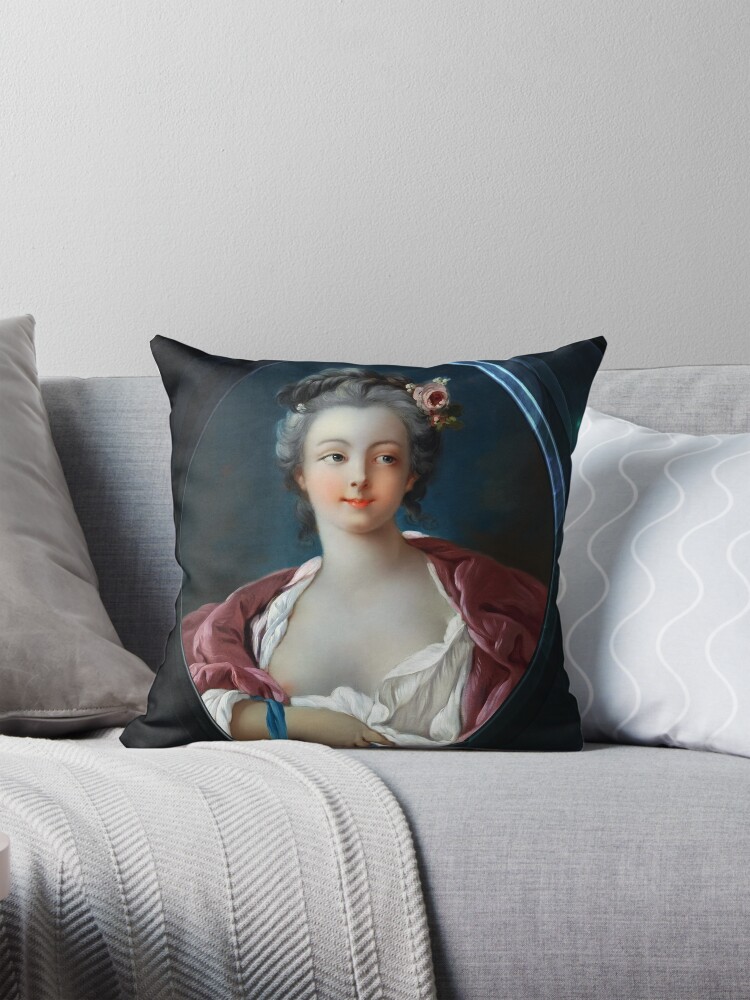
An saothar ealaíne Bean Óg le Bláthanna ina Gruaige cruthaíodh i 1734 ag an bpéintéir cáiliúil Francach Francois Boucher (1703 – 1770). Boucher, ceiliúradh ar a ról sa ghluaiseacht Rocócó, cuireann sé portráid d'áilleacht agus d'áilleacht na hóige i láthair sa phictiúr seo, tréith dá chumas grásta agus ciallmhar a chuid ábhar a ghabháil. Léiriú íogair agus scagtha de bhean óg atá sa saothar seo, bathed i solas bog agus timpeallaithe ag gnéithe a spreagann mothú opulence agus éascaíocht, tipiciúil den ré rocócó. Obair scuab an ealaíontóra, in éineacht le mionsonraí beoga ar fheisteas agus gnéithe aghaidhe an ábhair, cuireann sé an phéintéireacht go daingean i gcomhthéacs uaisle agus faisin na Fraince san 18ú haois.
Clár na nÁbhar
An tÁbhar agus Comhdhéanamh
Sa phortráid seo, Boucher expertly showcases a young woman dressed in a luxurious ensemble of flowing fabrics, with her face framed by soft curls and adorned with flowers. The woman is depicted in an intimate and almost wistful pose, her soft gaze directed slightly off-center, as if lost in contemplation. The simplicity of her pose, with one hand resting gently at her chest, invites the viewer to focus on her delicate features and the grace of her attire. The subtle contrast between the intricate folds of her luxurious robe and the softness of her skin enhances the natural elegance of the subject.
A cuid gruaige, styled i updo ilchasta, is adorned with vibrant roses and delicate blossoms, a signature detail of Boucher’s work that celebrates both the natural world and the beauty of femininity. The arrangement of flowers in her hair, combined with the gentle expression on her face, speaks to the Rococo theme of idealized beauty and sensuality, set within a world of nature and grace.
The Use of Color and Light
Boucher’s use of color in this portrait is notable for its subtlety and richness. The soft pastel hues of her gown, composed of muted pinks, gealáin, and creams, contrast beautifully with the deeper, darker tones of the background. These color choices serve to enhance the subject’s youthful beauty, as her face and attire seem to almost glow against the dark, blurred backdrop. The gentle play of light on her skin and fabric adds depth to the composition, highlighting the textures of her clothing and the soft contours of her face. The muted tones of the background also create a sense of ethereal space, focusing all attention on the subject’s figure and face.
The Rococo Style and Mood
François Boucher Bean Óg le Bláthanna ina Gruaige encapsulates the defining characteristics of the Rococo style, which flourished in France during the early 18th century. Rococo, marked by its ornate, playful, and often sensual aesthetic, sought to evoke lightness and pleasure, moving away from the more somber tones of the Baroque period. Sa phéintéireacht seo, the delicate treatment of the subject’s features, the flowing, almost billowy fabrics, and the soft color palette all exemplify Rococo’s emphasis on grace and beauty.
The mood of the portrait is one of calm and serenity, with a hint of coquettish charm. The subject’s gentle smile and distant gaze suggest an inner world of thoughtfulness, while her elegant pose exudes both confidence and femininity. The flowers in her hair act as a metaphor for youth and beauty, reinforcing the Rococo fascination with fleeting moments of pleasure and the cultivation of beauty.
Symbolism and Materiality
The young woman’s attire and the surrounding elements in the painting are not only a reflection of her social status but also a symbol of the prevailing tastes of the time. A gúna, made of luxurious fabrics such as silk or velvet, is depicted with great attention to texture, emphasizing the wealth and refinement of the subject. The folds and draping of the fabric are painted with precision, showcasing Boucher’s skill in rendering the material as though it were tangible.
The flowers in her hair carry additional meaning, often seen as symbols of youth, áilleacht, and transience in 18th-century art. Roses, go háirithe, have long been associated with love and passion, and their inclusion here suggests a connection between the subject’s outward beauty and the emotions she may evoke. An comhdhéanamh iomlán, with its focus on beauty and sensuality, aligns with the themes of ephemeral pleasure and the celebration of youth that were central to the Rococo movement.
Conclúid
François Boucher Bean Óg le Bláthanna ina Gruaige is an exemplary work of Rococo portraiture, capturing the essence of the period through its delicate portrayal of feminine beauty and sensuality. The artist’s ability to blend texture, éadrom, and color creates an image that not only reflects the fashion and ideals of 18th-century French aristocracy but also invites the viewer into a world of serene grace and elegant charm. Through this painting, Boucher immortalizes the subject’s youth, áilleacht, agus femininity, while also showcasing the opulent tastes and refined aesthetics of the time.
Is atáirgeadh ealaíne digiteach retouched ar íomhá fearainn poiblí é Young Woman with Flowers in Her Hair.
Beathaisnéis Ealaíontóir
Faisnéis Thíos Díorthaithe ó Wikipedia.org
Páras ó dhúchas, Ba mhac é Boucher le péintéir nach raibh chomh cáiliúil sin Nicolas Boucher, a thug a chéad oiliúint ealaíne dó. Ag seacht mbliana déag d’aois, bhí meas ag an bpéintéir François Lemoyne ar phictiúr le Boucher. Cheap Lemoyne Boucher ina phrintíseach ina dhiaidh sin, ach tar éis trí mhí amháin, chuaigh sé ag obair don engraver Jean-François Cars.
I 1720, bhuaigh sé an Grand Prix de Rome mionlach as péinteáil, ach níor thapaigh sé an deis iarmhartach staidéar a dhéanamh san Iodáil go dtí cúig bliana ina dhiaidh sin, mar gheall ar fhadhbanna airgeadais san Acadamh Ríoga Péinteála agus Dealbhóireachta.[1] Nuair a d'fhill sé ar staidéar san Iodáil, glacadh leis an dealbhóireacht Académie de peinture et de 24 Samhain 1731. A phíosa fáiltithe (píosa fáiltithe) Ba é a Rinaldo agus Armida de 1734.
Phós Boucher Marie-Jeanne Buzeau i 1733. Bhí triúr páistí ag an lánúin le chéile. Tháinig Boucher chun bheith ina bhall dáimhe i 1734 agus luathaigh a shlí bheatha ón bpointe seo toisc gur tugadh ardú céime dó mar Ollamh ansin mar Reachtaire an Acadaimh, ag éirí mar chigire ag an Royal Gobelins Manufactory agus ar deireadh Premier Peintre du Roi (Céad Péintéir an Rí) in 1765. Portráid de Marie-Louise O’Murphy c. 1752
Fuair Boucher bás ar 30 Bealtaine 1770 ina Pháras dúchais. A ainm, mar aon le pátrún Madame de Pompadour, tar éis éirí comhchiallach le stíl Rocócó na Fraince, ag treorú na ndeartháireacha Goncourt a scríobh: “Tá Boucher ar cheann de na fir sin a léiríonn blas céad bliain, a chuireann in iúl, é a phearsanú agus a chorprú.”
Tá clú ar Boucher as a rá go bhfuil an dúlra “ró-ghlas agus droch-lit” (ró-ghlas agus droch-lit).
Bhí baint ag Boucher leis an engraver gemstone Jacques Guay, a mhúin sé a tharraingt. Rinne sé meantóireacht freisin ar an bpéintéir Moravian-Ostarach Martin Ferdinand Quadal chomh maith leis an bpéintéir neoclasaiceach Jacques-Louis David i 1767.[4] Níos déanaí, Rinne Boucher sraith líníochtaí de shaothair le Guay a rinne Madame de Pompadour a ghreamú agus a dháileadh mar imleabhar faoi cheangal dathúil ar chúirtéirí is fearr leo