

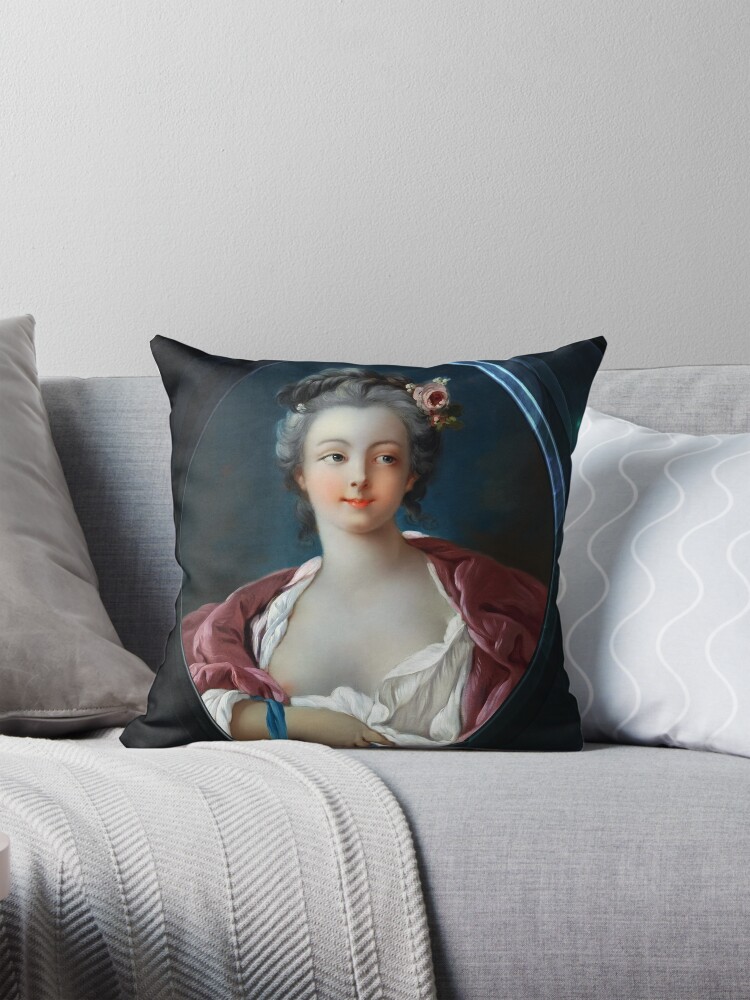
髪に花を持つ若い女性 c1734
アートワーク 髪に花を持つ若い女性 で作成されました 1734 有名なフランスの画家による フランソワ・ブーシェ (1703 – 1770). Boucher, ロココ運動における彼の役割が称賛される, この絵には若々しい美しさと優雅さの肖像画が表現されています, 被写体の優雅さと官能性の両方を捉える彼の能力の特徴. 若い女性を繊細かつ上品に描いた作品, 柔らかな光に包まれ、贅沢さと安らぎの感覚を呼び起こす要素に囲まれています。, ロココ時代の典型的な. アーティストの筆致, 被写体の服装や顔の特徴の鮮明なディテールと組み合わせる, この絵を 18 世紀のフランスの貴族階級とファッションの文脈の中にしっかりと位置づけています。.
目次
主題と構成
この肖像画には, ブーシェは、流れるような生地の豪華なアンサンブルを着た若い女性を巧みに表現しています。, 彼女の顔は柔らかいカールで縁取られ、花で飾られています. 女性は親密で、ほとんど切ないポーズで描かれています, 彼女の柔らかい視線は少し中心からずれたところに向けられていた, まるで思索にふけっているかのように. 彼女のポーズのシンプルさ, 片手を胸にそっと当てて, 見る者を彼女の繊細な顔立ちと優雅な服装に注目してもらいます。. 彼女の豪華なローブの複雑な折り目と彼女の肌の柔らかさの間の微妙なコントラストが、被写体の自然な優雅さを高めます。.
彼女の髪, 手の込んだアップヘアでスタイリングした, 鮮やかなバラと繊細な花々で飾られています, 自然界と女性らしさの美しさの両方を称賛するブーシェ作品の特徴的なディテール. The arrangement of flowers in her hair, combined with the gentle expression on her face, speaks to the Rococo theme of idealized beauty and sensuality, set within a world of nature and grace.
色と光の使用
Boucher’s use of color in this portrait is notable for its subtlety and richness. The soft pastel hues of her gown, composed of muted pinks, 白人, and creams, contrast beautifully with the deeper, darker tones of the background. These color choices serve to enhance the subject’s youthful beauty, as her face and attire seem to almost glow against the dark, blurred backdrop. The gentle play of light on her skin and fabric adds depth to the composition, highlighting the textures of her clothing and the soft contours of her face. The muted tones of the background also create a sense of ethereal space, focusing all attention on the subject’s figure and face.
ロココ様式と雰囲気
フランソワ・ブーシェ 髪に花を持つ若い女性 encapsulates the defining characteristics of the Rococo style, which flourished in France during the early 18th century. ロココ, marked by its ornate, 遊び心のある, and often sensual aesthetic, sought to evoke lightness and pleasure, moving away from the more somber tones of the Baroque period. この絵の中で, the delicate treatment of the subject’s features, 流れる, almost billowy fabrics, and the soft color palette all exemplify Rococo’s emphasis on grace and beauty.
The mood of the portrait is one of calm and serenity, with a hint of coquettish charm. The subject’s gentle smile and distant gaze suggest an inner world of thoughtfulness, while her elegant pose exudes both confidence and femininity. The flowers in her hair act as a metaphor for youth and beauty, つかの間の喜びと美の育成によるロココの魅力を強化する.
象徴性と物質性
絵の中の若い女性の服装と周囲の要素は、彼女の社会的地位を反映しているだけでなく、当時の一般的な趣味の象徴でもあります。. 彼女のガウン, シルクやベルベットなどの豪華な生地で作られています, 質感に細心の注意を払って描かれています, 主題の豊かさと洗練を強調する. 生地のひだやドレープも精密に描かれています, 素材をあたかも有形であるかのように表現するブーシェのスキルを紹介する.
彼女の髪に咲いた花にはさらなる意味がある, 若さの象徴として見られることが多い, 美しさ, 18世紀芸術における儚さと. バラ, 特に, 長い間愛と情熱と結びついてきた, and their inclusion here suggests a connection between the subject’s outward beauty and the emotions she may evoke. 全体的な構成, with its focus on beauty and sensuality, aligns with the themes of ephemeral pleasure and the celebration of youth that were central to the Rococo movement.
結論
フランソワ・ブーシェ 髪に花を持つ若い女性 is an exemplary work of Rococo portraiture, capturing the essence of the period through its delicate portrayal of feminine beauty and sensuality. The artist’s ability to blend texture, ライト, and color creates an image that not only reflects the fashion and ideals of 18th-century French aristocracy but also invites the viewer into a world of serene grace and elegant charm. この絵を通して, Boucher immortalizes the subject’s youth, 美しさ, そして女性らしさ, while also showcasing the opulent tastes and refined aesthetics of the time.
髪に花を持つ若い女性は、パブリック ドメインの画像をデジタル アートで複製したものです。.
アーティスト略歴
以下の情報から派生 Wikipedia.org
パリ出身, ブーシェはあまり知られていない画家ニコラスブーシェの息子でした, 彼に彼の最初の芸術的訓練を与えた人. 17歳で, ブーシェの絵画は、画家フランソワ・ルモワンに賞賛されました. Lemoyneは後にBoucherを彼の見習いとして任命しました, でもたった3ヶ月で, 彼は彫刻家ジャン=フランソワ・カーズのために働きに行きました.
に 1720, 彼は絵画でエリートローマグランプリを受賞しました, しかし、5年後までイタリアで勉強する結果的な機会をとらなかった, 王立絵画彫刻アカデミーの財政問題のため。[1] イタリアでの勉強から戻ったとき、彼は再建された王立絵画彫刻アカデミーに入学しました。 24 11月 1731. 彼のレセプションピース (レセプションピース) 彼のリナルドとアルミダは 1734.
ブーシェはマリージャンヌブゾーと結婚しました 1733. カップルには3人の子供がいました. Boucherはの教員になりました 1734 そして彼のキャリアはこの時点から加速し、彼は教授、そしてアカデミーの学長に昇進しました。, 王立ゴブラン製作所の検査官になり、ついに国王の筆頭画家になりました (王の最初の画家) に 1765. マリー=ルイーズ・オマーフィーの肖像c. 1752
ブーシェはで死んだ 30 5月 1770 彼の生まれ故郷のパリで. 彼の名前, 彼の常連客であるポンパドゥール夫人のそれと一緒に, フランスのロココ様式の代名詞になっていた, ゴンコート兄弟を率いて書く: “ブーシェは世紀の味を代表する男性の一人です, 表現する人, それを具体化して具体化します。”
ブーシェは自然が “緑が多すぎて照明が不十分” (緑が強すぎて照明が悪い).
ブーシェは宝石の彫刻家ジャック・ゲと関係がありました, 彼が描くことを教えた人. 彼はまた、モラヴィア・オーストリアの画家マーティン・フェルディナンド・クアダルと新古典主義の画家ジャック=ルイ・ダヴィッドを指導しました。 1767.[4] 後で, ブーシェは、ポンパドゥール夫人が彫刻し、好意的な廷臣に見事に綴じられた巻として配布した、グアイの一連の作品の素描を作成しました。