

Young Woman with Flowers in Her Hair c1734
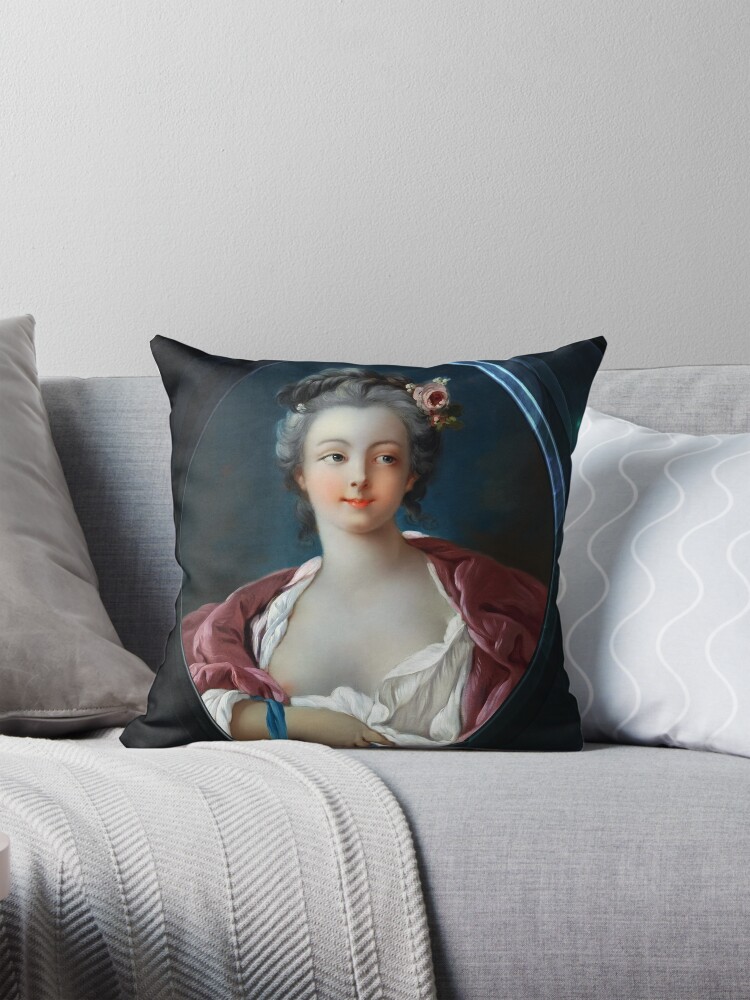
Grafika Young Woman with Flowers in Her Hair was created in 1734 by the renowned French painter Francois Boucher (1703 – 1770). Boucher, celebrated for his role in the Rococo movement, presents in this painting a portrait of youthful beauty and elegance, characteristic of his ability to capture both the grace and sensuality of his subjects. This work is a delicate and refined depiction of a young woman, bathed in soft light and surrounded by elements that evoke a sense of opulence and ease, typical of the Rococo era. The artist’s brushwork, combined with the vivid detail of the subject’s attire and facial features, places the painting firmly within the context of 18th-century French aristocracy and fashion.
Spis treści
Temat i kompozycja
W tym portrecie, Boucher expertly showcases a young woman dressed in a luxurious ensemble of flowing fabrics, with her face framed by soft curls and adorned with flowers. The woman is depicted in an intimate and almost wistful pose, her soft gaze directed slightly off-center, as if lost in contemplation. The simplicity of her pose, with one hand resting gently at her chest, invites the viewer to focus on her delicate features and the grace of her attire. The subtle contrast between the intricate folds of her luxurious robe and the softness of her skin enhances the natural elegance of the subject.
Jej włosy, stylizowana na wyszukaną fryzurę, is adorned with vibrant roses and delicate blossoms, a signature detail of Boucher’s work that celebrates both the natural world and the beauty of femininity. The arrangement of flowers in her hair, combined with the gentle expression on her face, speaks to the Rococo theme of idealized beauty and sensuality, set within a world of nature and grace.
The Use of Color and Light
Boucher’s use of color in this portrait is notable for its subtlety and richness. The soft pastel hues of her gown, composed of muted pinks, upławy, i kremy, contrast beautifully with the deeper, darker tones of the background. These color choices serve to enhance the subject’s youthful beauty, as her face and attire seem to almost glow against the dark, blurred backdrop. The gentle play of light on her skin and fabric adds depth to the composition, highlighting the textures of her clothing and the soft contours of her face. The muted tones of the background also create a sense of ethereal space, focusing all attention on the subject’s figure and face.
The Rococo Style and Mood
François Bouchera Young Woman with Flowers in Her Hair encapsulates the defining characteristics of the Rococo style, which flourished in France during the early 18th century. Rococo, marked by its ornate, playful, and often sensual aesthetic, sought to evoke lightness and pleasure, moving away from the more somber tones of the Baroque period. W tym obrazie, the delicate treatment of the subject’s features, płynący, almost billowy fabrics, and the soft color palette all exemplify Rococo’s emphasis on grace and beauty.
The mood of the portrait is one of calm and serenity, with a hint of coquettish charm. The subject’s gentle smile and distant gaze suggest an inner world of thoughtfulness, while her elegant pose exudes both confidence and femininity. The flowers in her hair act as a metaphor for youth and beauty, reinforcing the Rococo fascination with fleeting moments of pleasure and the cultivation of beauty.
Symbolism and Materiality
The young woman’s attire and the surrounding elements in the painting are not only a reflection of her social status but also a symbol of the prevailing tastes of the time. Jej suknia, made of luxurious fabrics such as silk or velvet, is depicted with great attention to texture, emphasizing the wealth and refinement of the subject. The folds and draping of the fabric are painted with precision, showcasing Boucher’s skill in rendering the material as though it were tangible.
The flowers in her hair carry additional meaning, often seen as symbols of youth, piękno, and transience in 18th-century art. Róże, zwłaszcza, have long been associated with love and passion, and their inclusion here suggests a connection between the subject’s outward beauty and the emotions she may evoke. Ogólny skład, with its focus on beauty and sensuality, aligns with the themes of ephemeral pleasure and the celebration of youth that were central to the Rococo movement.
Wniosek
François Bouchera Young Woman with Flowers in Her Hair is an exemplary work of Rococo portraiture, capturing the essence of the period through its delicate portrayal of feminine beauty and sensuality. The artist’s ability to blend texture, światło, and color creates an image that not only reflects the fashion and ideals of 18th-century French aristocracy but also invites the viewer into a world of serene grace and elegant charm. Przez ten obraz, Boucher immortalizes the subject’s youth, piękno, i kobiecość, while also showcasing the opulent tastes and refined aesthetics of the time.
Młoda kobieta z kwiatami we włosach to wyretuszowana cyfrowa reprodukcja obrazu z domeny publicznej.
Biografia artysty
Informacje poniżej pochodzą z Wikipedia.org
Pochodzący z Paryża, Boucher był synem mniej znanego malarza Nicolasa Bouchera, który dał mu pierwszy trening artystyczny. W wieku siedemnastu lat, obraz Bouchera podziwiał malarz François Lemoyne. Lemoyne mianował później Bouchera swoim uczniem, ale już po trzech miesiącach, poszedł do pracy dla grawera Jean-François Cars.
W 1720, zdobył elitarne Grand Prix de Rome za malarstwo, ale dopiero pięć lat później skorzystał z wynikającej z tego możliwości studiowania we Włoszech, z powodu problemów finansowych w Królewskiej Akademii Malarstwa i Rzeźby.[1] Po powrocie ze studiów we Włoszech został przyjęty do zrefundowanej Académie de peinture et de sculpture na 24 listopad 1731. Jego kawałek recepcji (kawałek recepcji) był jego Rinaldo i Armida z 1734.
Boucher poślubił Marie-Jeanne Buzeau w 1733. Para miała razem troje dzieci. Boucher został członkiem wydziału w 1734 i od tego momentu jego kariera nabrała tempa, gdy został mianowany profesorem, a następnie rektorem Akademii, zostaje inspektorem w Królewskiej Manufakturze Gobelinów i wreszcie premierem Peintre du Roi (Pierwszy malarz króla) w 1765. Portret Marie-Louise O'Murphy c. 1752
Boucher zmarł dnia 30 Móc 1770 w rodzinnym Paryżu. Jego imię, wraz z tym jego patronki Madame de Pompadour, stał się synonimem francuskiego stylu rokoko, prowadząc braci Goncourt do pisania: “Boucher jest jednym z tych mężczyzn, którzy reprezentują smak stulecia, kto wyraża?, personifikować i ucieleśniać go.”
Boucher słynie z tego, że mówi, że natura jest “zbyt zielony i słabo oświetlony” (zbyt zielony i źle oświetlony).
Boucher był związany z grawerem kamieni szlachetnych Jacques Guay, kogo nauczył rysować. Był również mentorem dla morawsko-austriackiego malarza Martina Ferdinanda Quadala oraz neoklasycznego malarza Jacquesa-Louisa Davida w 1767.[4] Później, Boucher wykonał serię rysunków dzieł Guay, które Madame de Pompadour następnie wygrawerowała i rozprowadziła jako ładnie oprawiony tom wśród uprzywilejowanych dworzan