

Morwyn â Basged O Rosod
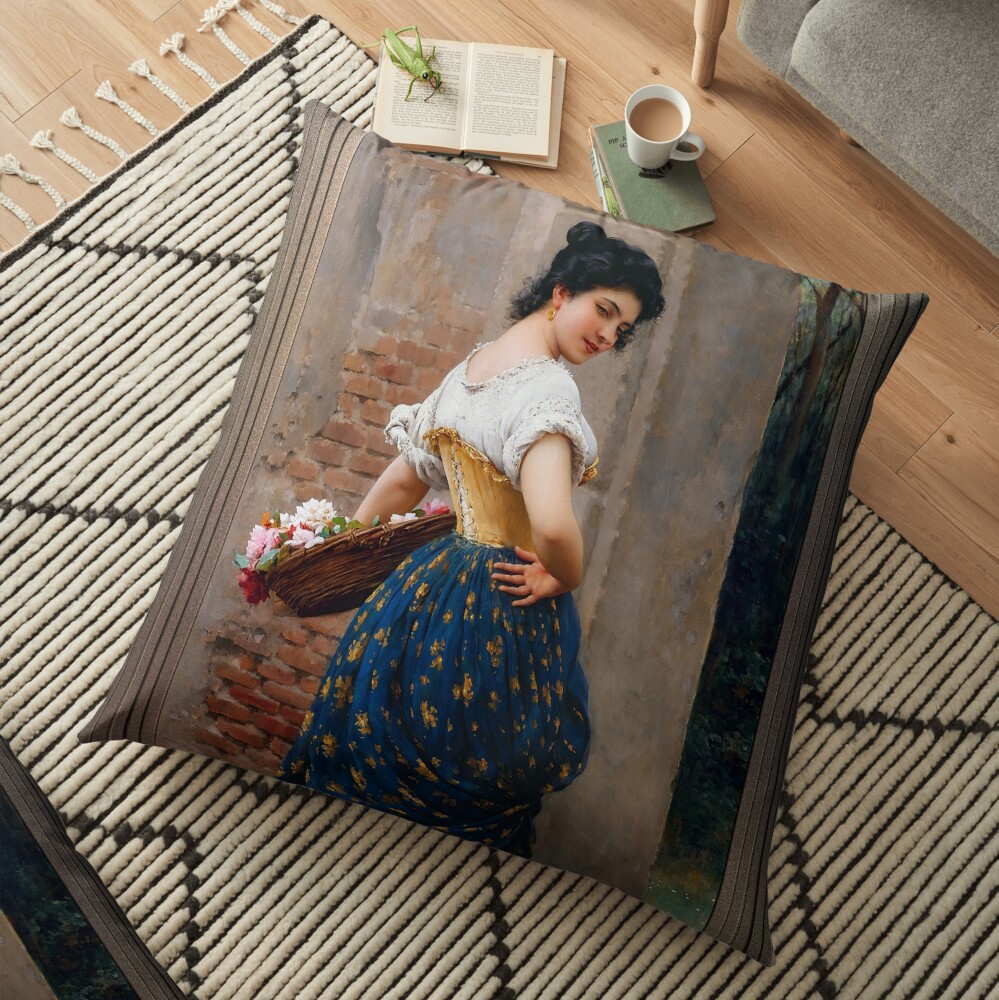
“Morwyn â Basged O Rosod,” wedi'i greu yn 1900 gan yr arlunydd Eidalaidd enwog Eugene von Blas (1843 – 1931), yn ddarn hynod o realaeth glasurol sy’n dal swyn a gosgeiddig merch ifanc mewn eiliad heddychlon o fywyd cefn gwlad. Von Blas, yn adnabyddus am ei ddarluniau coeth o ferched mewn gwisg glasurol, yn aml yn paentio portreadau o ffigurau gyda chysylltiad dwfn â natur a harddwch cain. Yn y paentiad arbennig hwn, y testun yw morwyn ifanc yn cario basged wedi'i llenwi â rhosod, symbol purdeb a harddwch. Y lliwiau meddal, ffabrigau sy'n llifo, ac mae darlunio manwl yr amgylchoedd oll yn cyfrannu at ymdeimlad o lonyddwch ac amseroldeb.
Tabl Cynnwys
Y Testun a'r Cyfansoddiad
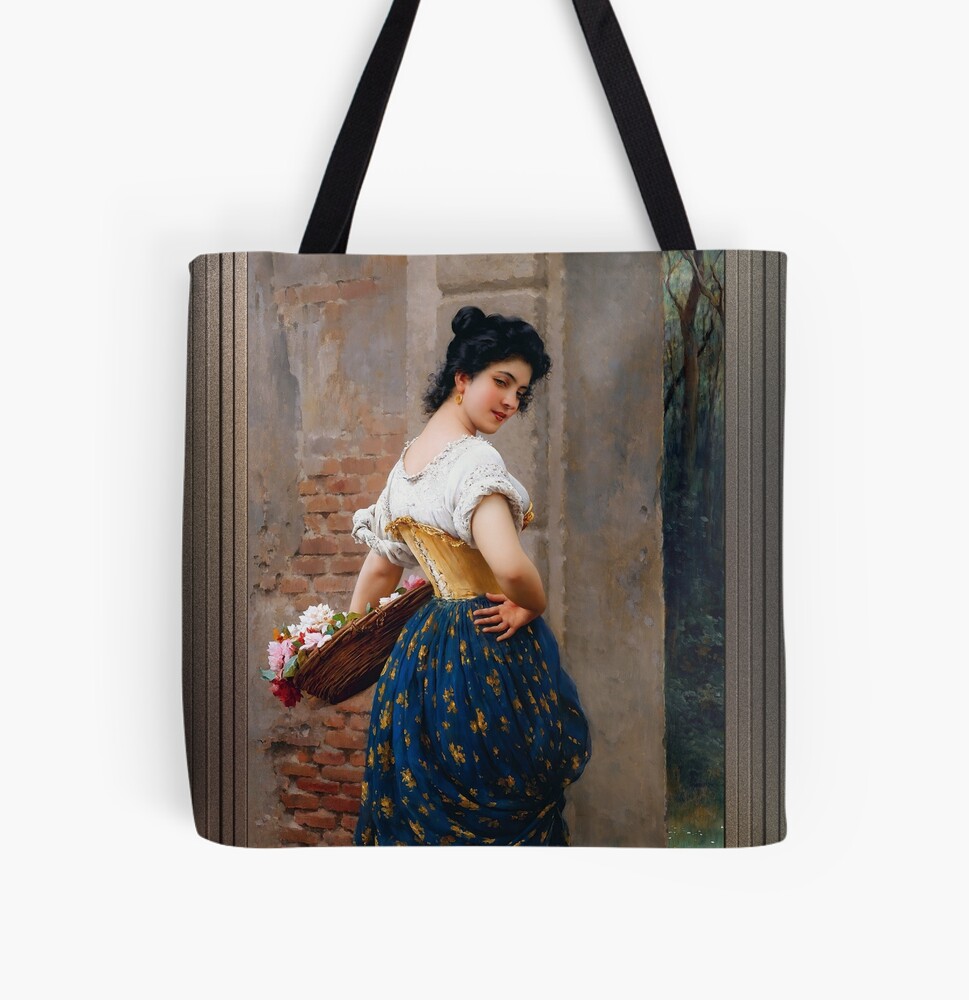
Ffigur canolog y paentiad hwn yw menyw ifanc wedi'i gwisgo mewn gwisg draddodiadol, sy'n gain ac yn syml. Mae hi'n cael ei dangos o ongl fach, gyda'i chorff yn troi tuag at y gwyliwr, ond cyfeiriodd ei syllu ychydig dros ei hysgwydd, gwahodd y gwyliwr i'w byd. Mae wyneb ifanc y fenyw wedi'i fframio gan dywyllwch, gwallt cyrliog, sydd wedi'i steilio mewn tonnau meddal sy'n rhaeadru i lawr at ei gwddf. Mae ei mynegiant yn dyner ond yn ddeniadol, gydag awgrym o chwilfrydedd a gras sy'n tynnu sylw'r gwyliwr.
Mae ei gwisg yn cynnwys blows wen gyda manylion les cywrain o amgylch y wisgodd, gan gynnig cyferbyniad cain i'r sgert las ddofn y mae'n ei gwisgo. Y sgert, wedi'i addurno â motiffau blodau aur, bustlau tuag allan, creu ymdeimlad o symudiad. Mae gwead cyfoethog y ffabrig yn cael ei ddarlunio gyda realaeth ryfeddol, rhoi ymdeimlad i’r gwyliwr o bwysau’r ffabrig a’r ffordd y mae’n rhyngweithio â’r golau. Mae cyferbyniad y blows golau a'r sgert las tywyll yn amlygu ffurf y ffigwr wrth greu cydbwysedd trawiadol yn y cyfansoddiad..
Yn ei llaw dde, mae'r forwyn yn dal basged gwiail wedi'i llenwi ag amrywiaeth o rosod. Mae'r fasged wedi'i rendro'n ofalus, arddangos gwead naturiol y deunydd gwehyddu. Y blodau, yn bennaf mewn arlliwiau o binc a gwyn, ychwanegu byrst o liw i'r olygfa a gwella'r ymdeimlad o ffresni a bywyd. Mae'n ymddangos bod y rhosod yn symbol o burdeb, harddwch, ac efallai ymdeimlad o ddiniweidrwydd ieuenctid, tra bod eu lleoliad tyner yn y fasged yn cyfleu ceinder naturiol.
Mae hosanau coch ac esgidiau brown y gwrthrych yn darparu cyferbyniad ychwanegol yn erbyn arlliwiau meddalach ei gwisg, seilio'r ffigwr yn yr olygfa tra'n tynnu sylw at ei chorff isaf. Y ffordd y mae'r artist wedi dewis darlunio ei choesau, gyda choch llachar yr hosanau a symudiad cynnil ei cherddediad, yn trwytho'r cyfansoddiad ag egni bywiog sy'n ei atal rhag teimlo'n statig.
Y Tir a'r Cefndir
Mae cefndir y paentiad yr un mor gymhellol, er ei fod yn parhau i fod yn eilradd i'r prif ffocws ar y forwyn. Mae'r dirwedd yn awgrymu gwladaidd, amgylchedd gwledig gyda'i arlliwiau tawel o bridd a gwyrddni. Saif wal gerrig i'r chwith o'r forwyn, wedi'i orchuddio'n rhannol â haen o eiddew, sy'n gwella'r gosodiad naturiol. Mae'r wal yn ymddangos yn hen, gydag olion amser yn amlwg yn ei friciau hindreuliedig. Mae'r artist wedi dal gwead bras y brics yn fanwl iawn, gwneud iddynt deimlo'n gyffyrddol a dilys.
Y tu hwnt i'r wal gerrig, mae'r dirwedd yn pylu'n feddal, gardd wyrdd neu olygfa goedwig, sy'n creu cysylltiad cytûn rhwng y forwyn a'i hamgylchedd. Mae'r golau sy'n hidlo trwy'r coed yn taflu cysgodion brith ar draws y ddaear, gan awgrymu mai'r amser o'r dydd yw naill ai ben bore neu hwyr yn y prynhawn, pan fydd golau'r haul yn gynnes ac yn euraidd. Mae’r gwyrdd meddal a’r browns yn y cefndir yn adlewyrchu’r lliwiau yng ngwisg y forwyn, gan ei chysylltu ymhellach â byd natur.
Mae cyfansoddiad cyffredinol y paentiad yn tynnu sylw'r gwyliwr at y forwyn yn y blaendir, tra bod y cefndir yn parhau i fod yn dawel, lleoliad tawel nad yw'n cystadlu am sylw. Y byd naturiol, ei ddal mewn brwsh cain, yn gyflenwad perffaith i'r ffigwr dynol, gan atgyfnerthu thema perthynas gytûn rhwng dynolryw a natur.
Defnyddiau, Arddull, a Thechneg
Mae meistrolaeth Eugen von Blaas ar beintio olew yn amlwg yng nghyfoeth y gweadau a’r defnydd medrus o olau a chysgod.. Mae ei sylw i fanylion yn rhyfeddol, yn enwedig wrth rendro'r ffabrigau a'r rhosod yn y fasged. Mae pob petal rhosyn wedi'i beintio'n ofalus iawn, gyda chysgod cynnil sy'n rhoi ansawdd difywyd i'r blodau. Mae chwarae golau ar groen a dillad y forwyn yn dangos ymhellach allu’r artist i ddal arlliwiau golau, creu ymdeimlad tri dimensiwn o gyfaint yn y paentiad.
Mae arddull y paentiad yn glynu at egwyddorion realaeth glasurol, a oedd yn boblogaidd yn ystod y 19eg ganrif a dechrau'r 20fed ganrif. Y defnydd o feddal, mae lliwiau naturiolaidd a'r ffocws ar y ffurf ddynol gyda phortread ysgafn ond realistig o fanylion yn nodweddion nodweddiadol o'r symudiad hwn. Mae gallu Von Blaas i wneud plygiadau’r ffabrig a nodweddion cain wyneb y fenyw yn arddangos ei ddealltwriaeth ddofn o anatomeg a ffurf.
Mae naws y gwaith celf yn un o dawelwch a myfyrio tawel. Mae mynegiant tangnefeddus y forwyn a’r lleoliad tawel yn ennyn ymdeimlad o dawelwch, fel pe bai'r gwyliwr yn dyst i foment agos-atoch ym mywyd y gwrthrych. Mae'r artist yn dal momentyn byrlymus o harddwch, un sy'n ddiamser ac yn benodol i foment benodol mewn hanes, dwyn i gof hiraeth am symlach, ffordd fwy delfrydol o fyw.
Thema a Hwyliau
Mae thema waelodol y paentiad yn ymwneud â harddwch, natur, a phurdeb ieuenctyd. Y rhosod, fel symbolau o harddwch a chariad, gwasanaethu i atgyfnerthu'r syniadau hyn, tra bod mynegiant tangnefeddus ac ystum gosgeiddig y fenyw yn awgrymu ymdeimlad o foddhad a heddwch mewnol. Y lleoliad gwledig, gyda'i wyrddni tyner a'i olau naturiol, yn ehangu ymhellach thema cytgord rhwng dynoliaeth a natur. Mae naws y paentiad yn ysgafn, heddychol, ac yn llawn ymdeimlad o hiraeth am orffennol delfrydol.
Mae hwn yn atgynhyrchiad hen feistri celf ddigidol wedi'i ailfeistroli o ddelwedd parth cyhoeddus sydd ar gael fel a argraffu cynfas ar-lein.
Y greadigaeth gelfyddyd ddigidol hon, fel gyda'r holl waith celf sydd i'w gael ar wefan Xzendor7 ar gael i'w brynu ar-lein mewn amrywiaeth o fformatau deunydd gan gynnwys printiau cynfas, printiau acrylig, printiau metel, printiau pren, printiau wedi'u fframio, posteri, ac fel printiau cynfas wedi'u rholio mewn amrywiaeth o feintiau o 12 modfedd i 72 modfeddi yn dibynnu ar faint y gwaith celf gwirioneddol a'r siop argraffu ar alw y byddwch yn dewis prynu'r celf ohoni.
Mae’r gwaith celf hefyd ar gael ar ystod eang o ddillad dynion a merched, mygiau, totes, sgarffiau, llyfrau nodiadau a chyfnodolion a llawer o gynhyrchion addurno cartref.
Bio artist
Gwybodaeth Islaw sy'n Deillio o Wikipedia.org
Ganwyd ef yn Albano, ger Rhufain, i dad o Tyrolean a mam Eidalaidd. Roedd ei dad Karl, hefyd peintiwr, oedd ei athraw. Ei fam, Agnesina Auda, roedd yn ddynes Rufeinig dda i wneud. Symudodd y teulu i Fenis pan ddaeth Karl yn Athro yn Academi Fenis. Byddai'n paentio golygfeydd yn Fenis yn aml, ond hefyd portreadau a phaentiadau crefyddol.
Ymhlith ei weithiau mae The nuptial form in the sacristy; Bingo yn Campielo yn Fenis; Golygfa bypedau mewn ysgol; a La Ninetta. Y beirniad celf Luigi Chirtani, pan gafodd y paentiad ei arddangos yn y Mostra Nazionale di Venezia, ei ddisgrifio fel Hardd, gwenieithus, pert, caressed, glanhau, caboledig, golchdy mewn darlun gan Mr. Bledren, hoff bortreadwr uchelwyr Fenisaidd mawr, gwisgo mewn satins gala, gemwaith disgleirio, steiliau gwallt y cyfoethog.
Ei ddelweddau cyfnod lliwgar a braidd yn theatraidd o gymdeithas Fenisaidd, e.e. Ar y Balconi (1877; Casgliad Preifat), yn dra gwahanol o gymharu â phasteli cain ac ysgythriadau o'r cyrtiau, balconi a chamlesi Fenis fodern.
Eugene de Blas’ arddangoswyd paentiadau yn yr Academi Frenhinol, Cymdeithas Celfyddyd Gain, Oriel Newydd ac Oriel Arthur Tooth and Sons yn Llundain, a hefyd yn Oriel Gelf Walker yn Lerpwl