

Ein Mädchen mit einem Korb voller Rosen
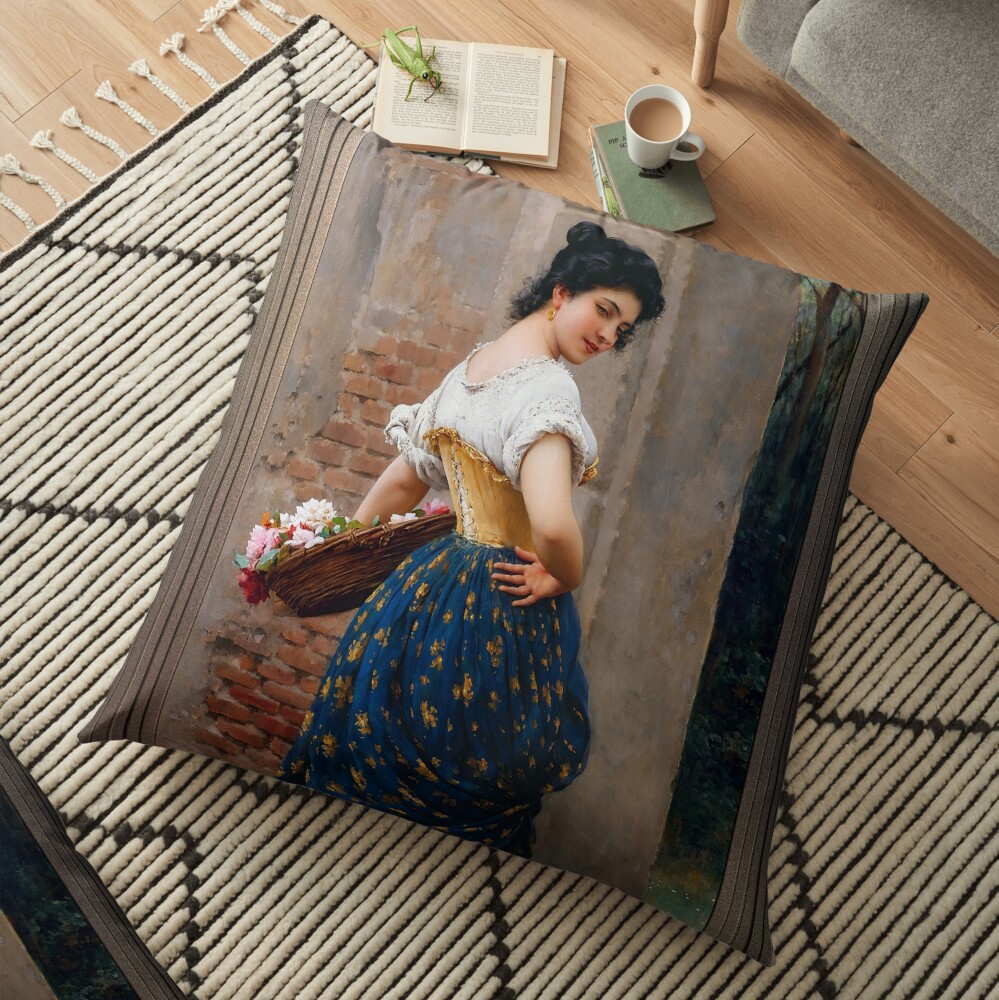
“Ein Mädchen mit einem Korb voller Rosen,” erstellt in 1900 vom renommierten italienischen Künstler Eugen von Blaas (1843 – 1931), ist ein bemerkenswertes Stück klassischen Realismus, das den Charme und die Anmut einer jungen Frau in einem friedlichen Moment des Landlebens einfängt. Von Blaas, bekannt für seine exquisiten Darstellungen von Frauen in klassischer Kleidung, oft gemalte Porträts von Figuren mit einer tiefen Verbundenheit zur Natur und zarter Schönheit. In diesem besonderen Gemälde, Dargestellt ist ein junges Mädchen, das einen Korb voller Rosen trägt, symbolisiert Reinheit und Schönheit. Die sanften Farben, fließende Stoffe, und die detaillierte Darstellung der Umgebung tragen zu einem Gefühl von Ruhe und Zeitlosigkeit bei.
Inhaltsverzeichnis
Das Thema und die Komposition
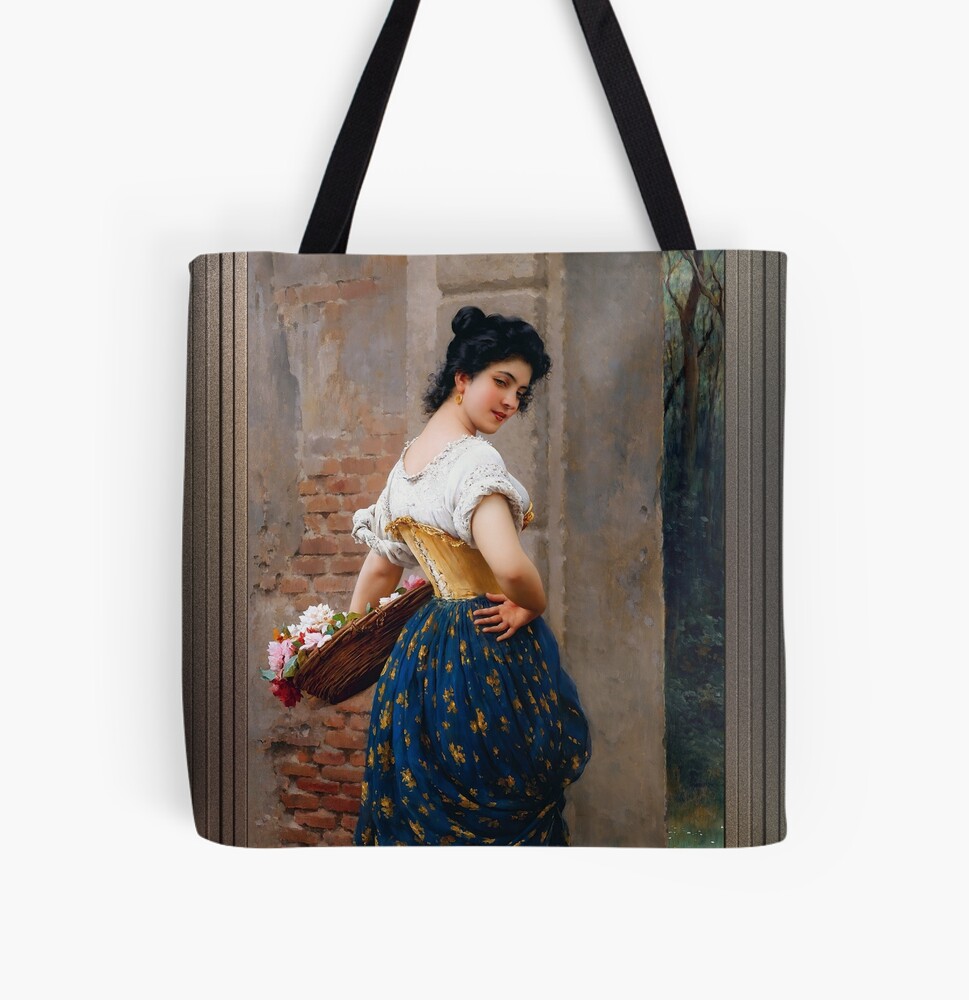
The central figure of this painting is a young woman dressed in a traditional gown, which is both elegant and simple. She is shown from a slight angle, with her body turned toward the viewer, but her gaze directed slightly over her shoulder, inviting the viewer into her world. The woman’s youthful face is framed by dark, curly hair, which has been styled in soft waves that cascade down to her neck. Her expression is gentle yet engaging, with a hint of curiosity and grace that draws the viewer’s attention.
Her attire is composed of a white blouse with intricate lace detailing around the neckline, offering a delicate contrast to the deep blue skirt she wears. Der Rock, adorned with gold floral motifs, billows outward, creating a sense of movement. Die reiche Textur des Stoffes wird mit bemerkenswertem Realismus dargestellt, Sie vermitteln dem Betrachter ein Gefühl für das Gewicht des Stoffes und die Art und Weise, wie er mit dem Licht interagiert. Der Kontrast der hellen Bluse und des dunkelblauen Rocks unterstreicht die Form der Figur und sorgt gleichzeitig für eine eindrucksvolle Ausgewogenheit in der Komposition.
In ihrer rechten Hand, Das Mädchen hält einen Weidenkorb voller Rosen. Der Korb ist sorgfältig gerendert, unterstreicht die natürliche Textur des gewebten Materials. Die Blumen, überwiegend in Rosa- und Weißtönen, Verleihen Sie der Szene einen Hauch von Farbe und verstärken Sie das Gefühl von Frische und Leben. Die Rosen scheinen Reinheit zu symbolisieren, Schönheit, und vielleicht ein Gefühl jugendlicher Unschuld, während ihre sanfte Platzierung im Korb eine natürliche Eleganz vermittelt.
The subject’s red stockings and brown shoes provide additional contrast against the softer tones of her outfit, grounding the figure in the scene while drawing attention to her lower body. The way the artist has chosen to depict her legs, with the bright red of the stockings and the subtle motion of her gait, imbues the composition with a lively energy that prevents it from feeling static.
Das Gelände und der Hintergrund
The background of the painting is equally compelling, though it remains secondary to the primary focus on the maiden. The landscape suggests a rustic, rural environment with its muted tones of earth and greenery. A stone wall stands to the left of the maiden, partially covered in a layer of ivy, which enhances the natural setting. The wall appears aged, with traces of time evident in its weathered bricks. The artist has captured the rough texture of the bricks in fine detail, making them feel tactile and authentic.
Beyond the stone wall, the landscape fades into a soft, verdant garden or forest scene, which creates a harmonious connection between the maiden and her environment. The light filtering through the trees casts dappled shadows across the ground, suggesting the time of day is either early morning or late afternoon, when the sunlight is warm and golden. The soft greens and browns in the background mirror the colors in the maiden’s attire, further linking her to the natural world.
The overall composition of the painting draws the viewer’s attention to the maiden in the foreground, while the background remains a calm, serene setting that does not compete for attention. The natural world, captured in delicate brushwork, serves as a perfect complement to the human figure, reinforcing the theme of a harmonious relationship between mankind and nature.
Materialien, Stil, und Technik
Eugen von Blaas’s mastery of oil painting is evident in the richness of the textures and the skillful use of light and shadow. His attention to detail is extraordinary, particularly in the rendering of the fabrics and the roses in the basket. Each rose petal is meticulously painted, with subtle shading that gives the flowers a lifelike quality. The play of light on the maiden’s skin and clothing further demonstrates the artist’s ability to capture the nuances of light, creating a three-dimensional sense of volume in the painting.
The painting’s style adheres to the principles of classical realism, which was popular during the 19th and early 20th centuries. Die Verwendung von Soft, naturalistic colors and the focus on the human form with a gentle yet realistic portrayal of details are hallmark traits of this movement. Von Blaas’s ability to render the folds of the fabric and the delicate features of the woman’s face showcases his deep understanding of anatomy and form.
The mood of the artwork is one of peacefulness and quiet reflection. The maiden’s serene expression and the tranquil setting evoke a sense of calm, as if the viewer is witnessing an intimate moment in the life of the subject. The artist captures a fleeting moment of beauty, one that is both timeless and specific to a particular moment in history, evoking a nostalgia for a simpler, more idyllic way of life.
Thema und Stimmung
The underlying theme of the painting revolves around beauty, Natur, and the purity of youth. Die Rosen, as symbols of beauty and love, serve to reinforce these ideas, while the woman’s serene expression and graceful pose suggest a sense of contentment and inner peace. The rural setting, with its gentle greenery and natural light, further enhances the theme of harmony between humanity and nature. The mood of the painting is light, peaceful, and imbued with a sense of nostalgia for an idealized past.
Dies ist eine remasterte digitale Kunst-Reproduktion alter Meister eines gemeinfreien Bildes, das als verfügbar ist Leinwanddruck online.
Diese digitale Kunstschöpfung, Wie alle Kunstwerke, die auf der Xzendor7-Website zu finden sind, können sie online in einer Vielzahl von Materialformaten einschließlich Leinwanddrucken erworben werden, Acryldrucke, Metalldrucke, Holzdrucke, gerahmte Drucke, Plakate, und als gerollte Leinwanddrucke in verschiedenen Größen von 12 Zoll zu 72 Zoll, abhängig von der Größe des tatsächlichen Kunstwerks und dem Print-on-Demand-Shop, in dem Sie das Kunstwerk kaufen möchten.
Das Kunstwerk ist auch auf einer breiten Palette von Herren- und Damenbekleidung erhältlich, Tassen, Tragetaschen, Schals, Notizbücher und Tagebücher sowie viele Heimdekorationsprodukte.
Biografie des Künstlers
Info unten abgeleitet von Wikipedia.org
Er wurde in Albano geboren, in der Nähe von Rom, an einen Tiroler Vater und eine italienische Mutter. Sein Vater Karl, auch ein Maler, war sein Lehrer. Seine Mutter, Agnesina Auda, war eine wohlhabende Römerin. Die Familie zog nach Venedig, als Karl Professor an der Akademie von Venedig wurde. Er malte oft Szenen in Venedig, aber auch Porträts und religiöse Gemälde.
Zu seinen Werken gehören Die Hochzeitsform in der Sakristei; Bingo in Campielo in Venedig; Eine Puppenszene in einer Schule; und La Ninetta. Der Kunstkritiker Luigi Chirtani, als das Gemälde in der Mostra Nazionale di Venezia ausgestellt wurde, beschrieb es als schön, schmeichelhaft, hübsch, gestreichelt, gereinigt, poliert, Wäscherin in einem Gemälde von Mr. Blase, der beliebteste Porträtmaler großer venezianischer Aristokraten, in Gala-Satin gekleidet, glänzender Schmuck, Frisuren der Reichen.
Seine farbenfrohen und eher theatralischen Bilder der venezianischen Gesellschaft, z.B. Auf dem Balkon (1877; Privatsammlung), waren ganz anders als zarte Pastelle und Radierungen der Höfe, Balkon und Kanäle des modernen Venedigs.
Eugene de Blaas’ Gemälde wurden in der Royal Academy ausgestellt, Gesellschaft für bildende Kunst, Neue Galerie und Arthur Tooth and Sons Gallery in London, und auch in der Walker Art Gallery in Liverpool