

水の牧歌: ハンス・ザツカのロマンチックなビジョンの魅力を探る
水の牧歌 by ハンス・ザツカ (1859-1945) Pとしても知られています. ロンサール, ピエール・ド・ロンサール, またはH. Zabateriと彼はJosephBernardとして彼の作品の多くに署名しました, J. バーナード, あるいはバーナード・ザツカが販売できる作品数を制限する契約を破るというペナルティを回避するためだ。; ニンフの牧歌的なシーンで知られる有名なオーストリアの画家でした, 妖精, そしてロマンチックな風景, しばしば繊細な憂鬱と魅惑の感覚が染み込んでいる.
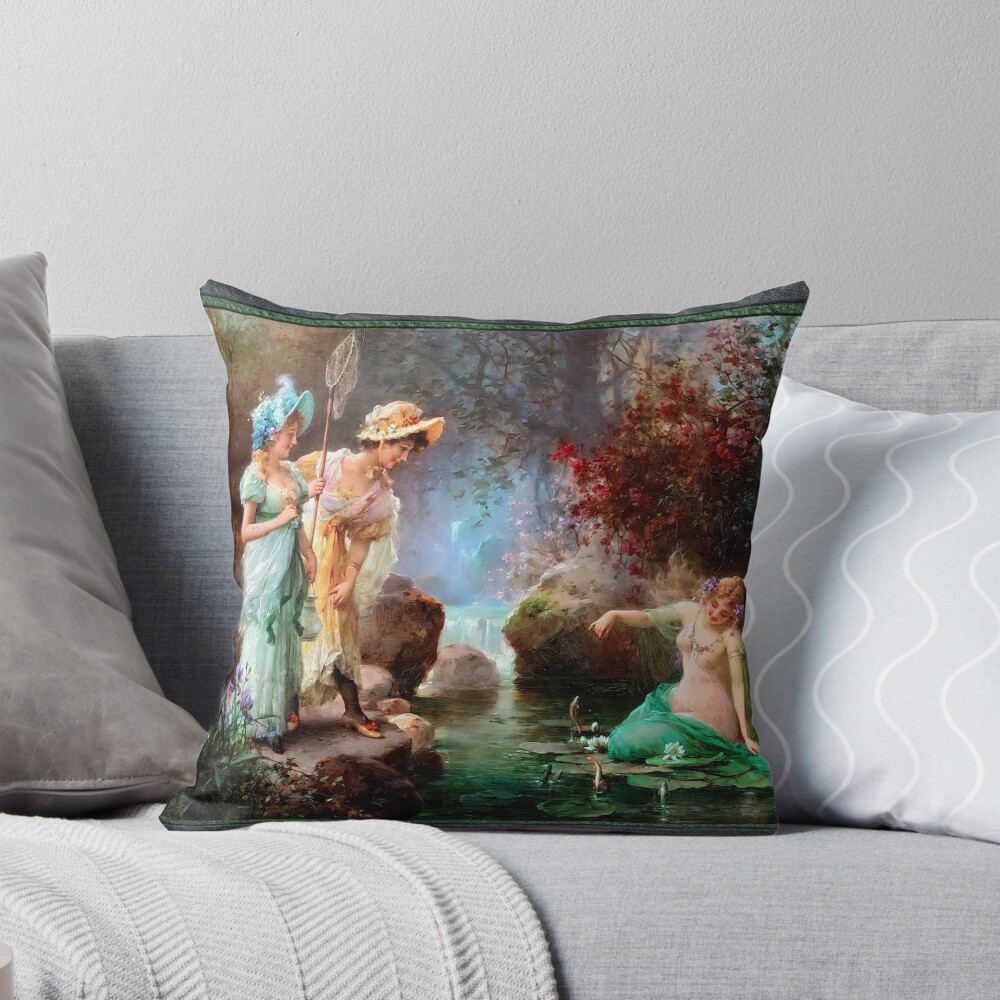
“水の牧歌,” この署名スタイルの例, 見る者を人里離れた森のプールに連れて行き、現実とファンタジーがぼやけます。. この絵は単なる自然の描写ではありません; それは憧れの探求です, 観察, そしてまだ見ぬ世界の魅力. ザツカの細部へのこだわり, 彼の光と色の熟練と組み合わされて, 熟考を促す魅惑的な雰囲気を作り出します.
目次
構成ハーモニー & 物語の提案
構成は、中央の水たまりを中心に注意深く構成されています。, 物理的および比喩的な焦点の両方として機能する. 2人の若い女性, 19世紀後半のファッショナブルな服装を着ている, 土手の上に立つ, 彼らの視線は、深層から現れたニンフまたは水の精霊に釘付けになっていました。.
これらの図形を配置すると、視覚的に明確な三角形が作成されます。, キャンバス全体に目を誘導し、人間の世界と神話の領域の間に物語の緊張感を確立する. 背景には葉が密生しています, 奥行きと隔絶感を生み出す, 中心的なアクションの枠組みを作りながら. 小さな滝がプールに流れ落ちます, シーンに動きと聴覚的な暗示を追加する.
数字: 観察 & エンチャント
二人の女性は驚くほど詳細に描写されています, 好奇心と驚きが入り混じった彼らの表情. 一人は虫取り網を持っている, 自然標本を早期に追求することを示唆, もう一方はわずかに前かがみになる, 彼女は穏やかな質問のしぐさで手を上げた. 彼らの衣服(繊細な装飾が施された明るい色のドレス)は、その時代のファッションを反映しているだけでなく、全体的な軽さと優雅さの感覚にも貢献しています。.
ニンフ, 部分的に水に浸かっている, 幻想的な美しさで描かれています. 彼女の流れる髪, 花で飾られた, 周囲の葉とシームレスに調和します. 彼女のポーズは羽化の瞬間を示唆しています, まるで深海から這い上がってきたか、あるいは水面下に戻ろうとしているかのように. 彼女は岸辺の女性たちに手を差し伸べる, 2つの世界の間に微妙なつながりを生み出す.
光と色: ロマンチックなパレット
ザツカの光と色の使い方は、絵の雰囲気を確立する上で重要です. 現場は柔らかな光に包まれる, 木々の間から差し込む拡散光, 水や葉にまだら模様を作る. 温かみのある色調 - ゴールド, 黄色, と緑 – 前景を支配します, 一方、より涼しい青と紫は、プールと背景の森のより深い窪みを描写するために使用されます。. このコントラストにより奥行き感が増し、神秘的な雰囲気を醸し出します。. アーティストは巧みに利用する Chiaroscuro, 光と影の劇的なコントラストを使用して重要な要素を強調し、ドラマの感覚を生み出す. 全体的なパレットはロマン主義の特徴です, 厳密な現実主義よりも感情と主観的な経験を強調する.
植物の詳細 & 環境ストーリーテリング
数字を超えて, ザツカの絵画は植物の細部への素晴らしい理解を示しています. さまざまな種類の花や葉が正確に描写されています, シーンの豊かさと信頼性を高める. 野生の花 – アイリスの存在, ユリ, などの繊細な花々 – 牧歌的な環境を強調し、人間の介入が及ばない場所を示唆しています. プールを囲む生い茂った植物が囲い込みのような感覚を生み出します, 人物を外界からさらに隔離する. 環境の細部への配慮は単なる装飾ではありません; それは絵全体の物語に大きく貢献します, 自然と神話が絡み合う隠れた聖域を示唆しています。.
ザツカの芸術的遺産 & ロマンチックファンタジーの魅力
“水の牧歌” ロマンチックなビジョンで想像力を魅了した芸術家としてのザツカの永遠の魅力を体現しています。. 彼の絵画は、日常からの逃避を求める鑑賞者の共感を呼びます。, 美と魅惑が至高の世界を垣間見ることができます。. ザツカの作品は生前非常に人気があった, その技術力は高く評価され続けています, 刺激的な雰囲気, そして時代を超えた自然のテーマ, ファンタジー, そして人間の憧れ. この絵画の根強い人気は、日常を超えたものとのつながりを求める普遍的な願望を物語っています。ザツカはその切望を雄弁にキャンバスに表現しました。.
アーティスト略歴の由来 Wikipedia.org
ハンス・ザツカは時々Pとして知られています. ロンサール, ピエール・ド・ロンサール, またはH. バッテリー, ジョセフ・バーナードとして彼の作品の多くに署名しました, J. バーナード, またはBernardZatzka.
Zatzkaの膨大な数の仮名の目的は、販売できるアートワークの量を制限する契約違反のペナルティを回避することでした。.
これにより、一部のアートデータベースでは、仮名ジョセフバーナードの下でのザツカの作品と同じ名前のフランスの彫刻家が混同されています。.
ハンス・ザツカは 8 行進 1859 ウィーンで. 彼の父バルトロマウスは建設労働者でした, 彼の母親はマリー・カルピシェク・ザツカでした.
間 1877 そして 1882, 彼は芸術アカデミーで学びました, クリスチャン・グリーペンケルの下で, カール・ウルツィンガー, とカールフォンブラース.
Zatzkaは、教会やその他の機関向けのフレスコ画を制作することで生計を立てることができました。.
に 1885, Zatzkaは、KurhausBadenで天井フレスコ画TheNaiadofBadenの作成を依頼されました.
Zatzkaの作品の多くは、オーストリアのさまざまな教会に捧げられた宗教画や祭壇画でした。.
しかしながら, 彼は女性の絵でもっと知られています, 妖精, と他の幻想的なシーン.
頻繁, 彼はリヒャルト・ワーグナーの作品とグリム兄弟のおとぎ話からインスピレーションを得ました.
19世紀後半から20世紀初頭に, Zatzkaによるいくつかの作品が写真に撮られ、商業的で収集可能なポストカードになりました.
1920年代, Zatzkaのスタイルは、ヨーロッパ全体で選ばれる装飾になりました. 加えて, 過去30年間はZatzkaの復活を開催しました.