

Allegory of Peace and War c1776
Allegory of Peace and War, created in 1776 by the Italian painter Pompeo Batoni (1708 – 1787), is an exemplary work of the Rococo style, showcasing the artist’s mastery in blending classical themes with an elegant and refined visual approach. Batoni was renowned for his portraits and allegorical works, and this particular painting, rich in symbolism, captures the dual forces of peace and war, two contrasting forces often depicted in classical art. In this painting, Batoni explores the delicate balance between these two states of existence, utilizing figures, attire, and props to represent the complexities and tensions between the martial and pacifist realms.
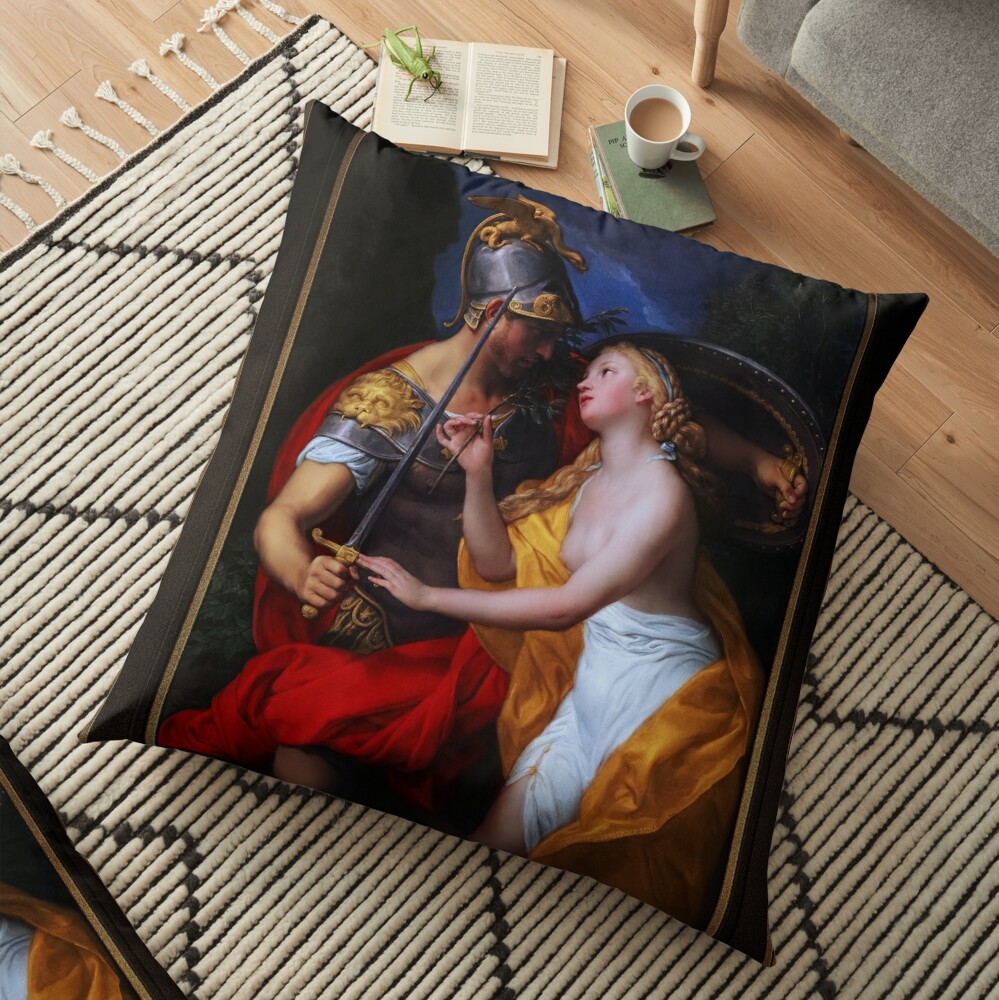
Table of Contents
The Theme and Mood
The primary theme of the artwork is the allegorical representation of two contrasting concepts, Peace and War, depicted through two figures engaging in a delicate interaction. The figures of Peace and War are not simply opposing forces; they embody the broader philosophical conflict between order and chaos, harmony and discord, that defined the political and social context of the late 18th century. The scene is charged with symbolic meaning, and the emotional tenor is a mixture of intensity and tension. The mood suggests a calm moment of interaction between two powerful entities, one representing the calm, serene nature of peace, and the other exuding the fierceness and aggression of war.
The overall atmosphere of the painting is dynamic yet balanced, as the figures are presented in a visually harmonious composition. The soft, glowing light that illuminates the figures lends a serene quality to the scene, while the dark, moody backdrop contrasts with the brightness of the figures, emphasizing their emotional distance. Despite their differences, Peace and War are shown in close proximity, their interaction suggesting that both forces are inseparable, forever in dialogue, forever influencing each other.
The Figures
In the painting, the figure of War is represented as a muscular, armored soldier adorned with a bronze helmet and a red cape, a traditional representation of military power and aggression. His posture is dominant, yet his expression seems to reflect a moment of hesitation, as he gazes upon the figure of Peace. The warrior’s sword and shield are held loosely, as if he is momentarily setting them aside. His body language indicates a reluctant engagement, a symbolic representation of the internal conflict faced when war collides with the desire for peace.
Peace, in contrast, is portrayed as a serene, graceful woman, her attire flowing and gentle. She wears a white dress, with a yellow drapery wrapped around her figure. Her expression is calm, almost wistful, as she gazes into the eyes of the warrior. In her right hand, she holds a branch of olive, an ancient symbol of peace, while her left hand rests on a shield, perhaps symbolizing the protection she offers, yet indicating that even peace cannot exist without the threat of war. The contrast between the two figures is palpable, as the softness of Peace’s form and the intensity of War’s armor demonstrate the delicate balance between the forces they represent.
The Objects and Symbols
The objects present in the painting carry rich symbolic weight. The soldier’s shield and sword are iconic tools of war, emblematic of violence, conflict, and defense. Yet, they are not wielded aggressively in the scene, but held in a passive manner, which indicates the moment of suspension between the two states. Peace’s olive branch, on the other hand, serves as a clear symbol of reconciliation, diplomacy, and hope, representing the ideal that, despite the prevalence of war, there remains an opportunity for resolution.
The shield that Peace rests her hand upon could symbolize the protection that comes with peace, yet the very fact that the shield is an object of defense also suggests that peace is always at risk of being disrupted by war. The juxtaposition of the two figures and their respective symbols, Peace’s olive branch and War’s armor—serve as a visual metaphor for the constant negotiation between the two forces.
The Terrain and Background
The terrain in Batoni’s “Allegory of Peace and War” is primarily dark and indistinct, with the background consisting of a moody sky and blurred foliage, emphasizing the figures in the foreground. The dramatic lighting draws the viewer’s attention to the figures of Peace and War, while the background remains in shadow, creating a sense of uncertainty and instability. The ominous sky could be interpreted as symbolizing the tension and unrest that often accompanies the clash of opposing forces.
The choice of a dark and stormy background sets the tone for the narrative of the piece, suggesting that while peace may shine brightly in the foreground, it is always under threat from the looming presence of war. This backdrop amplifies the emotional intensity of the scene, as the viewer is reminded that these two forces, though depicted in a moment of stillness, are never far apart.
The Style and Technique
Pompeo Batoni’s mastery of light and shadow in this work demonstrates his expertise in chiaroscuro, a technique that emphasizes the contrast between light and dark. The subtle gradation of light across the figures’ forms, especially in the tender faces of both figures, lends a sense of three-dimensionality and realism to the painting. The detailing of the armor and clothing of the soldier, as well as the delicate textures of the fabric of Peace’s gown, are testament to Batoni’s meticulous attention to detail.
The smooth, polished surfaces and the ethereal quality of the figures’ faces enhance the emotional pull of the painting, making the viewer feel the personal connection between the figures. The soft, glowing quality of the light on Peace’s face contrasts with the more muted tones on the figure of War, drawing a clear distinction between the two states they represent.
Conclusion
“Allegory of Peace and War” by Pompeo Batoni is a powerful, visually arresting painting that encapsulates the conflict between two eternal forces. Through the interaction of the warrior and the peaceful figure, Batoni explores the nature of war and peace, offering a glimpse into the balance of power, humanity, and diplomacy. The painting is an intricate study of light, symbolism, and allegory, with the figures and their surroundings carefully composed to convey the weight of their respective ideals. The tension in the mood of the artwork invites reflection on the inevitability of conflict and the fragile beauty of peace.
Artwork Backstory
Though peace and war are at odds; peace conquers war as it should and in this allegorical piece, we see that peace as won out.
Here peace is represented by an alluring attractive young woman that is partially cover in a white garment that hangs from her right shoulder and around her waist and thighs; with a gold colored garment on top of that.
War on the other hand is shown in full battle gear with a metal helmet that has a bronze dragon on the top and ram accents on the side; and which is complemented with large oval shield attached to his left arm that is partially wrapped around the young woman’s head and back.
He is also wearing a white short sleeve tunic undergarment over which he wears a leather body armor breast plate, along with a leather tunic from his waist to his thighs; and metal armor shoulder plates that are in two sections, and that have a brass emblem of a fanged lion on the top shoulder portions.
Wrapped around war is a large red garment and he is also carrying a steel sword with a brass handle in his right hand that peace is holding at bay as she presents him with an olive branch; while they look into each others eyes.
In the background we can see a large rock face on the left with some tree branches on it’s top and green plants growing from an out cropping of rocks just behind war; and more trees in the distance behind peace.
This is a remastered digital art old masters reproduction of a public domain image that is available as a canvas print online.