

Chiron kennir Achilles í boganum: Nýklassískt meistaraverk
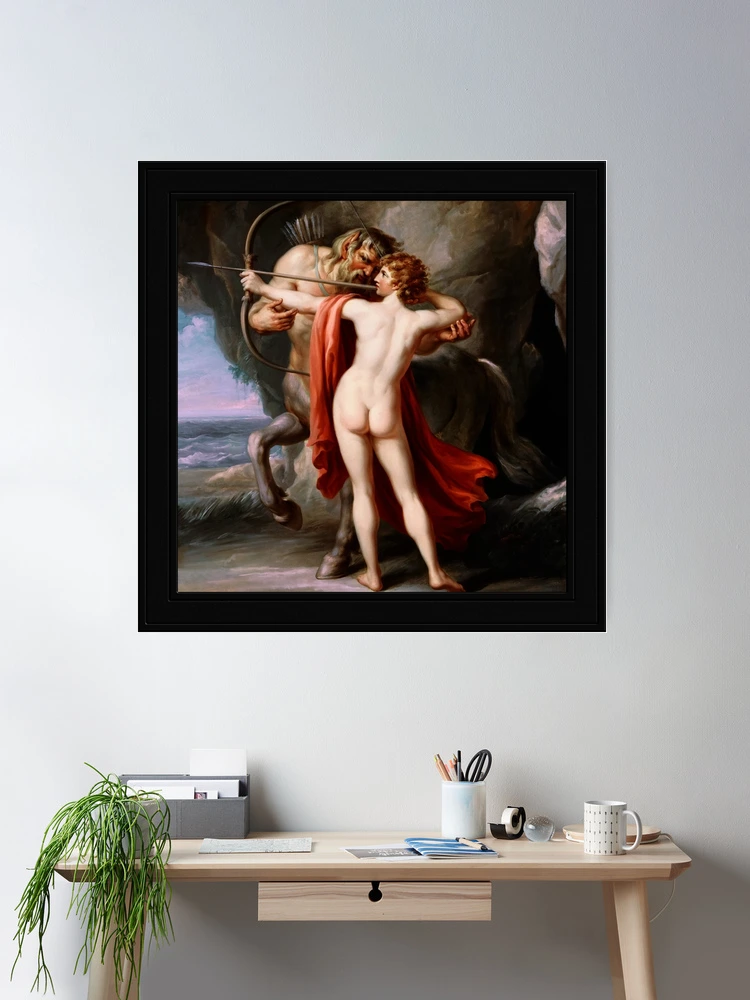
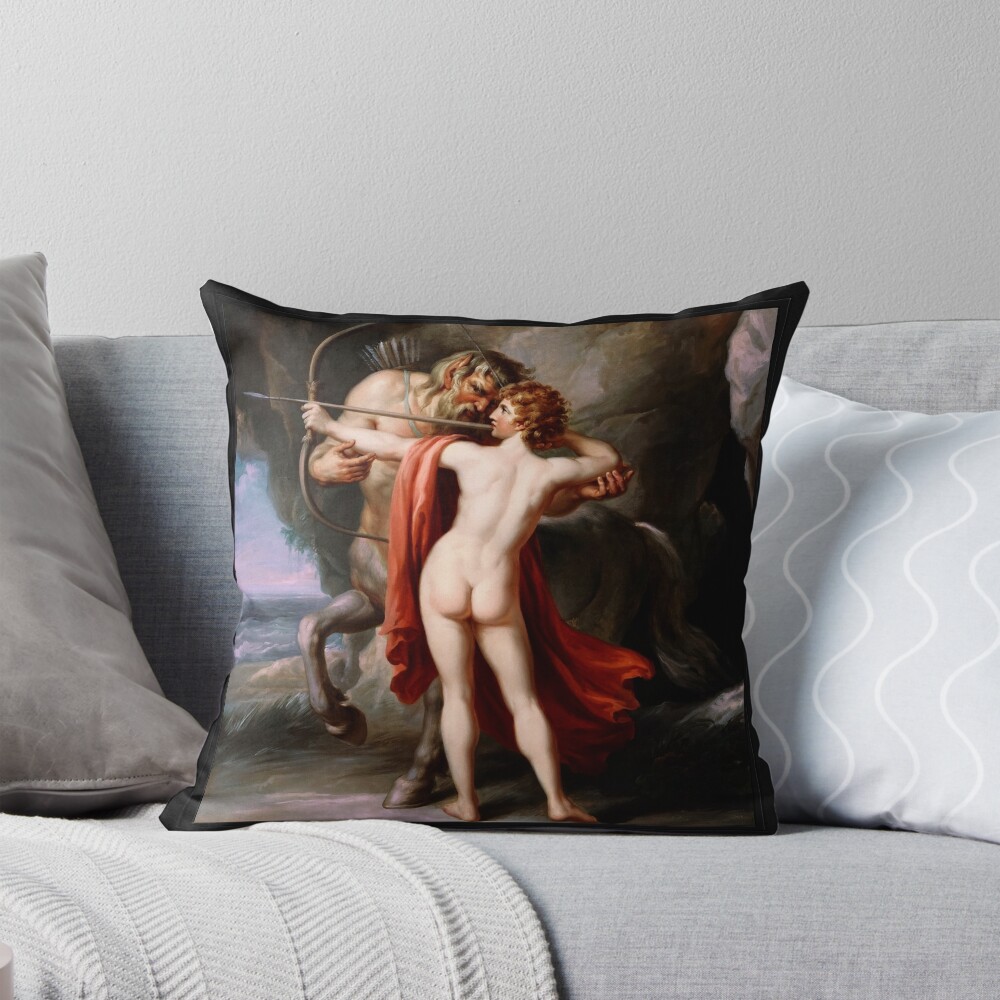
Giovanni Battista Cipriani „Chiron Instructing Achilles in the Bow,“ málað í kring 1776, er grípandi dæmi um að seint rókókó breytist yfir í nýklassík. Listaverkið lýsir mikilvægu augnabliki úr grískri goðafræði - kentárinn Chiron sem kennir ungu hetjunni Akkillesi bogfimi.. Þessi sena, ríkur af táknmáli og sýndur af nákvæmum smáatriðum, er dæmi um leikni Cipriani í tónsmíðum, Líffærafræði, og dramatísk lýsing. Það er sem stendur í safni Yale Center for British Art í New Haven, Connecticut.
Efnisyfirlit
Samsetningaruppbygging & Frásagnarfókus
Styrkur málverksins liggur í vandlega smíðaðri pýramídasamsetningu þess. Chiron, kraftmikil centaur mynd, myndar toppinn, töfrandi vöxtur hans ræður ríkjum á vettvangi. Akkilles, staðsett fyrir neðan og örlítið til hliðar, skapar kraftmikið mótvægi. Fyrirkomulagið leiðir auga áhorfandans í gegnum frásögnina: frá útréttum handlegg Chirons sem heldur í bogann, til Akkillesar’ einbeitt augnaráði, og að lokum niður að fjarlægu sjávarmyndinni sem gefur kyrrlátt bakgrunn. Þessi vísvitandi uppbygging leggur áherslu á yfirfærslu þekkingar og færni milli leiðbeinanda og nemanda. Cipriani forðast þrengsli; í staðinn, hann nýtir neikvætt pláss innan grýtta grotunnar til að draga fram myndirnar og samspil þeirra.
Tölurnar: Chiron & Akkilles
Chiron, lýst sem vöðvastæltum centaur með virðulegan svip, felur í sér visku og reynslu. His posture is one of gentle guidance rather than forceful instruction. He holds the bow with practiced ease, demonstrating its proper form for young Achilles. The artist’s rendering of Chiron’s anatomy showcases his skill in depicting musculature; þó, it avoids excessive exaggeration, maintaining a sense of classical restraint. The centaur’s grey-toned skin contrasts with the vibrant red drapery that partially covers his flanks, adding visual interest and highlighting his hybrid nature – part man, part beast.
Akkilles, portrayed as a youthful figure in partial nudity, is clearly engaged in learning. His body is rendered with idealized proportions characteristic of Neoclassical art. He leans slightly forward, intently observing Chiron’s demonstration. The red cloth draped around his shoulders adds warmth and color to the composition, while also hinting at his future heroic status. His expression conveys a mixture of concentration and eagerness, suggesting a deep desire to master the skill being taught.
Stilling & Andrúmsloft
The setting is an enclosed grotto or cave, partially obscured by rocky formations. The backdrop reveals a tranquil seascape with a soft pink sky, indicating either dawn or dusk. This naturalistic background provides a sense of depth and perspective while also contrasting with the ruggedness of the immediate surroundings. Cipriani’s use of light and shadow is particularly effective in creating atmosphere. The grotto is bathed in a diffused, warm light that illuminates the figures without being harsh. Skuggarnir í hellinum bæta við leyndardómi og auka dramatísk áhrif atriðisins.
Listrænn stíll & Áhrif
Stíll Cipriani endurspeglar umskiptin frá rókókó yfir í nýklassík sem var ríkjandi á hans tíma. Á meðan haldið er í glæsileika og skreytingar sem einkennir rókókó, málverkið sýnir vaxandi áherslu á klassísk form, jafnvægi samsetning, og aðhaldssamar tilfinningar – einkenni nýklassískrar fagurfræði sem er að koma fram. Áhrif listamanna eins og Jacques-Louis David eru lúmsk til staðar í skýrleika línunnar og hugsjónamynda.. Hins vegar, Cipriani heldur sínum sérstaka stíl með næmri meðferð sinni á ljósi og litum, and his ability to convey a sense of quiet intimacy within a grand mythological narrative.
Litapalletta & Tækni
The painting’s color palette is dominated by warm tones – reds, brúnir, and golds – which contribute to the overall feeling of warmth and serenity. The artist skillfully uses chiaroscuro (andstæða ljóss og dökks) to model the figures and create depth. Cipriani’s brushwork is smooth and refined, demonstrating his technical proficiency. He employs subtle gradations of color to render skin tones and drapery with remarkable realism. Close examination reveals a meticulous attention to detail in every aspect of the painting, from the texture of Chiron’s fur to the folds of Achilles’ garment.
Táknmál & Túlkun
Beyond its narrative function, “Chiron kennir Achilles í boganum” is rich in symbolic meaning. Chiron represents wisdom, mentorship, and the transmission of knowledge. Achilles embodies potential, æsku, and the pursuit of excellence. The bow and arrow symbolize skill, precision, and ultimately, heroic destiny. The setting itself – a secluded grotto – can be interpreted as a place of learning and transformation. The painting serves as an allegory for education, personal growth, and the preparation for future challenges.
Information Derived From Wikipedia.org
This is a painting of the two characters of Greek Mythology, Chiron a Centaur – a being with the upper body of a man and the lower body of a horse; and Achilles the strongest warrior and hero of the Greek army during the Trojan War.
Chiron was the son of the Titan Cronus and the Oceanid (water nymph) Philyra, the daughter of the Titans Oceanus and Tethys; and as a result was different from most Centaur that were wild creatures, as he was kind civilized, kind and intellegent.
Chiron was abandoned by his mother soon after she gave birth to him, and some time later was found be the god Apollo who took care of him; teaching him the art of music, the lyre, archery, medicine and prophecy; while Apollo’s sister the goddess Artemis, trained him in the skill of archery and hunting.
This scene shows Chiron passing on his knowledge of the bow to Achilles by teaching him how to effectively use the bow near a cave by the seashore.
Þetta er lagfærð stafræn list af gömlum meistara eftirgerð af mynd í almenningseign.