

Enchanteresse: Un aperçu de la beauté exotique par Luis Ricardo Falero
Enchanteresse par Luis Ricardo Falero (1851-1896) était un peintre espagnol connu pour ses représentations de personnages idéalisés au sein de, décors souvent exotiques. Son travail explorait fréquemment les thèmes de la beauté, sensualité, et l'attrait des terres lointaines, reflétant les tendances orientalistes populaires prédominantes dans l'art européen du XIXe siècle. “Enchanteresse,” peint en 1878, illustre ces caractéristiques avec une clarté et une compétence technique remarquables. Le tableau présente une scène captivante représentant une jeune femme assise sur une structure architecturale ornée., évoquant un sentiment de mystère et de contemplation tranquille.
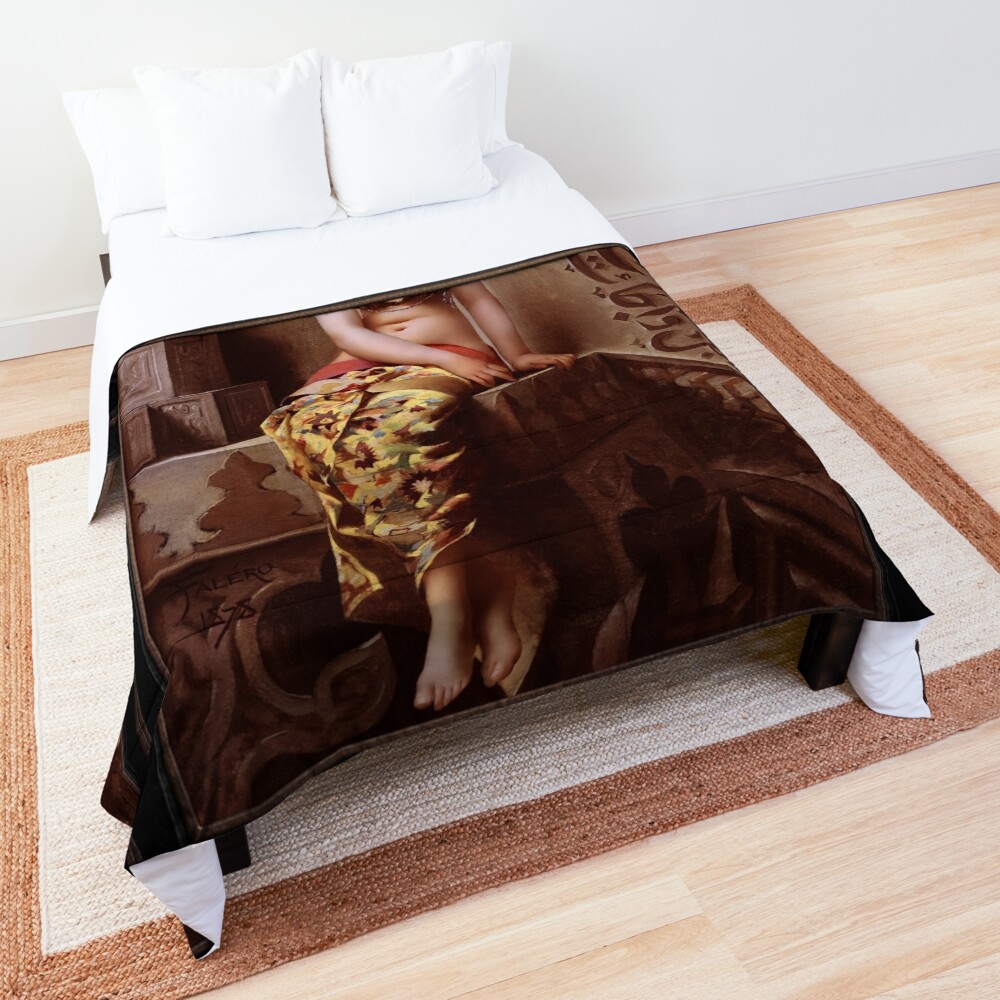
Table des matières
Éléments de composition & Paramètre
La composition est soigneusement structurée pour attirer le regard du spectateur vers le personnage central.. Falero utilise une disposition triangulaire, avec la femme formant le sommet et l'architecture environnante fournissant une base stable. Le décor semble être un espace intérieur, éventuellement dans un palais ou un temple, suggéré par les sculptures élaborées et les éléments décoratifs qui encadrent la scène de chaque côté. Ces détails architecturaux sont rendus avec une précision méticuleuse, mettant en valeur la maîtrise de la perspective de Falero et sa capacité à créer une impression de profondeur convaincante. L'arrière-plan est légèrement flou, mettant davantage l'accent sur la silhouette et l'isolant du milieu environnant. Cette technique crée une atmosphère intime, invitant le spectateur dans le monde privé de la femme.
La figure: Pose & Tenue
La jeune femme occupe la majorité de l'espace de la toile, attirer l'attention avec sa pose gracieuse et son regard captivant. Elle est assise d'une manière détendue mais prête, une jambe légèrement étendue alors qu'elle repose contre le rebord architectural. Son langage corporel suggère un état d'introspection tranquille ou peut-être un désir mélancolique.. La tenue vestimentaire du personnage contribue de manière significative à l’esthétique globale du tableau.. Elle porte un corsage révélateur orné de perles complexes et un châle fluide drapé sur ses genoux et ses épaules.. Le châle est orné de motifs floraux vibrants dans des tons de jaune, or, et brun, offrant un contraste saisissant avec son teint pâle. La combinaison de ces éléments crée une image à la fois séduisante et raffinée..
Palette de couleurs & Éclairage
L’utilisation de la couleur par Falero est magistrale, employing a warm and muted palette to create a sense of intimacy and tranquility. Earth tones – browns, ocres, and creams – dominate the scene, reflecting the natural materials of the architecture and complementing the woman’s skin tone. The vibrant colors of the shawl provide a focal point, drawing the eye and adding visual interest. Lighting plays a crucial role in shaping the mood of the painting. Un doux, diffused light source illuminates the figure from above, casting gentle shadows that accentuate her form and create a sense of depth. This lighting technique also contributes to the overall atmosphere of mystery and enchantment.

Expression du visage & Détails
The woman’s face is rendered with remarkable detail, capturer une expression subtile de mélancolie ou peut-être d'amusement tranquille. Ses yeux sont baissés, suggérant une introspection, tandis que ses lèvres sont légèrement entrouvertes dans un sourire énigmatique. L’attention portée aux détails par Falero s’étend aux cheveux de la femme, qui est coiffée de boucles élaborées et ornée de bijoux délicats. Le rendu des carnations est particulièrement remarquable, démontrant l'habileté de Falero à capturer les nuances de l'anatomie humaine et à transmettre un sentiment de réalisme.
Influences artistiques & Contexte
“Enchanteresse” reflète plusieurs tendances artistiques prédominantes au XIXe siècle. Le mouvement orientaliste, qui a gagné en popularité dans toute l'Europe, cherché à romantiser les cultures du Moyen-Orient et d'Afrique du Nord, les décrivant souvent à travers une lentille idéalisée. Falero’s painting aligns with this trend by depicting a woman in exotic attire within a richly decorated setting. aditionellement, the work demonstrates influences from Academic art, caractérisé par son accent mis sur les compétences techniques, représentation réaliste, et composition classique. Le détail minutieux, composition équilibrée, and refined aesthetic all point to Falero’s training within the traditional academic system.
Signature & Date
The painting is signed “Falero 1878” in elegant script at the bottom left corner, confirming its authorship and date of creation. This signature adds a layer of authenticity and historical significance to the artwork. The presence of the date provides valuable insight into the context within which the painting was created, reflecting the artistic trends and cultural values of the late 19th century.
Biographie de l'artiste dérivée Wikipedia.org
Falero est né à Grenade et a d'abord poursuivi une carrière dans la marine espagnole, mais a abandonné à la déception de ses parents; comme il a décidé de voyager à Paris, où il a étudié l'art, chimie et génie mécanique.
Pendant ses études en chimie et génie mécanique; il considérait les expériences qu'il devait mener trop dangereuses, l'amenant ainsi à concentrer son attention sur la peinture seule.
En conséquence, il est devenu un élève du portraitiste et orientaliste français Gabriel-Joseph-Marie-Augustin Ferrier (1847 – 1914). Après Paris, il a déménagé à Londres, où il a poursuivi ses études, et finalement réglé.
Falero avait un intérêt particulier pour l'astronomie et a incorporé des constellations célestes dans plusieurs de ses œuvres, tel que “Le mariage d'une comète” et “Étoiles jumelles”. Son intérêt et sa connaissance de l'astronomie l'ont également amené à illustrer les œuvres de Camille Flammarion.
Dans 1896, l'année de sa mort, Maud Harvey a poursuivi Falero pour paternité. La poursuite alléguait que Falero avait séduit Harvey alors qu'elle était 17, servant d'abord de femme de chambre, puis son modèle. Quand il a découvert qu'elle était enceinte, il l'a renvoyée.
Elle a gagné l'affaire et a reçu cinq shillings par semaine pour soutenir leur enfant. Falero est décédé au University College Hospital, Londres, à l'âge de 45
Les Monuments de Paris par Hubert Robert impression roulée.