

Goddess of Water
Goddess of Water by Russian Painter Konstantin Makovsky (1839 – 1915); spesjalisearre yn Russyske Histoaryske skilderijen dy't in idealisearre werjefte fan it Russyske libben yn 'e ôfrûne ieuwen sjen litte.
It skilderij “Goddess of Water” is a masterful depiction of the divine beauty and power of water through classical mythology. The artist’s rich use of color, dramatyske ferljochting, and careful attention to detail create a vivid and serene representation of the goddess of water as she is transported by swans across a vast oceanic expanse.
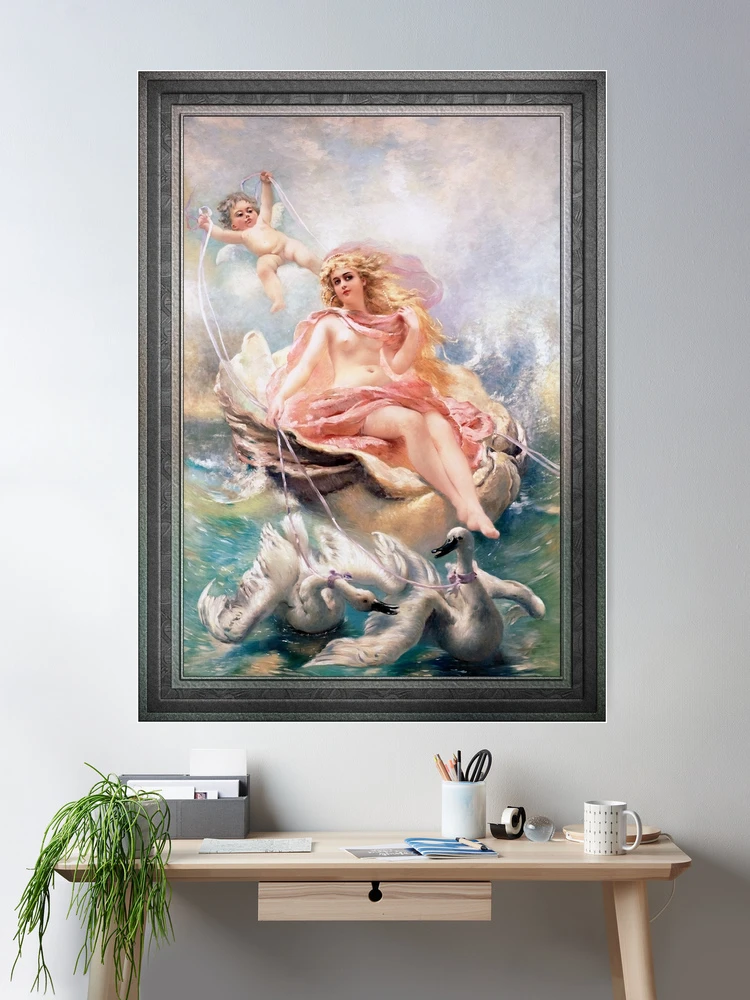
The central figure in the artwork is the goddess herself, a beautiful woman with flowing golden locks, her body partially draped in a pink and soft mauve sheer cloth that clings delicately to her form, revealing the curves of her body.
The goddess is seated serenely in a boat-like structure made of what appears to be soft seashells, floating on undulating waves, with a faint glow surrounding her, symbolizing her divine nature. Har gesicht, kalm en gearstald, carries an air of grace and timeless beauty, reinforcing the ethereal nature of her character.
Achter har, in cherubyske figuer, a child-like angel, is tethered to the goddess by ribbons, symbolizing a divine connection between the mortal and the immortal. This child, whose face expresses innocence and purity, seems to guide or assist in the goddess’s journey across the waters.
The angel holds onto ribbons that extend out into the air, tethering the goddess to the swans pulling her vessel. The gentle hands of the cherub grasp the flowing ribbons with precision, and his childlike features lend a sense of playful innocence to the otherwise tranquil scene.
The swans, regal and powerful, are the carriers of the goddess, their long necks extending gracefully through the scene, and their white feathers rendered with a soft, almost glowing light, enhancing their majestic appearance.
The swans pull the boat forward, seemingly in motion as the ripples of water, shown through the smooth, soft waves, reflect the calmness of the scene. The swans’ presence in mythology often symbolizes purity and spiritual grace, which complements the goddess’s serene and powerful nature.
The background of the painting is a vast and dreamy oceanic landscape, baden yn sêft, waarm ljocht, as if the sun itself is fading into the horizon. It wetter, although calm and peaceful, seems to ripple with the movement of the swans, adding life and a sense of motion to the otherwise still moment. The sky above is filled with soft, billowy clouds, reminiscent of a serene and timeless world where the goddess’s presence is natural and eternal.
The mood of the painting is peaceful, serene, and divine. The soft pastel colors used in the piece lend a sense of tranquility, while the glowing light surrounding the goddess and the angel enhances the mystical nature of the scene. There is a harmony in the painting that speaks to the balance of the elements—water, air, and earth—through the goddess’s gentle interaction with the swans, the water, and the sky.
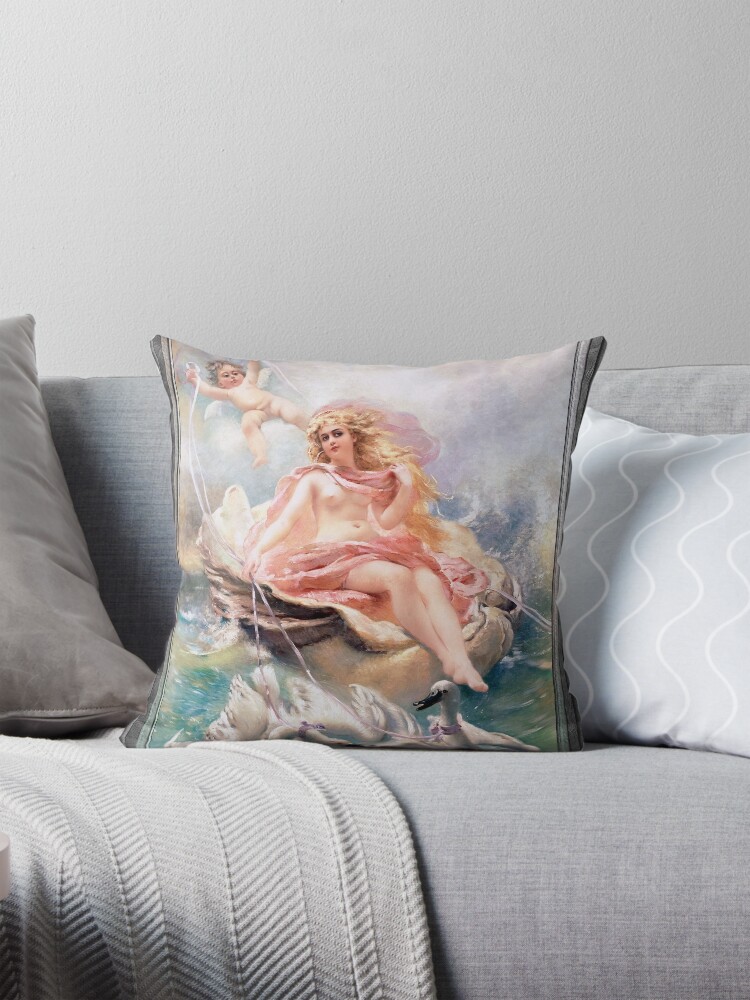
Makovsky’s mastery of classical techniques shines through in the detailed depiction of the figures, tekstueren, and natural elements. The soft texture of the goddess’s flowing hair, the delicate folds of her clothing, and the smoothness of the swans’ feathers all demonstrate his skill in bringing the ethereal into the visual realm. It ljocht, radiant atmosphere throughout the artwork communicates the theme of purity, godlikens, and the eternal cycle of nature.
The theme of water as a symbol of life, suverens, and fertility is prevalent in the painting. The goddess of water, accompanied by the cherubic guide and the swans, creates a powerful and harmonious image of nature’s beauty and divine intervention.
Water in mythological contexts often represents fluidity, feroaring, and the nurturing aspects of life, all of which are conveyed through the painting’s serene depiction of the goddess as she floats effortlessly across the waters.
This painting embodies the 19th-century Russian fascination with classical themes, blending mythological subjects with a refined and sophisticated approach to realism. It showcases a period of artistic exploration that was both romantic and idealized, drawing on ancient mythological figures to embody ideals of beauty, graasje, and divine connection with nature.
Ta beslút, “Goddess of Water” is a masterpiece that combines the beauty of nature with the divine, creating a serene, mystical atmosphere that is both timeless and transcendent. The detailed execution, the symbolic presence of the goddess, angel, and swans, en de sêfte, flowing colors make this piece a vivid representation of classical mythology, encapsulating the quiet power of water as an eternal, life-giving force.
Info hjirûnder ôflaat fan Wikipedia.org
Konstantin Makovsky wie in ynfloedrike Russyske skilder, oansletten by de “Peredvizhniki (Swalkers)”. In protte fan syn histoaryske skilderijen, lykas Beneath the Crown (1889) ek bekend as The Russian Bride's Attire en Before the Wedding, toande in idealisearre werjefte fan it Russyske libben fan eardere ieuwen. Hy wurdt faak beskôge as in fertsjintwurdiger fan akademyske keunst.
Konstantin Makovsky waard berne yn Moskou. Syn heit wie de Russyske keunstfiguer en amateurskilder, Yegor Ivanovich Makovsky. Syn mem wie in komponist, en hja hope dat har soan ienris yn har fuotstappen folgje soe. Syn jongere bruorren Vladimir en Nikolay en syn suster Alexandra waarden ek skilders.
Yn 1851 Makovsky gie yn 'e Moskouske Skilderijskoalle, Skulptuer en arsjitektuer wêr't hy de topstudint waard, maklik krije alle beskikbere prizen. Syn leararen wiene Karl Bryullov en Vasily Tropinin. Makovsky syn oanstriid ta romantyk en dekorative effekten kin ferklearre wurde troch de ynfloed fan Bryullov.
Hoewol't keunst wie syn passy, hy betocht ek hwat syn mem him dwaen woe. Hy sette ôf om komponisten te sykjen dêr't er nei ferwize koe, en gie earst nei Frankryk. Foar, hy hie altyd in leafhawwer fan klassike muzyk west, en harke nei in protte stikken. Hy woe faaks dat er de tune feroarje koe, of styl fan guon fan harren om se nofliker te meitsjen. Letter yn syn libben kaam it wier.
Yn 1858 Makovsky gie nei de Keizerlike Akademy fan Keunsten yn Sint Petersburch. Fan 1860 hy die mei oan de útstallings fan de Akademy mei skilderijen lykas Curing of the Blind (1860) en Agents of the False Dmitry deadzje de soan fan Boris Godunov (1862). Yn 1863 Makovsky en trettjin oare studinten holden in protest tsjin de ynstelling fan 'e Akademy fan ûnderwerpen út Skandinavyske mytology yn' e konkurrinsje foar de Large Gold Medal of Academia; allegear ferlieten de akademy sûnder in formeel diploma.
Makovsky waard lid fan in koöperaasje (artel) fan keunstners ûnder lieding fan Ivan Kramskoi, typysk produsearje Wanderers skilderijen op it deistich libben (Widdo 1865, Hjerringferkeaper 1867, ensfh.). Fan 1870 hy wie in oprjochter fan de Society for Travelling Art Exhibitions en bleau te wurkjen oan skilderijen wijd oan it deistich libben. Hy eksposearre syn wurk by sawol de Academia-eksposysjes as de Travelling Art Exhibitions of the Wanderers.
In wichtige feroaring yn syn styl barde nei it reizgjen nei Egypte en Servje yn 'e midden fan' e jierren '70. Syn ynteresses feroare fan sosjale en psychologyske problemen nei de artistike problemen fan kleuren en foarm.
Yn de jierren 1880 waard hy in modieuze skriuwer fan portretten en histoaryske skilderijen. Op de Wrâldtentoanstelling fan 1889 yn Parys krige er de Grutte Gouden Medalje foar syn skilderijen Death of Ivan the Terrible, It oardiel fan Parys, en Demon en Tamara. Hy wie ien fan 'e meast wurdearre en heech betelle Russyske keunstners fan' e tiid. In protte demokratyske kritisy beskôgen him as in renegaat fan 'e Wanderers’ idealen, produsearje (lykas Henryk Siemiradzki) opfallende mar ûndjippe wurken,[2] wylst oaren him sjogge as in foarrinner fan it Russyske ympresjonisme.
Makovsky waard fermoarde yn 1915 doe't syn hynstekoets rekke waard troch in elektryske tram yn Sint-Petersburch.