

Ceannard Balach Òg c1763
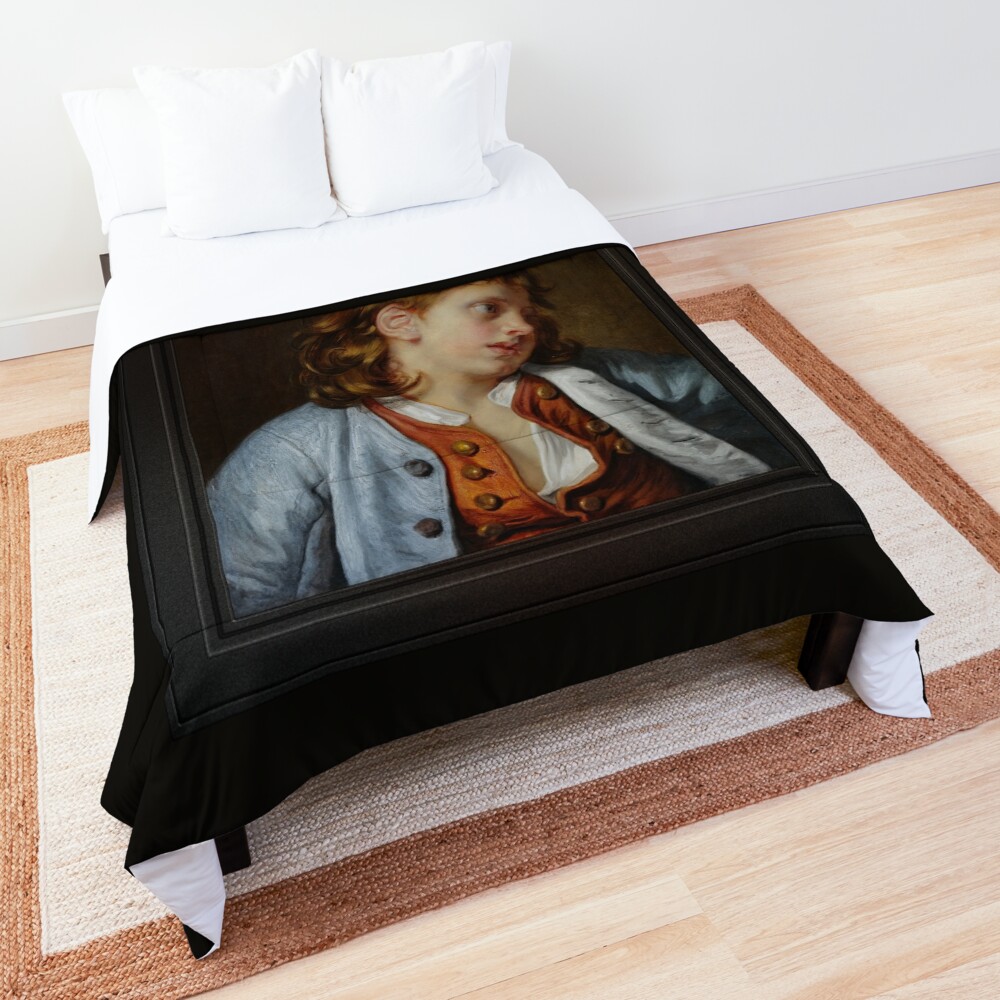
An obair ealain le tiotal Ceannard Gille Òg air a chruthachadh ann an 1763 leis a 'pheantair ainmeil Frangach Jean-Baptiste Greuze (1694 – 1774). Tha an dealbh inntinneach seo a 'toirt a-steach caoimhneas agus neo-chiontachd na h-òigridh, a’ taisbeanadh sgil iongantach an neach-ealain ann a bhith a’ toirt seachad faireachdainn agus caractar tro mhion-fhiosrachadh seòlta agus obair bhruis shàr-mhath. Greusaidh, gu tric air a chomharrachadh airson a dhealbh de sheallaidhean gnè, faireachdainn tòcail, agus cuspairean moralta, a’ toirt beò brìgh nàdar meòrachail balach òg. Tha an dealbh a' cur cudrom air ceann a' chuspair, a’ cur cuideam air inneach a chraicinn, bogachd a fheartan, agus an abairt aige, uile fhad ‘s a tha e a’ cleachdadh reul-eòlas sònraichte Greuze agus cugallachd ri faireachdainn daonna.
Clàr-innse
Cuspair agus sgrìobhadh
Is e prìomh fhòcas an deilbh ceann agus torso àrd balach òg, 's dòcha mu dhà-dheug no trì-deug, ann an sàmhchair, àm truaillidh. Tha a cheann air a thionndadh beagan chun an taobh, le a shealladh air a stiùireadh sìos agus air an làimh dheis, a' toirt àile de introspection dha.
Tha feartan fìnealta a’ bhalaich air an glacadh cho mionaideach ‘s gum faod duine cha mhòr a bhith a’ faireachdainn inneach craiceann òige agus cho aotrom ‘s a tha e bog., falt dualach. A aodann, air a frèamadh le tonnan sgaoilte de fhalt donn-chnò, a’ nochdadh sàmhach ach air a lionadh le mothachadh air lionn-dubh. A shùilean, ged a tha e bog, tha e coltach gu bheil iad a’ conaltradh doimhneachd faireachdainn bunaiteach, mar gum biodh an neach-ealain an dùil barrachd air dìreach coltas corporra a ghlacadh ach cuideachd mionaid de mheòrachadh tòcail.
Tha am balach air a sgeadachadh ann an sìmplidh, gidheadh beagan ath-leasaichte, aodach a tha àbhaisteach ann am fasan Frangach meadhan an 18mh linn dha balaich òga. He wears a garment with a reddish-brown underlay, partially revealed beneath a loose, blue jacket adorned with brass buttons.
The colors of his attire, earthy and muted, serve to complement the naturalistic tones of his face, emphasizing the lifelike quality of the portrait. The texture of his clothing is rendered with exquisite detail, with Greuze’s signature soft brushwork lending an almost tactile quality to the fabric, conveying the impression that the viewer could reach out and feel the texture of the materials.
Stoidhle is innleachd ealanta
Jean-Baptiste Greuze is widely regarded as a master of Rococo realism, and this portrait is a prime example of his ability to merge delicate, refined aesthetics with profound emotional depth. The artist’s technique in Ceannard Gille Òg showcases his sensitivity to the nuances of light and shadow. The light source comes from the left, illuminating the boy’s face and highlighting the softness of his youthful skin.
The light plays delicately across his features, creating a gentle contrast between the highlights on his forehead, nose, and cheek, and the subtle shadows around his eyes and under his chin. This masterful use of chiaroscuro (an eadar-dhealachadh eadar solas agus dorchadas) brings a lifelike three-dimensionality to the figure, enhancing the sense of realism.
Greuze’s brushwork is soft yet precise, with every detail carefully rendered to evoke texture and form. The softness of the skin is portrayed through gentle, stròcan fluid, while the more textured elements, such as the buttons on the jacket and the folds of fabric, are painted with sharper, more defined lines. This balance of soft and hard brushwork gives the portrait its depth and realism, and contributes to the tender mood of the piece.
Cuspair agus mood
The theme of the painting appears to focus on the quiet, reflective nature of childhood. Unlike other portraits of children from this period that may emphasize their status or wealth, Greuze seems to highlight the vulnerability and introspective quality of youth. The boy’s subtle, almost melancholic expression evokes a sense of innocence and fragility, suggesting that the subject’s internal world is being gently explored by the artist.
His somewhat somber expression does not indicate sadness, but rather a contemplation of his surroundings or of life itself. This emotional depth is characteristic of Greuze’s genre paintings, which often dealt with themes of morality, human emotion, and the complexities of youth.
The mood of the painting is calm and introspective. The boy’s expression, along with the gentle lighting and muted tones of his clothing, creates a sense of quietude and reflection. The simplicity of the composition, focused solely on the boy’s head and upper torso, reinforces this meditative atmosphere, inviting the viewer to contemplate the nature of childhood and the emotional depth that Greuze was able to capture within his subjects.
Stuthan agus innleachd
Ceannard Gille Òg is executed in oil paint on canvas, a medium in which Greuze excelled throughout his career. The use of oil allows for the rich, textured application of pigment, which enhances the three-dimensional quality of the figure and the intricate detailing of the boy’s features and clothing. Greuze’s skill in layering paint, as well as his ability to manipulate light and shadow, demonstrates the technical expertise that made him one of the most respected portraitists of his time.
The choice of canvas as the support material provides a smooth surface on which Greuze could build up his layers of paint with precision. The texture of the canvas itself, though barely perceptible to the naked eye, contributes to the painting’s overall atmosphere, helping to absorb and diffuse light in a way that enhances the lifelike appearance of the subject. The depth of color, particularly in the boy’s face, is achieved through delicate glazing techniques, a tha a’ toirt a-steach a bhith a’ cur sreathan tana de pheant gluasaid thairis air còmhdach bonn tiormaichte gus buaidh aotrom a chruthachadh.
Co-dhùnadh
Ann an Ceannard Gille Òg, Tha Jean-Baptiste Greuze a’ taisbeanadh a thàlant air leth airson a bhith a’ glacadh doimhneachd tòcail is saidhgeòlach nan cuspairean aige. Am balach òg, air a thoirt seachad le fìor-eòlas fìnealta, chan e dìreach dealbh de leanabh a th’ ann, ach rannsachadh air caithe-beatha na h-òige.
Tha faireachdainn ciùin an dealbh, còmhla ris an dòigh mhionaideach aige agus a bhith a’ cleachdadh solas is dubhar gu cuimhneachail, a’ giùlan an neach-coimhead gu saoghal far a bheil faireachdainnean agus smuaintean air an cur an cèill gu sàmhach tro cho-fhaireachdainn faireachdainn daonna. Tha an obair-ealain seo fhathast na theisteanas air maighstireachd Greuze ann an raon dhealbhan, a’ tabhann meòrachadh gun ùine air nàdar na h-òige agus iom-fhillteachd faireachdainn daonna.
Is e seo ath-riochdachadh seann mhaighstirean ealain didseatach ath-leasaichte de ìomhaigh fearann poblach a tha ri fhaighinn mar chlò-bhualadh canabhas air-loidhne.
Neach-ealain Bio
Tha am fiosrachadh gu h-ìosal a’ tighinn bho NGA.gov
Rugadh Sìne ann an Tournus, anns an Fhraing 1725 mar an t-siathamh mac aig maighstir tiler a dh'aithnich a thàlant aig aois glè òg; a chuir gu Lyon e, An Fhraing gus sgrùdadh a dhèanamh leis a’ pheantair dhealbhan Frangach Charles Grandon (1691 – 1762).
Aig mu aois a 30 dh'fhàg e Lyon, agus chaidh e gu Paris, An Fhraing gus sgrùdadh a dhèanamh aig an Académie royale de peinture et de deilbheadh no Acadamaidh Rìoghail Peantadh is Deilbhidh; a bha aig an àm na phrìomh ionad ealain na Frainge anns a’ phàirt mu dheireadh den Ancien Régime (Old Regiem ~ 1500 gu 1789), gus an do chuireadh as dha ann an 1793 aig àm Ar-a-mach na Frainge.
Ged a bha e air leth tàlantach agus air leth soirbheachail anns na 1760an agus 1770an, le luchd-taic do leithid am Marquise de Pompadour (1721 – 1764), Bana-phrionnsa Catherine II na Ruis (r. 1762 – 1796), agus Ange Laurent bho La Live de Jully (1725 – 1779); bhiodh a nàdar ceannairceach agus a chòmhstri ri oifigearan na h-Acadamaidh agus an Salon na mhì-fhortan dha; gu sònraichte às deidh a phòsadh ri Anne Marie Babuty ann an 1759; a bhiodh 'na thubaist dha, oir bha fios aice gu robh diofar chùisean aice leis na h-oileanaich agus na suidheadairean aige, a thug air teachd a-steach a chall agus irioslachd poblach.
Nuair a thàinig am pòsadh gu crìch 34 bliadhnaichean an dèidh sin fhuair a bhean tuineachadh susbainteach, a dh'fhàg e ann an droch ionmhas agus aig àm a bhàis ann 1805 aig aois 80 cha mhòr nach robh e briste.