

The Monuments of Paris (パリの記念碑) c1789
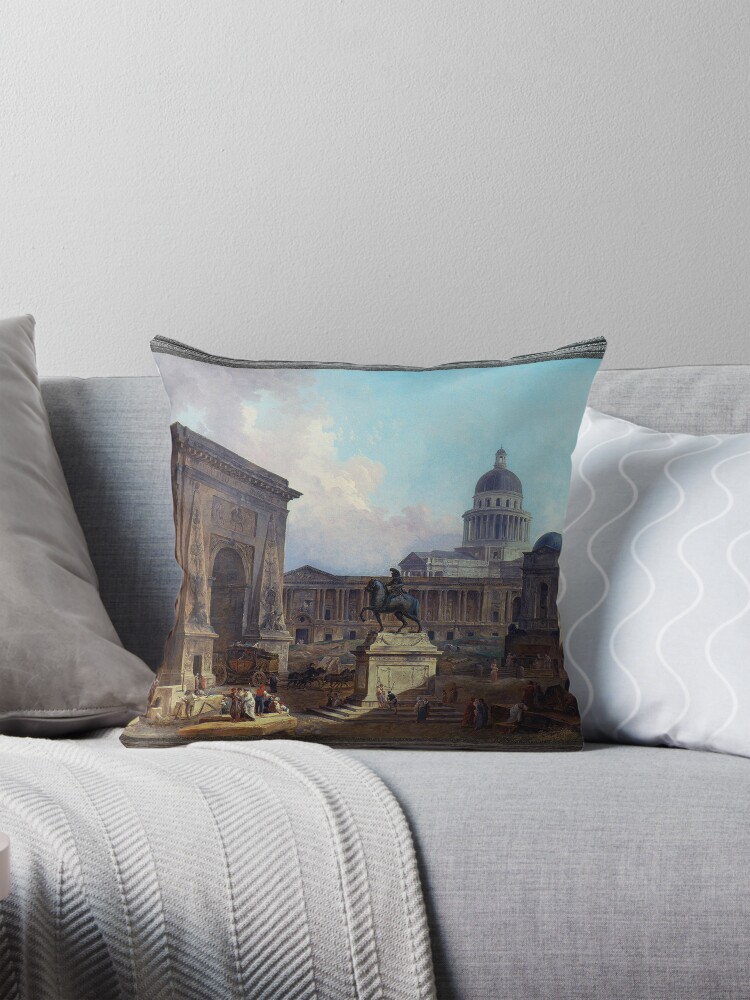
“The Monuments of Paris” (パリの記念碑), 描かれた 1789 フランスの芸術家によって ユベール・ロバート (1733 – 1808), is a magnificent example of classical landscape painting that showcases the enduring beauty and grandeur of Parisian architecture in a moment frozen in time. A well-known painter during the French Enlightenment period, Robert was celebrated for his historical and picturesque views of both real and imagined ruins, creating a sense of timelessness that evokes nostalgia for a lost era. This work is one of his many contributions to the genre of “capricci,” a type of landscape that often combines elements of actual buildings with imaginative ruins, offering a contemplative vision of what was, what could have been, and what remains.
目次
主な主題と構成
The central focus of the painting is an imposing Roman-style arch, reminiscent of the iconic triumphal arches of the Roman Empire. This monumental arch, which stands boldly in the foreground, is not only the primary subject of the artwork but also serves as a symbol of grandeur, 歴史, and human achievement. The arch’s weathered stone surface, carved with intricate reliefs, suggests a narrative of past glory and civilization. It is strategically positioned in the center of the composition, anchoring the viewer’s eye and creating a sense of balance within the artwork.
To the left of the arch, we see a regal statue of a horse-mounted figure, perhaps a historical leader or emperor, adding further grandeur and historical weight to the scene. この図, 精緻に描写された, contrasts with the surrounding crumbling ruins, heightening the sense of both imperial magnificence and the inevitable passage of time. The figure appears to watch over the decaying remnants of what once was, capturing the viewer’s imagination with the juxtaposition of human strength against nature’s inexorable erosion.
The background of the painting is dominated by the stately dome of a neoclassical building, which stands as a beacon of human achievement and architectural skill. The building’s grand dome is flanked by columns, and the entire structure seems to radiate a sense of permanence and majesty. It contrasts with the surrounding ruins, reinforcing the theme of lost grandeur. This building, possibly meant to represent the Pantheon or another significant structure in Paris, plays a crucial role in emphasizing the temporal nature of empires and architectural endeavors.
地形, 材料, と質感
に描かれている地形 “The Monuments of Paris” is one of uneven surfaces and scattered remnants. Large stones and broken columns are strewn across the foreground, as if the scene captures the aftermath of some historical event. These fallen fragments symbolize the decay of once-great civilizations, inviting reflection on the fragility of human accomplishments. The rocks, though broken, still retain their monumental forms, serving as a reminder that while physical structures may crumble, their historical and artistic legacies endure in the collective memory.
The artist’s use of materials is masterful, with delicate brushwork that gives texture and depth to the scene. The stones of the arch and the statue possess a tactile quality, almost inviting the viewer to reach out and touch their weathered surfaces. The soft light that bathes the scene enhances the sense of realism, casting long shadows that suggest the passing of time. The ruins themselves, bathed in the golden light of either dawn or dusk, seem to take on a melancholic beauty, further enhancing the mood of nostalgic reflection that permeates the painting.
遠くに, we see a view of the city that seems both timeless and dreamlike. The buildings rise in the background, but the soft haze of the atmosphere gives them an ethereal quality, as if the city is at once real and imaginary. This blending of the tangible and the intangible further underscores the Romantic ideals of Robert’s time—ideas centered around emotion, nostalgia, そして崇高なもの.
スタイル, テーマ, と気分
The style of Hubert Robert’s “The Monuments of Paris” is firmly rooted in the neoclassical tradition, but it also hints at a romantic interpretation of the ruins and the passage of time. While the painting’s composition, 視点, and attention to architectural detail adhere to the principles of neoclassical art, Robert imbues the scene with an emotional depth that suggests a more romantic vision. The juxtaposition of monumental ruins with majestic, still-standing buildings elicits a sense of melancholy, as the viewer is reminded of the impermanence of human achievement. The mood is one of reflection and reverence for the past, combined with an acknowledgment of the inevitable decline of all things.
The theme of decay and renewal is prevalent throughout the painting, emphasizing the transient nature of civilizations. By positioning the monument in a ruinous context, Robert invites contemplation about the fleeting nature of power and the enduring qualities of art and architecture. The contrast between the ruined foreground and the still-standing architectural structures hints at the possibility of regeneration, suggesting that even in decay, there is beauty to be found.
The soft lighting and gentle color palette, featuring warm tones of ochre, 茶色, and golden hues, further enhance the painting’s nostalgic and contemplative mood. The carefully rendered details of the scene evoke a sense of reverence for both the past and the natural world, giving the viewer a chance to pause and reflect on the passing of time.
これは、パブリックドメインの画像のレタッチされたデジタルアートオールドマスターの複製であり、 ロールドキャンバスプリントオンライン.
アーティスト略歴
以下の情報から派生 Wikipedia.org
ユベール・ロバートはパリで生まれました 1733. 彼の父, ニコラス・ロバート, フランソワ・ジョセフ・ド・ショワズールに仕えていました, ロレーヌ出身の主要な外交官、マーキス・ド・ステインビル. 若いロバートは、のナバラ大学でイエズス会で勉強を終えました。 1751 そして彫刻家ミシェル・アンジュ・スロッツのアトリエに入り、彼は彼にデザインと展望を教えましたが、彼に絵画に目を向けるように勧めました. に 1754 彼はエティエンヌ・フランソワ・ド・ショワズールの列車でローマに向けて出発しました, 父親の雇用主の息子, フランス大使に任命され、ルイ15世の外務大臣になる予定だった 1758.
彼は完全に11年間ローマで過ごしました, 驚くべき時間の長さ; ローマのフランスアカデミーでの若い芸術家の公邸がなくなった後, 彼はサンノン修道院のような愛好家を訪問するために彼が制作した作品によって彼自身を支えました, 4月にロバートをナポリに連れて行った人 1760 ポンペイの遺跡を訪問する. マリニー侯爵, BâtimentsduRoiのディレクターは、ナトワールに対応して彼の発展に遅れをとっていませんでした, フランスアカデミーのディレクター, 年金受給者に屋外でスケッチするように促した人, 自然から: ロバートは促す必要はありませんでした; 彼のスケッチブックからの図面は彼の旅行を記録しています: ヴィラデステ, カプラローラ.
ローマのリペタ港の眺め, NS. 1766, 架空の港の隣に古代ローマのパンテオンを示しています
古代ローマの遺跡と彼の時代の生活との対比は、彼の鋭い関心を刺激しました. 彼はしばらくの間、パニーニのスタジオで働いていました, その影響は、ルーヴル美術館の廃墟の想像上の眺めで見ることができます (図). ロバートはピラネージのサークルの若いアーティストの会社で彼の時間を過ごしました, ロマンチックに生い茂った廃墟のカプリッチが彼に大きな影響を与えたため、彼はロバート・デ・ルインズというニックネームを獲得しました. 彼がローマで集めたスケッチやドローイングのアルバムは、彼が彼のキャリアを通して絵画に取り組んだモチーフを彼に提供しました.