

Maternity c1917
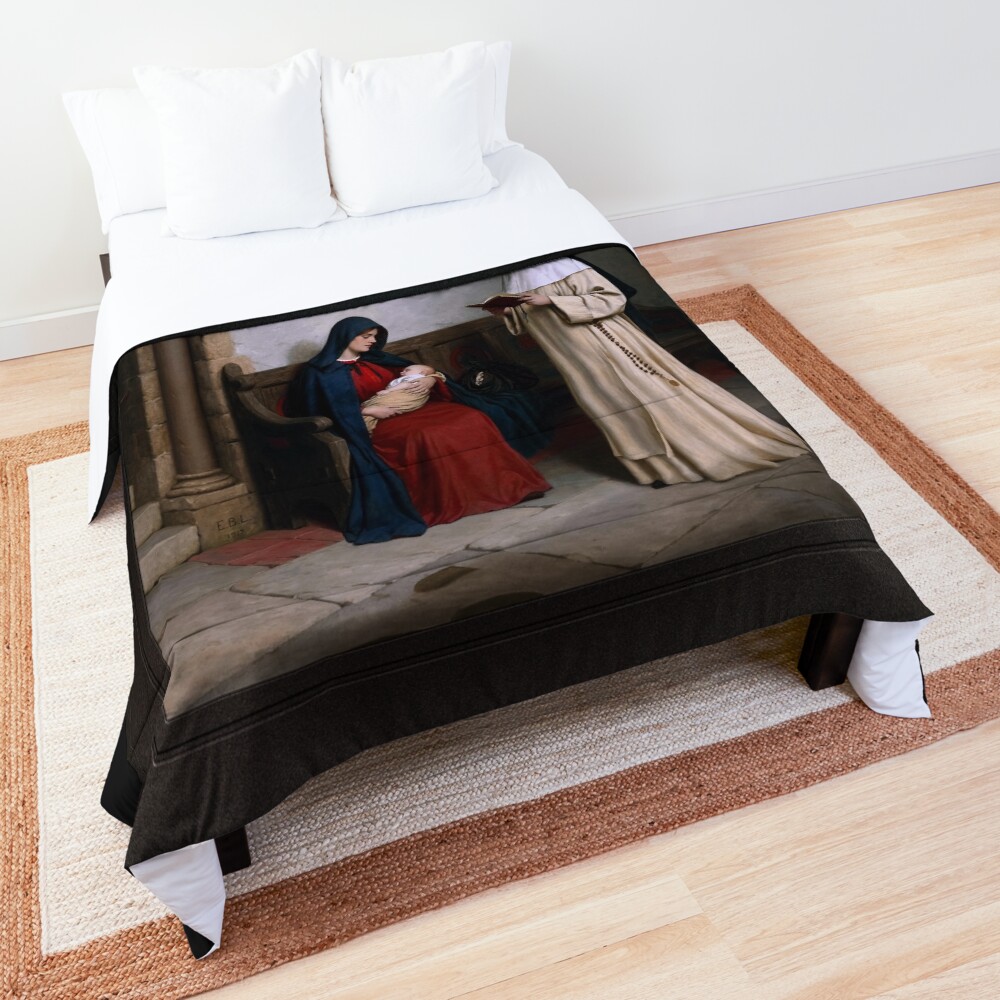
“Maternity,” に作成されました 1917 by British painter エドモンド・ブレア・レイトン (1852 – 1922), encapsulates the profound and timeless theme of maternal care and devotion. This exquisite painting is a reflection of Leighton’s signature approach to historical and genre painting, imbued with an atmosphere of reverence and serenity. The artwork features a tender and intimate scene, where a young mother, cradling her child, is surrounded by figures exuding a sense of peace and grace.
目次
シーンと作曲
The composition of the painting is both balanced and harmonious, drawing the viewer’s eye to the central figure of the mother. She sits in a stone pew within a somber, yet beautifully lit interior, which evokes a sense of both religious sanctity and domestic comfort. The mother’s attire is rich in color, with a deep red dress that contrasts against the muted tones of the surrounding space. The blue cloak she wears adds a layer of serenity and formality, reinforcing her importance in the composition. She gazes down lovingly at the infant in her arms, an image of maternal devotion that is both poignant and universal.
To the right of the mother stands a nun, dressed in the simple yet distinguished habit of the time. She holds an open book, perhaps a prayer or passage of scripture, and her gaze is directed downward, suggesting a quiet reverence for the scene unfolding before her. This juxtaposition of the divine and the maternal strengthens the underlying themes of sacred motherhood. The subtle interaction between the two figures, one focused on the child, the other engaged in spiritual contemplation, imparts a sense of balance between earthly and spiritual care.
象徴性とテーマ
のテーマ “Maternity” is deeply rooted in the idea of the sacred and selfless nature of motherhood. The painting communicates not only the love a mother has for her child but also the reverence associated with this relationship. The mother is depicted as a figure of nurturing warmth, providing a safe space for her infant in her protective embrace. The act of breastfeeding, depicted here, has historically been seen as an intimate and spiritual gesture, one that embodies the sacrificial and unconditional love a mother offers her child. In the presence of the nun, the scene also suggests that motherhood is not merely a physical role, but also a spiritual one, linking the earthly and the divine.
In the context of the time in which it was painted, just after World War I, the image of a mother with her child could be seen as a symbol of hope, continuity, and the restoration of peace after a period of suffering. The simplicity of the setting, with its stone walls and subdued lighting, adds to the painting’s sense of timelessness, reflecting the perennial nature of the bond between mother and child.
芸術的なスタイルとテクニック
Leighton’s artistic style in “Maternity” is characterized by a meticulous attention to detail and an almost photographic realism. ソフト, naturalistic lighting that bathes the mother and child creates an ethereal glow, emphasizing their importance within the painting. The rich textures of the clothing, the smoothness of the child’s skin, and the soft folds of the fabric are all rendered with exceptional skill, showcasing Leighton’s technical mastery. The artist’s use of light and shadow adds depth and dimension, drawing the viewer’s eye to the central figures while allowing the surrounding elements to fade gently into the background.
The figures themselves are carefully proportioned, each face expressing subtle emotions that add layers of meaning to the scene. The mother’s expression is one of deep tenderness and love, while the nun’s is one of quiet contemplation. The serene expressions on both figures are a testament to the peaceful mood that Leighton has successfully evoked.
The Setting and Materials
The interior depicted in “Maternity” suggests an ecclesiastical environment, perhaps a church or monastery, with its stone walls, arched columns, and medieval-style windows. The simplicity of the setting does not detract from the sacredness of the scene; それよりも, it enhances the intimate and personal nature of the moment. The rough-hewn texture of the stone contrasts with the softness of the figures, heightening the emotional impact of the scene.
The materials used in the painting, キャンバスに油彩, allow Leighton to achieve the rich depth of color and fine detail that characterize his works. The glimmer of light against the figures’ garments and the smoothness of the mother’s skin highlight the artist’s ability to capture the human form with exquisite precision.
気分と感情への影響
の気分 “Maternity” is one of profound peace and quiet reverence. 静寂を感じさせる構図, as if time has momentarily paused in this sacred space. 柔らかい照明, gentle expressions, and the maternal bond between the two women create a tranquil atmosphere that invites reflection. The image of the mother, tenderly cradling her infant, speaks to the universal themes of love, 保護, and the sacred nature of motherhood. The inclusion of the nun reinforces the connection between the earthly and the divine, emphasizing the sanctity of the maternal role.
The painting also resonates with themes of renewal and hope, particularly in the context of its creation during the aftermath of the First World War. The act of nurturing a child, in such a calm and sacred setting, could be interpreted as a symbol of the resilience of the human spirit, even in times of great turmoil. The mother’s act of care, set against the backdrop of a period of hardship, offers a message of quiet strength and the promise of a brighter future.
これは、リマスターされたデジタルアートのオールドマスターであり、パブリックドメインの画像を複製したものです。 キャンバスプリントオンライン.
アーティスト略歴
以下の情報から派生 Wikipedia.org
エドマンドはキャロライン・レイトンに生まれました (旧姓ブージー) とアーティストのチャールズ ブレア レイトン (1823 – 1855) 9月にイギリスのロンドンで 21, 1852; ユニバーシティカレッジスクールで教育を受けました, 彼が何歳のときに残したもの 15 お茶商に勤める.
彼は芸術に興味があり、勉強したいと思っていたので、; 彼はサウスケンジントンに入学し、夕方からレッスンを受け始めました; そこからニューマンストリートのヘザーリーズスクールに通いました, ロンドン.
彼が〜だった時 21 歳で王立芸術アカデミーに入学, に設立されました 1768; そして後にカッセルズ・マガジンと同誌のブリティッシュ・バラード集のためのモノクロイラストを担当する最初のアートコミッションを受けることになる。.
彼は最初の絵画「: タイトルの欠陥 1874 ロイヤルアカデミーで, それが彼に利益をもたらした 200 ポンド; そして次の年にも彼の作品を毎年展示することになる 40 ロイヤル・アカデミーに数年在籍するまで 1920.
エドマンドは細部に細心の注意を払い、完成度の高い装飾的な歴史的芸術作品を制作した芸術家でした。, 騎士道と中世の衣装を着た女性のロマンチックなシーンを特集したもの, 大きな人気を集めた.