

Nydia, The Blind Girl Of Pompeii
Emanuel Gottlieb Leutze’s (1816 – 1868) painting, Nydia, The Blind Girl Of Pompeii, created circa 1840, is a masterful representation of Romanticism in 19th-century American painting. Known for his historical and literary themes, Leutze brings to life the tragic and poignant figure of Nydia, a character from Edward Bulwer-Lytton’s novel The Last Days of Pompeii. The classical artwork seamlessly blends classical influences, dramatic lighting, and rich symbolism, evoking a sense of beauty and melancholy.
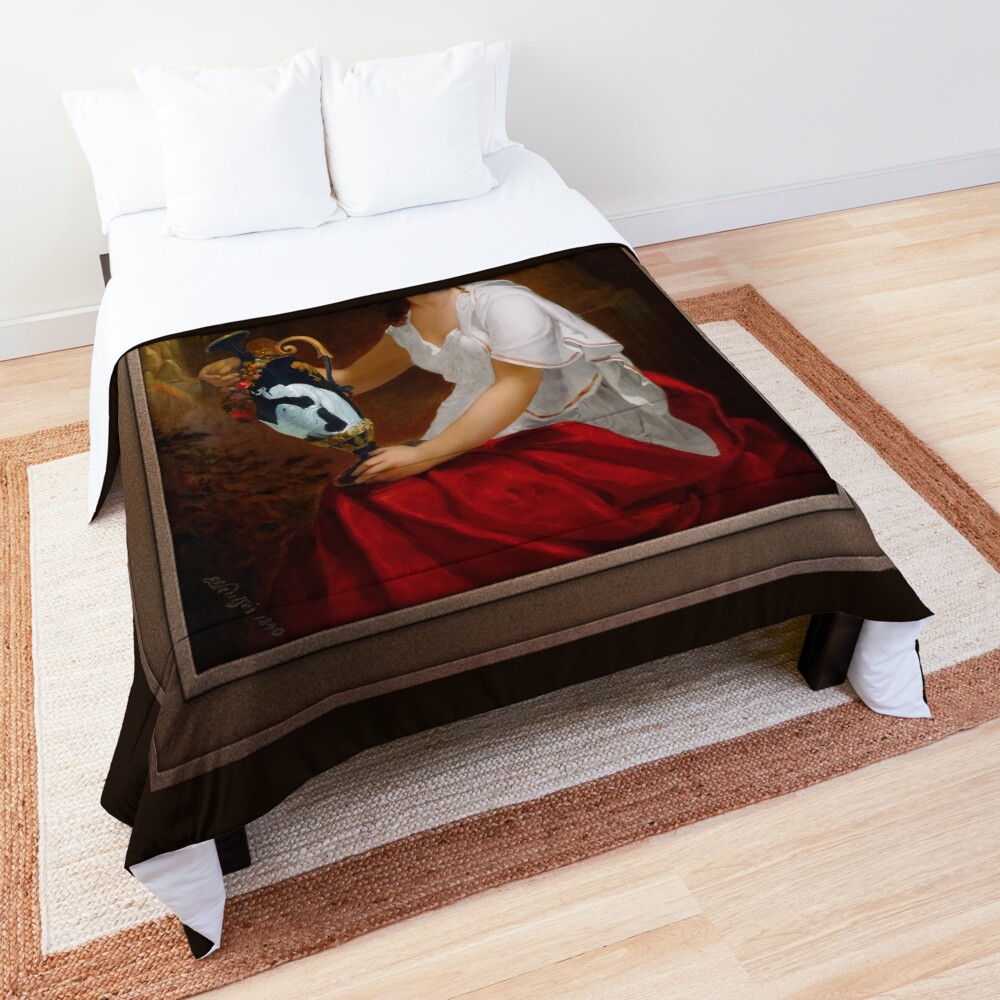
Table of Contents
Main Subject: Nydia, the Blind Girl
At the center of the composition is Nydia, a young blind flower seller. Her figure dominates the foreground, immediately capturing the viewer’s attention. She is depicted seated, delicately holding a Greco-Roman vase. The vase, adorned with intricate black and white motifs of mythological figures, symbolizes classical antiquity and serves as a reminder of the setting in ancient Pompeii.
Nydia’s expression is soft yet contemplative, her downcast eyes highlighting her blindness while enhancing the emotive quality of the piece. Her pose is graceful, with one hand supporting the vase and the other resting lightly on its base. The drape of her garments, an airy white blouse and a vibrant red skirt, adds texture and movement to her figure. The contrasting colors, particularly the stark whiteness of her blouse against the deep red of her skirt, emphasize her presence within the scene and hint at her inner strength amidst adversity.
Objects and Symbolism
The vase in Nydia’s hands is more than a decorative object; it serves as a metaphor for her delicate yet resilient nature. The floral decorations around the vase suggest themes of life and transience, resonating with the fleeting beauty of Pompeii before its tragic destruction. Additionally, the elegant curvature of the vase mirrors the contours of Nydia’s pose, creating a harmonious visual rhythm that ties the subject to her surroundings.
Behind Nydia, faintly visible in the dim background, is a sculptural figure, possibly referencing classical statuary or an altar. This object reinforces the setting in the classical world and suggests a temple or sacred space. The subtle inclusion of such details invites the viewer to consider the broader historical and cultural context of the scene.
Terrain and Background
The terrain is rich with atmospheric elements, portraying a shadowy, wooded area that gradually recedes into a darker, mysterious backdrop. The muted tones of the environment, including earthy browns and soft greens, contrast with the vibrant colors of Nydia’s attire. This juxtaposition creates a sense of depth while drawing the viewer’s focus to the main subject.
The dimly lit scene is evocative of twilight or an impending storm, contributing to the overall somber mood. The soft glow on Nydia’s face and hands suggests a subtle light source, possibly symbolic of her inner purity and resilience in the face of hardship. The blurred and subdued background allows Nydia’s figure to stand out as the focal point, emphasizing her isolation and vulnerability.
Materials and Technique
Leutze’s technique in this painting showcases his mastery of Romantic realism. The careful rendering of textures, from the softness of Nydia’s skin to the crisp folds of her clothing, demonstrates a meticulous attention to detail. The brushwork is precise yet fluid, particularly in the delicate treatment of the vase and the subtle transitions in the background.
The use of light and shadow plays a crucial role in defining the mood of the artwork. Leutze employs chiaroscuro to highlight Nydia’s figure, giving her an almost ethereal presence. The interplay of warm and cool tones creates a dynamic visual experience, while the subdued palette of the background enhances the vividness of her attire and the vase.
Style, Theme, and Mood
Nydia, The Blind Girl Of Pompeii exemplifies the Romantic movement’s fascination with emotion, individuality, and historical themes. The painting’s literary inspiration reflects the 19th-century interest in storytelling through visual art. Nydia’s character, as a symbol of innocence and tragedy, aligns with Romantic ideals of the noble yet doomed individual.
The theme of blindness is central to the narrative, both literally and metaphorically. Nydia’s blindness represents her physical limitation but also her heightened sensitivity and inner strength. The artwork explores the contrast between vulnerability and resilience, inviting the viewer to empathize with her plight.
The mood of the painting is both melancholic and reverent. Leutze’s use of subdued lighting and soft, harmonious colors creates a sense of intimacy, drawing the viewer into Nydia’s world. The overall atmosphere is one of quiet reflection, evoking both admiration for her beauty and sorrow for her struggles.
Conclusion
Emanuel Gottlieb Leutze’s Nydia, The Blind Girl Of Pompeii is a timeless masterpiece that combines technical brilliance with profound emotional depth. Through its evocative portrayal of Nydia, the painting captures the spirit of Romanticism and serves as a poignant reminder of the enduring power of art to convey the complexities of the human experience.
This is a remastered digital art old masters reproduction of a public domain image that is available as a canvas print online.
This digital art creation, as with all the artwork that can be found on the Xzendor7 website is available for purchase online in a variety of material formats including canvas prints, acrylic prints, metal prints, wood prints, framed prints, posters, and as rolled canvas prints in a variety of sizes from 12 inches to 72 inches depending on the size of the actual artwork and the print on demand shop you choose to buy the art from.
The artwork is also available on a broad range of men’s and women’s apparel, mugs, totes, scarfs, notebooks and journals and many home decor products.