

Retrat d'una dama c1941
Estil i Enfocament Artístic
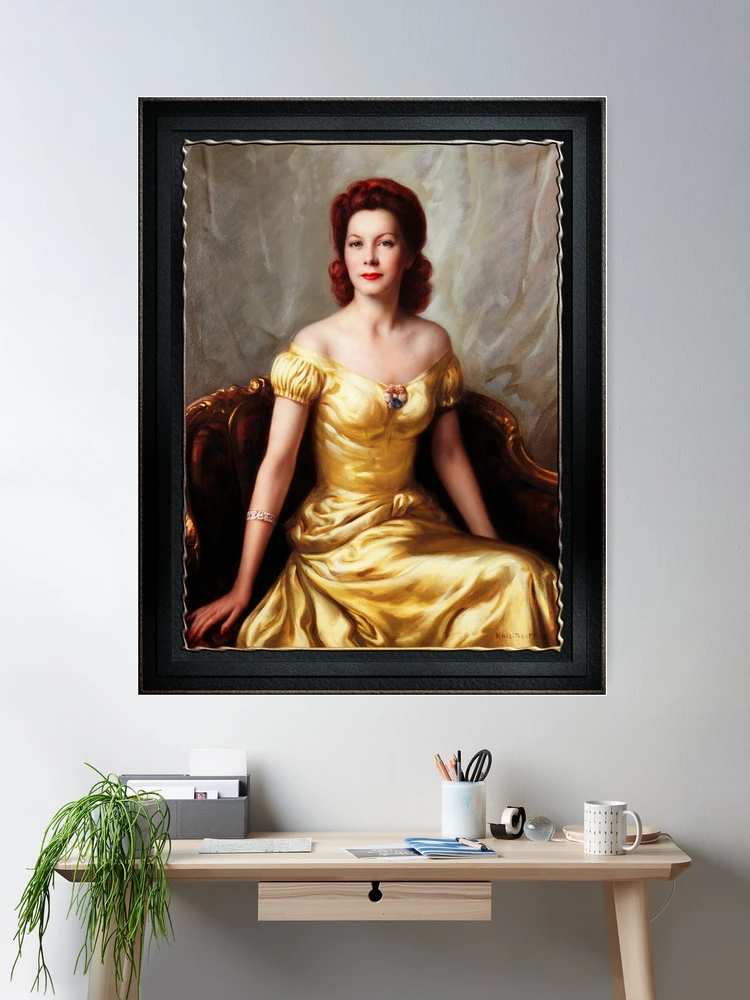
La pintura “Retrat d'una dama” des de 1941 de l'artista rus Nikolai Vasilievich Kharitonov (1880 – 1944), també conegut com Nicholas Basil-Haritonoff, és un exemple exquisit de retrat clàssic realitzat amb una precisió magistral. L'artista combina elements de realisme amb una sensibilitat romàntica més suau, capturant la mainada en un moment de gràcia digna.
El suau, contorns suaus de la cara de la dama, al costat dels teixits amb textura del seu vestit, revelen la profunda comprensió de Kharitonov de l'expressió humana i la interacció entre la llum i l'ombra. La seva tècnica sembla minuciosament deliberada, des de les subtils gradacions de color de la seva pell fins a la delicada representació de la seva exuberant, cabells vermells.
L'estil s'adhereix a la tradició del retrat del segle XIX que emfatitza el caràcter i la personalitat de la cantant.. La pinzellada precisa però fluida de Kharitonov mostra la seva profunda reverència per les formes d'art clàssic, alhora que incorpora els seus propis tocs més suaus per crear un fresc, elegància moderna en el retrat. La peça convida els espectadors a involucrar-se profundament amb el món interior i exterior de la cantant, presentat mitjançant l'ús de textures lluminoses i ombrejats matisats.
Taula de continguts
El tema i la composició
Al cor de la composició hi ha la pròpia dama, assegut amb una compostura regia. El seu vestit groc suau, amb delicades mànigues inflades, és un punt focal sorprenent, i la seva rica textura sembla fluir de manera natural amb els contorns del seu cos. El teixit luxós del vestit es presenta amb una atenció notable als detalls, capturant el joc de llum a la seva superfície setinada. El vestit, un símbol de sofisticació i refinament, no només millora la noble estatura de la mainadera, sinó que també afegeix una sensació de bellesa atemporal al retrat.
Els seus cabells, un to profund de vermell, està dissenyat amb ones suaus que emmarquen el seu rostre i cauen suaument sobre les seves espatlles. Els rínxols pintats meticulosament afegeixen una capa de complexitat a la seva personalitat, suggereix una sensació d'elegància i un equilibri ben mantingut, suggerint una dona de confiança i gràcia. Kharitonov ha optat per centrar-se en la cara de la dona, amb mínimes distraccions al fons, permetent que l'espectador s'absorbeixi completament en la seva expressió i les subtileses del seu vestit.
Paleta de colors i materials
L'artista utilitza una paleta de colors refinada, utilitzant tonalitats càlides de groc daurat, marrons suaus, i crema per emfatitzar tant el teixit del vestit com la calidesa de la pell de la dama. La paleta d'or i groc del vestit suggereix l'afluència i la sofisticació del tema.
Els suaus tons de fons de beix i gris milloren encara més la presència de la dona, envoltant-la d'una llum, ambient airejat. Els aspectes més destacats de la cara i les espatlles estan pintats amb una qualitat lluminosa que li dóna un aspecte suau, presència etèria, gairebé com si estigués il·luminada per una llum interior. La subtilesa de les transicions de color, from the darker tones of the folds of her gown to the lighter highlights around her face, speaks to Kharitonov’s expertise in rendering three-dimensionality on a flat canvas.
Kharitonov’s careful use of these colors suggests a careful mastery of oil paint, as the artist has used the medium’s natural properties to create a glowing, almost tactile effect. The intricate shading of the lady’s skin, the softness of the light falling across her features, and the smoothness of the fabric showcase his understanding of texture and depth. Cada pinzellada, each layer of paint, builds upon the last to evoke a sense of living, breathing realism.
Expressió i estat d'ànim
The mood of the portrait is one of quiet elegance and serene dignity. The lady’s expression is calm, compost, and slightly reserved, with her lips held in a soft, somriure gairebé imperceptible. Aquest petit, controlled expression suggests an air of mystery and contemplation, inviting the viewer to delve into the inner world of the subject. La seva postura, sitting upright with her hand gently resting on the arm of her chair, reinforces the idea of a woman of noble demeanor and inner strength.
There is an unspoken sense of poise that emanates from the sitter, and Kharitonov’s subtle choices in depicting her facial features—her clear eyes, the soft curve of her cheekbones, i la suavitat de la seva pell, add to the portrait’s aura of grace. The overall mood is one of quiet refinement, and it evokes a sense of nostalgia for a bygone era of sophistication.
Context històric i influència de l'artista
Created during the early 1940s, a time when Russia was embroiled in the Second World War, this portrait seems to stand in stark contrast to the harsh realities of the world. Yet it reflects the enduring resilience of culture, art, and beauty amid turmoil. The fashion in the portrait, with its opulent detailing, is reminiscent of the styles popular in the late 19th and early 20th centuries, creating a sense of continuity in Russian portraiture.
Nikolai Vasilievich Kharitonov, like many of his contemporaries, embraced the stylistic principles of the Russian Academy of Arts, grounded in classical traditions. This approach, malgrat això, was infused with his unique sensitivity to light, textura, and the delicate portrayal of human emotion. His legacy as an artist who deftly merged classical realism with a more contemporary approach to portraiture ensures that works like “Retrat d'una dama” endure as iconic representations of Russian elegance.
Elements clau
- The Lady: La figura central, equilibrat i agraciat, encarna el refinament físic i emocional.
- Bata: El ric vestit groc daurat, detallada amb cura, esdevé un símbol tant d'opulència com de dignitat tranquil·la.
- Cabells vermells: Els cabells vermells de la dama, estilitzat amb ones suaus, afegeix una capa de profunditat a la seva personalitat.
- Expressió: Ella gentil, un somriure reservat deixa entreveure un caràcter reflexiu i introspectiu.
- Composició: La senzillesa de la composició, amb un fons minimalista, crida l'atenció de l'espectador completament sobre el tema.
- Il·luminació: El joc de llum a través de la seva pell i el seu vestit es presenta amb una qualitat eteri que millora la seva presència.
- Fons: Els tons beix i gris apagats del fons permeten que la figura de la dama domini l'espai, destacant la seva importància.
- Pinzellada: La suau barreja de colors i pinzellades suggereix l'habilitat de Kharitonov per crear textures realistes..
- Humor: Una serena, dignified mood pervades the portrait, evoking both admiration and curiosity.
- Context històric: Created during the turmoil of the Second World War, the painting represents a moment of stillness amidst the chaos.
- Paleta de colors: Soft tones of gold, groc, and cream contrast with the deeper reds of the lady’s hair.
- Textura: The smooth rendering of skin and fabric suggests Kharitonov’s mastery of oil painting.
- Simplicity: The lack of complex elements in the background creates a quiet, reflective atmosphere.
- Soft Focus: The softening of features and use of light gives the painting a slightly dreamlike quality.
Portrait Of A Lady is a retouched digital art old masters reproduction of a public domain image.
Cortesia de la biografia de l'artista RA Gallery – Belles arts russes i internacionals
Nikolai Kharitonov (Nicholas Basil Haritonoff) was a prominent Russian painter of the Academic School, consider to be a brilliant portraitist and a master of the landscape genre. He was also a pupil of I. E. Repin, who used to combine Realism and Impressionistic tendencies in his artwork as well.
Nikolai Kharitonov was born on December 9, 1880, into a simple peasant family in the village of Plishkino (located in the Dubrovskoye Rural Settlement, Yelovsky District, Perm Krai, Rússia), which no longer exists.
After graduating from rural school, at the age of twelve, Kharitonov went to his live with his relatives in St. Petersburg, and there obtained a job in the paper shop, i, later, worked in a workshop that specialized in the production of signboards for stores.
Nikolai Vasilyevich then began his artistic education and career in a rather peculiar way. Al voltant 1895 he went to the island of Valaam, where he became an apprentice in the Spaso-Preobrazhensky monastery; while there he spent most of his time painting icons and religious images for two years; scrupulously studying this ancient painting skills of the monks.
On his return to St. Petersburg, Kharitonov then began attending classes at the Drawing School of the Imperial Society for the Encouragement of the Arts and started developing his proficiency in drawing in a private art studio of a talented academic painter and etcher, L. E. Dmitriev-Kavkazsky.
En 1901, Nikolai Vasilievich joined the Painting Department at the Higher Art School at the Academy of Arts, and a year later began training in the studio of the famous and outstanding artist – jo. E. Repin.