

Ribbons and Lace c1902
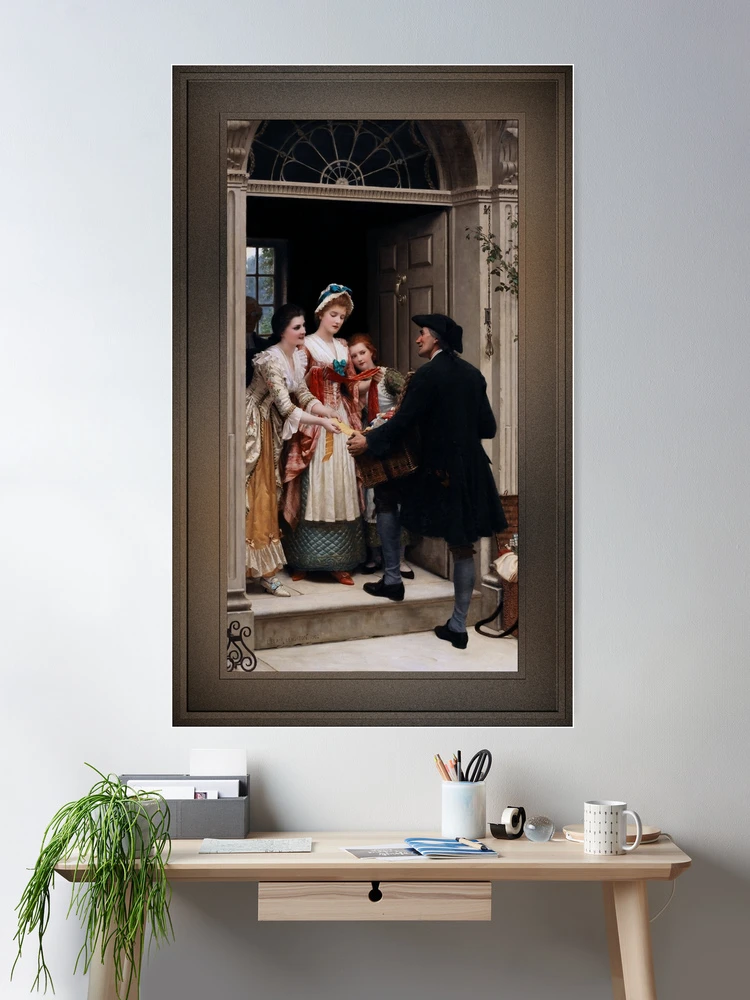
“Ribbons and Lace,” oanmakke yn 1902 by British artist Edmund Blair Leighton (1852 – 1922), is a fine example of late Victorian sjenre skilderij that epitomizes the elegance and charm of the period. Leighton, known for his skillful depictions of historical and romantic scenes, masterfully captures a moment of refined grace in this work. The painting centers on a group of three women engaged in a moment of social interaction on the doorstep of a grand building. De oandacht fan de keunstner foar detail, the richness of textures, and the graceful portrayal of his subjects reflect his deep understanding of the human form and his romantic interpretation of everyday moments.
Ynhâldsopjefte
Haadûnderwerp en komposysje
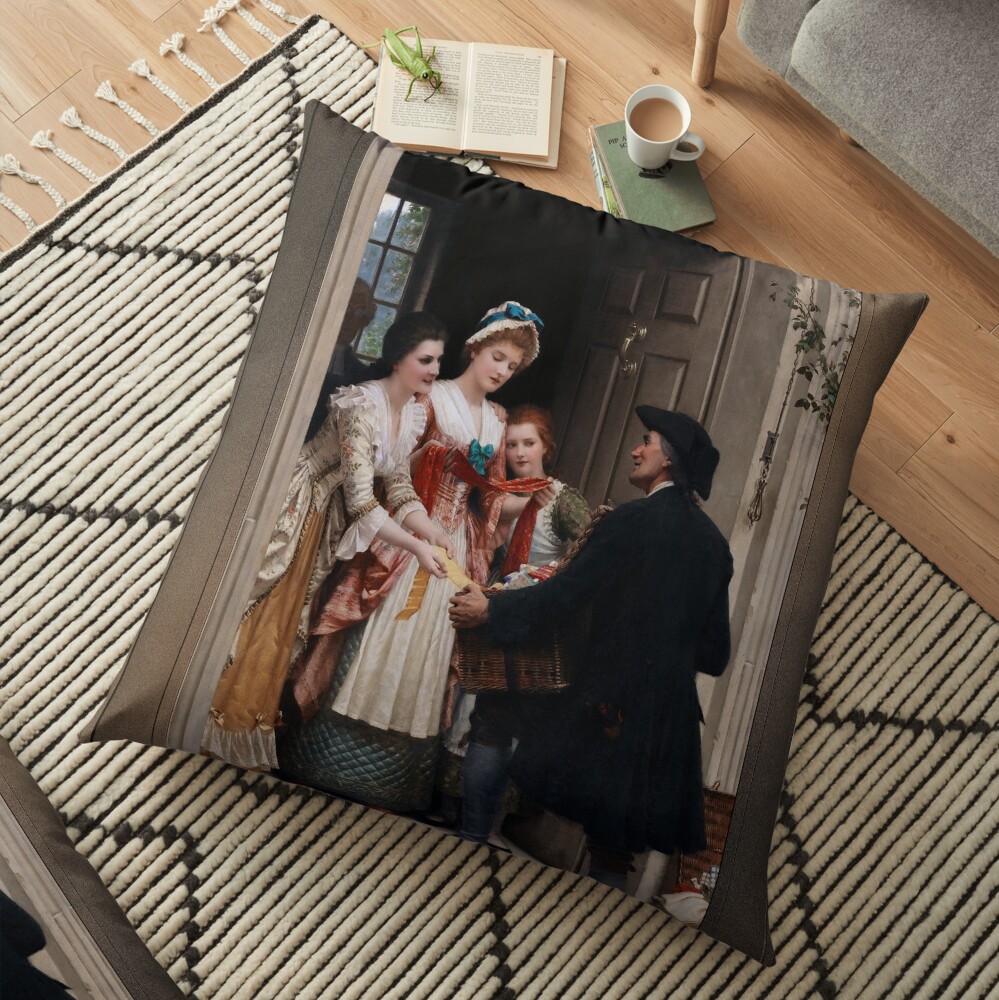
The focal point of the artwork is the interaction between the women and a man at the door. The scene is set in an elegant and sophisticated interior, suggesting the social status of the characters. The three women, dressed in lavish 18th-century attire, are positioned at the doorstep, each adorned with intricate lace and ribbons that symbolize both femininity and the fashionable style of the era. The central figure is a woman in a white gown with a red sash, receiving a basket from the man. Her posture suggests a gracious acknowledgment, while the two other women, positioned to her side, observe the interaction.
The man, standing at the entrance, holds a wicker basket filled with various goods, perhaps a gift or offering. His attire reflects the period’s fashion for men, with a coat and hat that, while formal, retain a sense of practicality. His face is slightly turned towards the viewer, giving the impression of cordial engagement, though his attention is primarily focused on the woman he is interacting with. The figure’s posture, slightly bent, adds to the overall sense of respect and deference typical in 19th-century courtship and social exchanges.
Setting and Environment
De ynstelling fan “Ribbons and Lace” contributes significantly to the mood of the piece. The doorway is a grand architectural feature, with columns and intricate detailing surrounding the entrance. The ornate window above the door suggests the opulence of the building and the high social class of its inhabitants. The exterior landscape is slightly visible through the open door, hinting at a well-kept garden or grounds typical of wealthy estates during the period.
The interior, visible only in part, hints at further richness, with luxurious drapery and muted light filtering through the doorway. The use of natural light, filtered through the door and window, bathes the scene in a warm glow, lending a sense of tranquility and harmony to the atmosphere. The light plays a crucial role in highlighting the fabric textures of the women’s dresses and the delicate features of their faces.
Objekten en Details
Each object in the scene has been carefully placed to contribute to the overall narrative and ambiance. The man’s basket is central to the exchange, symbolizing a gift or offering, while the ribbons and lace adorning the women’s attire suggest a sense of gentility and sophistication. These elements emphasize the social status of the women, whose fashionable dresses and attention to detail signify wealth and refinement.
The architectural details of the doorway, with its delicate carvings and sweeping lines, create a frame that visually guides the viewer’s attention towards the figures. These details are mirrored by the soft, luxurious fabrics worn by the women, including the delicate lace around the edges of their dresses and the smooth, flowing ribbons that accentuate the contours of their figures. The textures of the clothing, the smoothness of the basket, and the soft shadows of the interior contribute to the rich tactile quality of the painting.
Tema en stimming
The theme of the painting is one of genteel domestic life and social interaction. It reflects the refined, leisurely pace of upper-class society during the early 20th century, capturing a moment of courteous exchange. The interaction between the man and the women suggests a sense of propriety, while the setting evokes a world of grace and elegance. The painting’s mood is serene and dignified, with no sense of urgency or discord. The figures are composed and controlled, suggesting a world where social norms are respected, and interactions are measured and polite.
The use of light and shadow enhances the calm, Utnoegje sfear, while the soft colors of the women’s clothing and the architectural details create a sense of harmony. There is no visible tension or discord, only the tranquil flow of interaction between the figures. This mood invites the viewer to step into a world of refined beauty, wêr art, moade, and social custom blend seamlessly.
Styl en technyk
Leighton’s style in “Ribbons and Lace” is characteristic of the academic tradition, focusing on historical realism and attention to detail. The painting employs a soft, almost dreamlike quality through the use of light, which accentuates the delicacy of the figures and their surroundings. The artist’s technical expertise is evident in his rendering of fabric textures, from the lace and ribbons on the women’s dresses to the smooth, shiny surface of the basket.
Leighton’s attention to anatomical detail and the draping of fabric reflects his mastery of portraiture and his deep understanding of human form and movement. The clothing of the figures is depicted with painstaking accuracy, with individual folds and creases suggesting the weight and texture of the materials. The use of shadows and light to enhance the forms and create depth in the composition further demonstrates Leighton’s ability to capture the natural beauty of his subjects.
Konklúzje
“Ribbons and Lace” by Edmund Blair Leighton is a stunning example of late Victorian genre painting, capturing a delicate moment of social exchange within a refined, elegant setting. Through his meticulous attention to detail and mastery of light, Leighton creates a serene, harmonious atmosphere that evokes a sense of nostalgia for an era of grace and civility. The painting’s exquisite portrayal of fabric textures, intricate architectural features, and dignified social interaction reflects the artist’s deep understanding of his subject matter and his ability to evoke a world of beauty, sierlikens, en sjarme.
Dit is in remastered digitale keunst âlde masters reproduksje fan in byld yn it iepenbier domein dat is beskikber as in canvas print online.
Artist Bio
Ynformaasje hjirûnder ôflaat fan Wikipedia.org
Edmund waard berne as Caroline Leighton (nee Boeske) en keunstner Charles Blair Leighton (1823 – 1855) yn Londen Ingelân op septimber 21, 1852; en waard oplaat oan de University College School, dy't er ferliet op 'e leeftyd fan 15 by in teekeapman te wurkjen.
Om't hy belangstelling hie foar keunst en dy studearje woe; hy skreau him yn by South Kensington en begûn jûns les te nimmen; en dêrwei folge Heatherley's School yn Newman Street, Londen.
Doe't hy wie 21 jierren fan leeftyd gie hy yn 'e Royal Academy of Arts, dat waard oprjochte yn 1768; en soe letter syn earste keunstkommisje krije mei monochrome yllustraasjes foar Cassell's Magazine en har Book of British Ballads.
Hy eksposearre syn earste skilderij mei de titel: In flater yn 'e titel yn 1874 by de Royal Academy, dy't him fertsjinne 200 Pûnen; en soe syn wurk jierliks foar de folgjende eksposearje 40 jierren oan de Royal Academy oant 1920.
Edmund wie in keunstner dy't in protte oandacht foar detail joech en heech ôfmakke dekorative histoaryske keunstwurken produsearre, dy't romantisearre sênes fan ridderlikheid en froulju yn midsieuske klaaiïng befette, dat hie grutte populêre berop.