

Rough Sea with Ships c1834
Rough Sea with Ships c1834″ by Théodore Gudin (1802 – 1880)
La pintura Mar agitado con barcos, creado en 1834 por el artista francés Teodoro Gudin, captures the raw, tumultuous nature of the sea as it crashes against ships caught in its powerful swells. Teodoro Gudin, known for his marine landscapes, brings his deep understanding of seafaring life and nautical environments to life in this dramatic portrayal. The work, painted during the early part of his career, demonstrates his mastery of capturing both the violent and serene aspects of the ocean, as well as the lives of those who navigate its unpredictable waters.
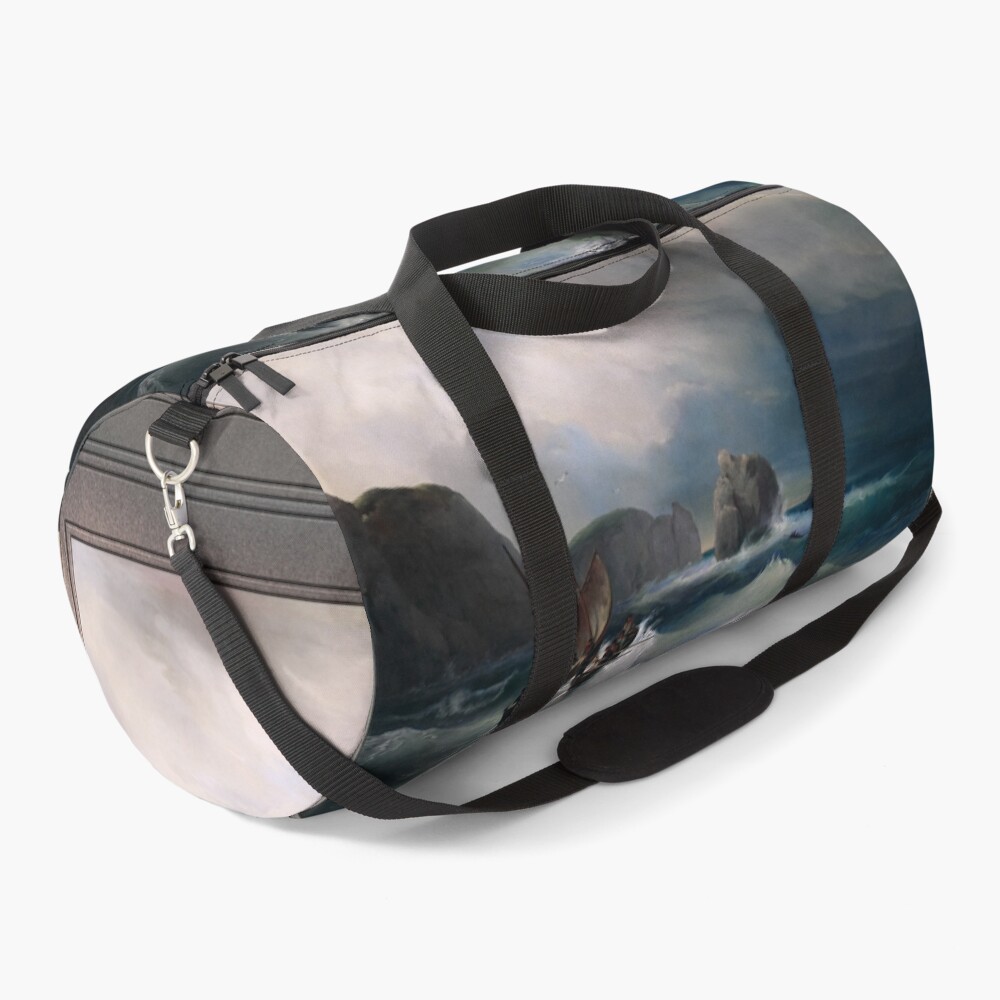
Tabla de contenido
Asunto principal: The Struggle Between Man and Nature
En el corazón de Mar agitado con barcos is the battle between human endeavor and the untamable force of nature. A small group of sailors is depicted in a boat, braving the crashing waves with determination. Their vessel, a sturdy wooden ship, is helmed by several figures whose taut expressions and focused actions suggest the dire situation they are facing. The sailors, positioned toward the foreground, labor tirelessly to control their ship amidst the violent tides, with some of the figures rowing while others brace themselves against the ocean’s relentless pull.
The ship they are struggling to steer is not fully depicted, but the viewer can sense its looming presence as the sailors face the mighty forces of the sea. The stark contrast between the smallness of the boat and the vastness of the ocean serves as a reminder of human vulnerability in the face of nature’s immense power. A lo lejos, another ship lies wrecked, its broken hull visible in the turbulent waters—a tragic casualty of the storm, illustrating the perils of seafaring life.
Terreno y elementos de fondo: A Churning Ocean and Rugged Coastline
The background is dominated by a vast and churning sea. Gudin’s use of swirling waves, painted in shades of green and blue, evokes the strength and energy of the water. The sea appears to stretch endlessly into the horizon, where the sky and water merge in a seamless, stormy union. The waves are thick with motion, capturing the raw power of nature as they crest and crash down. The high waves are painted with dynamic brushwork that gives them a three-dimensional quality, as though they might leap off the canvas and engulf the viewer.
A lo lejos, jagged cliffs rise sharply from the ocean, serving as an imposing reminder of the rugged coastlines that often challenge sailors. The rocky outcrops, painted with muted grays and browns, loom large in the composition. The cliffs are not only symbolic of the perilous environment sailors must navigate but also act as a dramatic contrast to the violently churning sea. The sea and sky appear restless, their tension palpable, as they communicate the chaos and danger of the scene.
The sky above the sea is dominated by heavy, dark clouds, painted in a mixture of grays and whites. The atmosphere is thick and oppressive, with the storm seeming to grow ever more powerful as it rages on. A few birds can be seen flying through the storm clouds, their fragile existence an almost poetic counterpoint to the overwhelming power of the waves below.
Materiales y técnica: Gudin’s Skillful Brushwork and Use of Light
Gudin employs a variety of techniques to bring this dramatic scene to life. His brushwork is bold and confident, especially in the rendering of the waves. The swirling movement of the water is captured with thick, swirling strokes that give the ocean a sense of dynamic motion. The texture of the waves feels palpable, almost as if the viewer could feel the spray of saltwater from the canvas.
The light in the painting plays a crucial role in heightening the mood. The painting is lit from a source beyond the horizon, with the light breaking through the dark clouds in places, lanzando un suave, almost ethereal glow on the surface of the water. This light serves to accentuate the contrast between the darkness of the storm and the fleeting moments of clarity that emerge during the tempest. The interplay of light and shadow on the sailors and their boat adds depth and drama, illuminating the tension of their struggle against the storm.
The material qualities of the painting are rich, with Gudin using oils to achieve a highly detailed, textured surface that allows for dramatic contrasts between light and dark. The smoothness of the sky contrasts with the rough, thick texture of the ocean’s waves. This juxtaposition adds to the sense of conflict and chaos in the scene, intensifying the mood.
Tema y estado de ánimo: A Struggle for Survival
The overriding theme of Mar agitado con barcos is one of struggle and survival. Gudin’s depiction of the sailors’ efforts against the raging sea emphasizes the fragility of life and the strength of the human will. The shipwreck in the distance acts as a grim reminder of the consequences of failing to overcome nature’s power. Todavía, the sailors in the boat press on, rowing with determination, their perseverance symbolizing resilience in the face of overwhelming odds.
The mood of the painting is intense and fraught with tension. The violent, turbulent ocean and the oppressive sky create an atmosphere of imminent danger. La oscuridad, heavy clouds above the water seem to mirror the uncertainty and peril that the sailors face. Al mismo tiempo, the small, human figures in the boat evoke a sense of quiet defiance. Their struggle, though seemingly hopeless in the face of such overwhelming odds, is imbued with dignity and purpose. Gudin’s work is not merely a depiction of nature’s power but also a tribute to human endurance and the will to survive.
Mar agitado con barcos es una reproducción remasterizada de viejos maestros de arte digital de una imagen de dominio público que está disponible como impresión en lienzo en línea..
Biografía del artista derivada de Wikipedia.org
Théodore nació en París Francia y él y su hermano mayor Jean-Louis (1799 – 1823), fueron criados por su madre que era viuda.
Aunque estaba matriculado en una escuela naval en Francia, abandonó sus estudios y emprendió un viaje a la ciudad de Nueva York en los Estados Unidos donde se mezcló con los bonapartistas (persona que participó activamente o abogó por conservadores, monárquico) en el exilio.
En 1819 Gudin decidió unirse a la Marina de los Estados Unidos y pasó a formar parte de la tripulación del Manchester Packet., a 250 tu bergantín (un velero con dos mástiles cuadrados).
Entonces en 1822 Regresó a París e inspirado por su hermano, que se había convertido en alumno del pintor francés Horace Vernet. (1789 – 1863); decidió seguir una carrera en el arte, y pudo ocupar un puesto en los estudios de la pintora francesa Anne-Louis Girodet (1767 – 1824).
Ese mismo año debutó en el Salón; pero al año siguiente en 1823 las cosas tomarían un giro trágico, ya que él y su hermano estuvieron involucrados en un naufragio en el río Sena en Francia, donde su hermano se ahogó. Este evento tendría un profundo impacto en él por el resto de su vida..
En 1824 expuso en el Salón una pintura de barcos que lo había llevado de visita a Estados Unidos y obtuvo el apoyo del futuro rey Luis Felipe I (1773 – 1850).
En 1828 fue encargado por el rey Carlos X (1754 – 1836) pintar una representación del alférez Hippolyte Bisson (1796 – 1827) quién, el año anterior, había volado su barco en lugar de entregarlo a los piratas.
Poco después de completar su comisión, Gudin fue con su amigo, el oficial de la Armada francesa Abel Aubert du Petit-Thouars., para participar en la Expedición a Argelia (1830 – 1903), donde realizó numerosos bocetos de su aventura.
Después de regresar de la Expedición a Argelia, se le otorgó el título de “pintor de la marina” en la corte de Luis Felipe; y durante los siguientes años realizó viajes de pintura a Italia., Suiza y Rusia.
Luego fue nombrado barón por el rey., y recibió el encargo de producir noventa pinturas sobre la historia naval francesa para el Palacio de Versalles.; una tarea monumental que aparentemente minó su salud.
En 1841 fue nombrado oficial de la Legión de Honor y tras una exposición en Berlín en 1845 recibió la Cruz Pour le Mérite.