

Tamoto
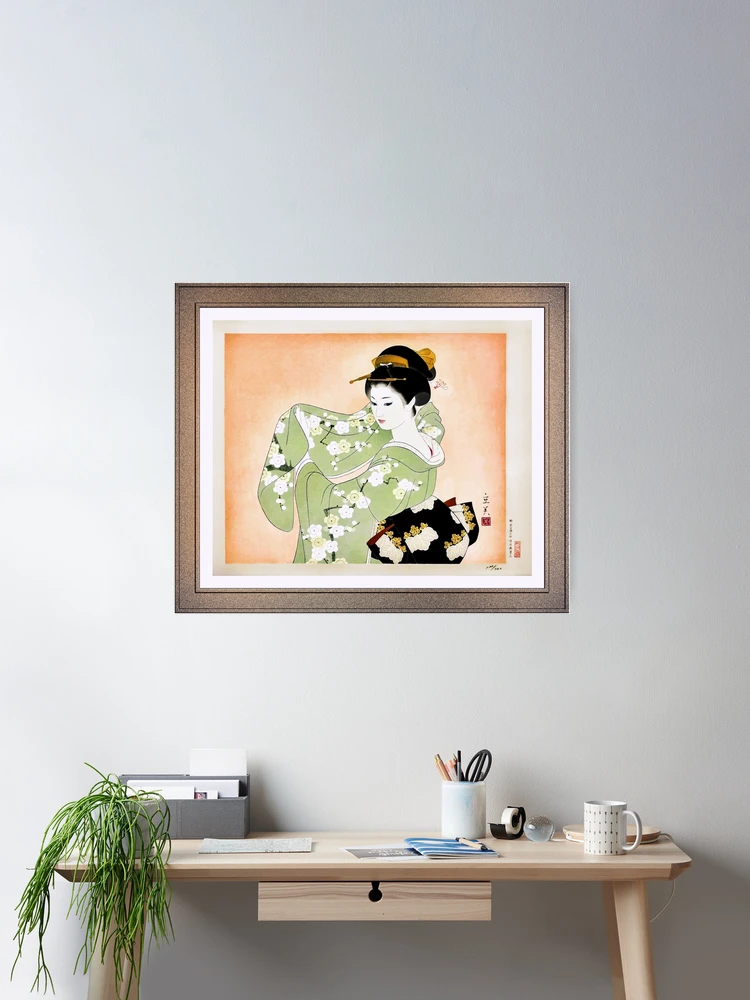
Tamoto (Mahuka), -k sortua japoniarra margolaria Tatsumi Shimura (1907 – 1980), Japoniako kultura tradizionalaren edertasun eta grazia korapilatsuan sakontzen duen arte japoniarren adibide nabarmena da. Artelanak emakumezko figura baten erretratu delikatua aurkezten du, Japoniako feminitatearen esentzia gorpuzten du kimonoak janzteko artearen bidez, Shimuraren pintzelkada zorrotz eta dotoreek jasotzen duten moduan. Pieza honek gaiaren erakargarritasun estetikoa ez ezik, kulturaren ikuspegia ere eskaintzen du, tradizioaren garrantzia, eta sarritan kimonoa janzteko ekintzarekin batera doan kontenplazio lasaia.
Edukien taula
Gai nagusia: The Woman in Kimono
-ren bihotzean Tamoto (Mahuka) stands a graceful woman wearing an exquisite kimono. Her posture is one of elegance and serenity as she slightly tilts her head downward, suggesting a moment of reflection or repose. The woman is depicted with her left hand holding the sleeves of her kimono, allowing the viewer to appreciate the fine detailing of the floral pattern that adorns the garment.
This act of holding the sleeves, referred to as “tamoto” in Japanese, is symbolic in traditional culture, signifying both the beauty of the garment and the delicate, almost ethereal nature of the woman who wears it. Luzea, flowing sleeves of the kimono seem to be gently resting, embodying the woman’s grace as she stands against a soft, peach-colored background. Sotilak, almost dreamlike expression on her face, combined with the muted tones of her clothing, further enhances the contemplative atmosphere of the piece.
Kimonoa: A Masterpiece of Craftsmanship
The kimono worn by the woman in this painting is a focal point of the artwork, highlighted through the elaborate design of the floral motifs embroidered across its fabric. These delicate white flowers, possibly representing the symbolic cherry blossoms or other traditional floral elements of Japanese culture, are set against a calming green backdrop, which enhances their visual contrast.
The kimono itself is a masterful display of craftsmanship, and the depiction of its texture and intricate design is rendered with extraordinary attention to detail, reflecting the artist’s admiration for traditional Japanese attire and culture. The choice of soft, natural colors, particularly the green of the kimono, imbues the figure with an aura of tranquility, while also allowing the viewer to appreciate the beauty of the woman in relation to her garment.
The kimono serves as a powerful visual metaphor in the piece, representing not only the external beauty of the woman but also the rich cultural traditions associated with the wearing of such garments in Japanese society. Through this attire, the subject is not merely a person but a representation of cultural identity and grace.
Atzeko planoa eta ezarpena: The Quiet Serenity
-ren atzealdea Tamoto (Mahuka) is a soft, light peach hue that creates a tranquil atmosphere. The simplicity of the background allows the viewer’s focus to remain on the woman and her kimono, while the gentle gradient of color evokes a sense of calmness and peace.
This minimalistic approach to the background is characteristic of much Japanese art, where the interplay between subject and background often emphasizes the serenity of the scene rather than distracting from it. The artist has intentionally avoided busy or complex backgrounds, ensuring that the viewer remains anchored to the subject, allowing the delicate expressions and gestures of the figure to take center stage.
This sense of quietude is reinforced by the woman’s subdued expression and the soft brushwork of the piece, which creates an almost ethereal quality. The absence of strong, sharp lines lends a gentle, flowing sense of motion to the piece, as if the subject herself is a part of the tranquil landscape.
Estilo artistikoa eta teknika: Traditional and Refined
Tatsumi Shimura, in creating Tamoto (Mahuka), employed the traditional Japanese painting style, which emphasizes delicate brushwork and harmonious color palettes. Shimura was known for his precise yet flowing lines, capturing not just the external appearance of his subjects but also their inner essence and emotions.
The style of the painting draws from nihonga, the traditional Japanese painting style that integrates natural materials such as mineral pigments, ground shells, eta urre hostoa. Although the medium used by the artist in this piece remains unspecified, lore-diseinuaren xehetasun finek eta emakumearen ezaugarrien itzal leunek Shimuraren teknikak metodo klasikoetan errotuta zeudela iradokitzen dute. nihonga, edertasun findua lehenesten dutenak, naturalismoa, eta sinbolismo sakona.
Artistak garbiaren erabilera, apaingarririk gabeko lerroek koadroaren aldarte neurritsua osatzen dute. Irudiaren aurpegiko pintzelada samurra eta leuna da, errealismo zentzua sorraraziz, gaiaren kalitate etereoa gordez. Kimonoaren lore diseinua arreta handiz egiten da, petalo eta hosto bakoitzari Shimuraren estiloa definitzen duen leuntasunarekin bizia hartzen utziz. Konposizioaren barruan espazioa eta oreka menderatzeak gaiaren eta bere inguruaren soiltasun findua azpimarratzen du., aligning with the Japanese aesthetic of “wabi-sabi,” which appreciates the beauty in imperfection and quiet elegance.
Cultural and Symbolic Themes: The Timeless Grace of the Kimono
In Tamoto (Mahuka), Shimura explores themes of beauty, liraintasun, and femininity within the context of traditional Japanese culture. The depiction of the woman in her kimono is a reflection of the timeless nature of Japanese customs, where clothing and appearance carry deep cultural and emotional significance. The act of holding the kimono’s sleeves is a symbol of modesty and refinement, suggesting that the woman is not only adhering to cultural norms but also embodying the essence of Japanese femininity. This serene portrayal of the woman suggests that her role within the piece is to represent the quiet strength, dotorezia, and grace that the kimono embodies in the larger cultural context.
Gainera, the artwork can be seen as a tribute to traditional Japanese customs, in which women often wore kimonos as symbols of their status, edertasuna, eta grazia. The painter’s choice to focus on a single moment in time—capturing the woman in her moment of reverie—allows the viewer to reflect on the deeper cultural significance of the kimono and the role of women in Japanese society.
Bukaera: A Reflection of Tradition and Beauty
Tamoto (Mahuka) by Tatsumi Shimura is a captivating portrayal of both the beauty of the kimono and the quiet, graceful demeanor of the woman who wears it. Through careful use of color, konposizioa, eta ehundura, Shimura’s painting invites the viewer to pause and contemplate the refined elegance that pervades traditional Japanese culture. This work serves as a tribute to the timeless tradition of the kimono, and by extension, the role of women in preserving and embodying these cultural values. Shimura’s masterful rendering of the subject and her attire showcases the enduring legacy of Japanese art and the deep respect for tradition that it continues to inspire.
Domeinu publikoko irudi baten erreprodukzioa da mihise inprimatu sarean.
Artistaren biografia
Tatsumi Shimura was born in Takasaki in Gunma prefecture Japan in 1907, with the given name os Sentaro. When he was about 14 years old he began studing art with the Japanese Bijin-ga Illustrator Yamakawa Saiho and then three years later with is son Yamakawa Shuho (1898 – 1944), who was also a Bijin-ga artist.
In his younger years as with many young artist of the time Tatsumi worked as an illustrator for newspapers and magazine, most notably for the Japanese magazine “Woman’s world” (Fujokai); and also worked as a painter in the Bijin-ga style; emakume ederrak irudikatzen dituen arte generoa dena.
Geroago bere inguruan zegoenean 60 urte zituela, Tatsumi-k bere energia artistiko guztiak Nihonga edo pintura japoniar tradizionala izeneko japoniar pinturaren estiloari eskaini zizkion.; ingurukoak 1900 aurrera, eta Japoniako ohiko arte-konbentzioen arabera sortuak dira, teknikak eta materialak.