

The Age of Iron
The Age of Iron c1589 by Dutch Engraver Hendrick Goltzius (1558 – 1617); an Engraver, Draftsman, Painter and Print Publisher.
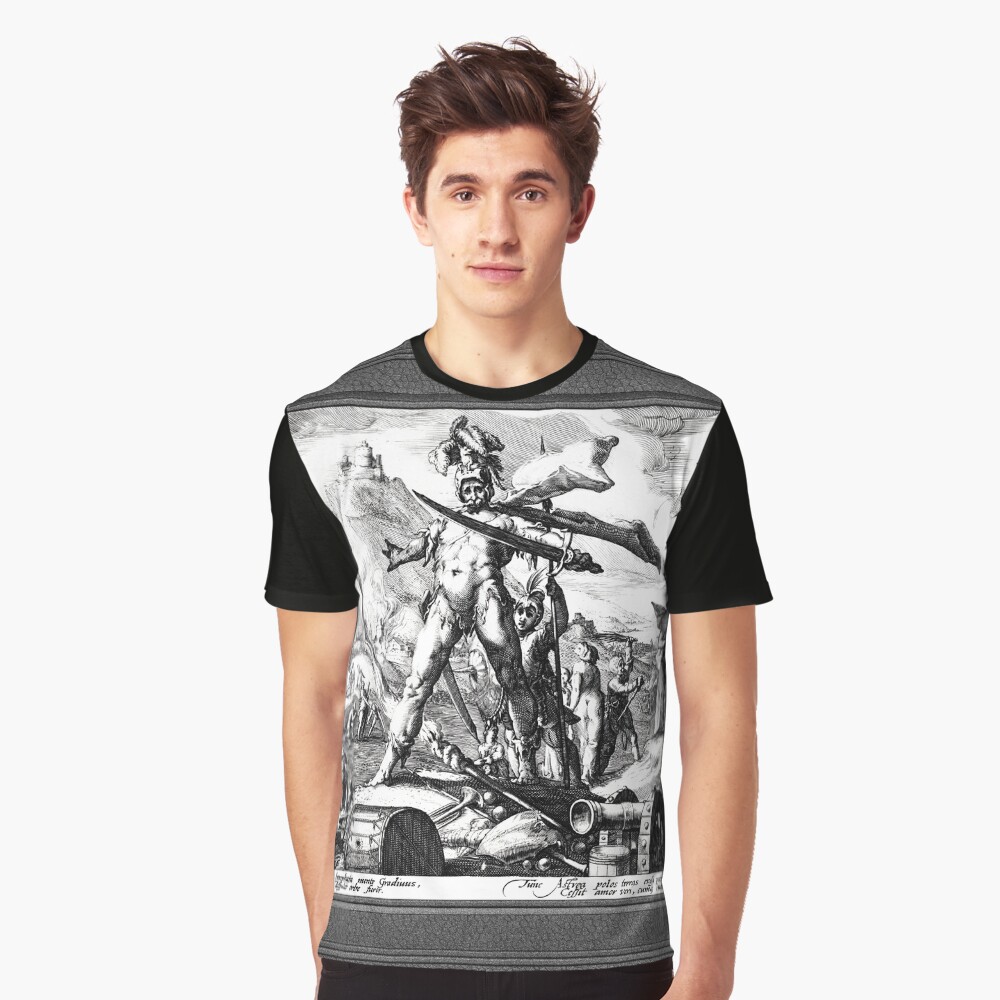
This engraving is a part of fourteen engravings of the Ages of Man, and depicts a scene from Greek Mythology which refers to a time of great conflict between nations during the 16th century.
In the scene there is an old soldier which is the central figure in conveying the plight of civilization as he stands on a mound of dirt or large boulder wearing tattered clothing a helmet with feathers, a weathered cape around his neck this blowing in the wind and a large sword in his left hand.
Behind him is a young childlike soldier that is dressed in a soldiers uniform holding a large shield in his right hand and a spear in his left hand that pointed straight up; with slaves or workers behind him, with other prisoners being lashed as they walk up a hill; while below them a prisoner sits by a fire that is tied to a tree.
In front of them both are the symbols of was, which include a canon, a barrel of gun powder, canon balls strewn about, a large drum, a horn and a lit torch.
In the scene we can see an assortment of workers that are most likely prisoners of war or slaves toiling the bare ground, and extracting its riches, with others being beaten and murdered.
In the distant background we can see a castle on the top of a mountain, as well as towns and villages, with some being set ablaze.

There is also a female figure to the upper right flying into the clouds carrying the symbols of justice in her left hand and a sword in her right.
Domeinu publikoko irudi baten erreprodukzioa da ijetzitako mihise inprimatu sarean.
Informazioa Behean Deribatua Wikipedia.org
Hendrick Venlo inguruan jaio zen Bracht edo Millebrecht, herri bat orduan Julicheko Dukerrian, bere familia Duisburgora joan zen hura zela 3 urte zituela eta adin nagusitu zenean beiraren gaineko pintura ikasi zuen aitaren aginduz urte batzuetan.
Gero Holandako Polymath Dirck Volckertszoon Coornhert-en eskutik ikasi zuen (1522 – 1590), harekin grabatua ikasi zuen.
In 1577 ondoren, Coornhert-ekin batera joan zen Holandako Errepublikako Haarlemera, non geratuko zen bere bizitza osorako; eta Haarlemen denbora batez Philip Gallerekin lan egingo zuen (1537 – 1612), Lukretiaren historiako estanpa-multzo bat grabatzeko.
Alboko Oharra: Lucretia; Lucrece bezala anglizizatua, Antzinako Erromako emakume noblea zen, zeinaren bortxaketa Sexto Tarkiniok (Tarkin) eta ondorengo suizidioak erromatar monarkia irauli zuen matxinada bat eragin zuen eta erromatar gobernua erresumatik errepublika izatera igaro zen..
Eskuineko eskuan izandako sute baten ondorioz, Hendrickek haurtzaroan sufritu zuela malformazioa eraginez, burila eusteko lesio horren ondorioz trebe bihurtu zen (grabatzeko tresna zorrotza) besoaren eta sorbaldaren gihar handiekin marraztera behartuta zegoen bezala.
Hendrick maisua zen “hantura-lerroa” eta baita aitzindaria ere “dot eta pastilla” teknika, non puntuak ipintzen diren gurutze-eskutiluaren bidez sortutako roma formako espazioen erdian, tonu-itzadura gehiago fintzeko.