

La Florknabino
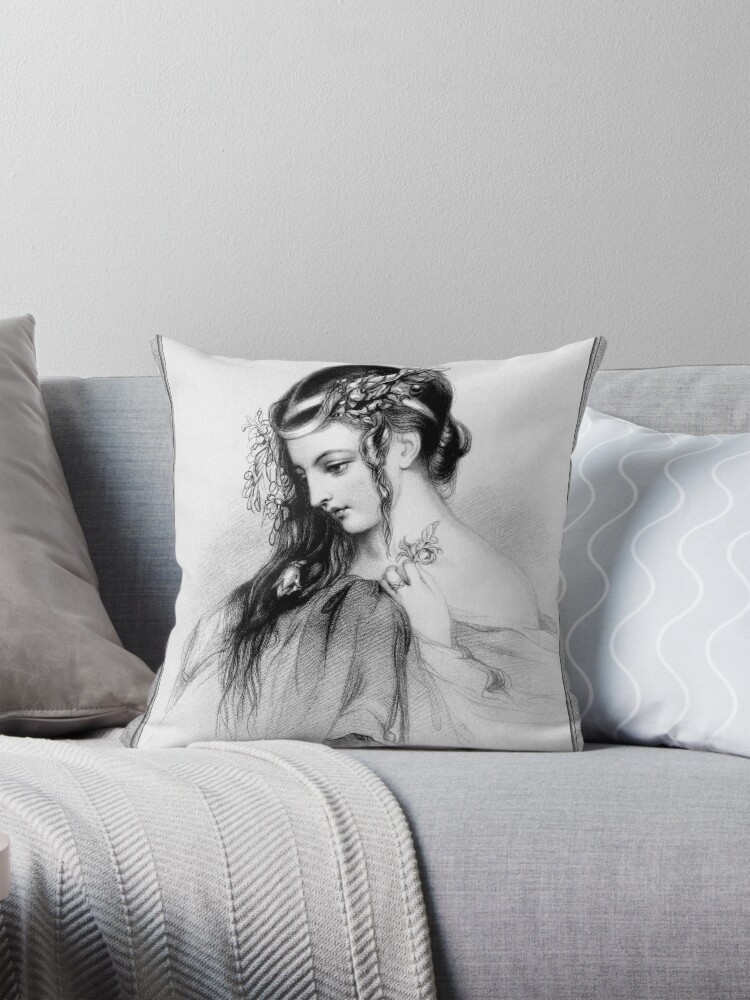
“The Flower Girl” is a captivating and delicate charcoal portrait of a young woman, embodying both grace and youthful femininity. La peco, created using the rich, muted tones of charcoal, is a three-quarter portrait that draws attention to the soft beauty of the subject’s face and the intricate details of her attire and adornments. While the artist’s identity is unknown, the technique suggests a mastery of classical sketching methods, evoking the tradition of 19th-century portraiture, where fine details and lifelike representations were of utmost importance. The absence of strong shading contrasts with the lightness of the subject’s features, further contributing to a sense of calm and delicate beauty.
Enhavtabelo
Ĉefa temo: The Young Flower Girl
The young woman at the center of the portrait is depicted in a soft, introspective pose. Her head is slightly tilted downward, as if she is contemplating something or simply lost in thought. The most striking feature of her appearance is the floral crown adorning her hair. A cluster of small flowers, delicately drawn and arranged around her head, adds a natural, ethereal touch to the scene. The flowers evoke a sense of purity and youth, enhancing the sense of innocence that permeates the piece. Her hair cascades gently down her shoulders in loose waves, adding to the sense of tranquility in the portrait.
The woman’s face is soft and serene, with features that are refined yet approachable. Ŝiaj okuloj, though not fully visible, seem to convey a quiet depth, sugestante homon, kiu ne nur estas bela ekstere sed portas trankvilan saĝon ene. La milda kurbo de ŝiaj lipoj sugestas etan rideton, tiu, kiu ne plene malkaŝas sin, sed restas nur perceptebla. Tiu ambigueco aldonas al la enigma naturo de la subjekto, invitante la spektanton demandi, kiaj emocioj povus kuŝi malantaŭ ŝia trankvila eksteraĵo.
The Setting and Background
La fono de “La Florknabino” estas subtila tamen grava. Ĝi restas minimumisma kaj netrudema, certigante ke ĉiu atento restas koncentrita sur la juna virino. La ombro de la fono estas milda kaj senjunte velkas en la figuron, kun malpezaj strekoj de karbo, kiuj kreas preskaŭ sonĝan etoson. Ĉi tiu manko de detalo en la fono reflektas la humoron de la peco: trankvila momento en la tempo, kie la ekstera mondo velkas en sensignifecon, allowing the inner life of the subject to take center stage.
La Materialoj kaj Tekniko
The artist’s choice of charcoal for this piece lends a unique richness to the portrait. Charcoal, with its deep blacks and ability to create soft, gradual transitions between light and shadow, allows the artist to give texture to the woman’s hair, haŭto, and clothing. The tonal range created by the charcoal adds dimension to the face and clothing, highlighting the softness of the woman’s features while adding an element of realism. This technique is characteristic of classical sketching, where the focus was often on capturing the essence of a subject with minimal use of color and instead relying on depth and contrast to create lifelike representations.
The use of delicate hatching and blending in the drawing technique gives the portrait a fluid, almost ephemeral quality. The slight smudging seen in the areas around the face and flowers helps bring a sense of motion to the static image, as though the figure might step out of the page at any moment. This technique also works in contrast to the sharp, clear lines defining the edges of the woman’s face and flowers, creating a visual balance between softness and definition.
La Humoro kaj Atmosfero
The overall mood of the artwork is one of serenity and quiet contemplation. The soft shading, gentle contours, and delicate adornments of the subject suggest a peaceful scene, perhaps set in a moment of quiet reflection or connection with nature. The flowers in the subject’s hair reinforce this peaceful connection to nature, simbolante belecon, kresko, and purity. There is an air of timelessness to the piece, as though the woman could exist in any era, her image unchanged by the passing of time.
The atmosphere created by the artist is one of introspection, where the viewer is invited to pause and reflect on the stillness of the moment. The lack of any overt expression of emotion adds to the sense of calm, allowing the viewer to project their own feelings onto the subject. This approach leaves much to the imagination, allowing for an intimate connection between the viewer and the artwork.
Konkludo
Konklude, “La Florknabino” is a masterful depiction of youthful beauty and serenity. Through the careful use of charcoal and the attention to detail in the subject’s features and adornments, the artist has created a piece that conveys both a sense of quiet elegance and a deeper emotional resonance. The subtle mood of introspection and the ethereal nature of the portrait invite the viewer into a world of peaceful contemplation, where nature and beauty converge. This work, though simple in its elements, carries a timeless appeal that transcends the era of its creation.
Ĉi tio estas retuŝita cifereca arto malnova majstra reproduktaĵo de publika domajno bildo.