

The Red Hotline
The Red Hotline: A Celebration of Glamour and Playfulness
The Red Hotline troch Peter Driben (1903 – 1968), an esteemed American pin-up artist of the mid-20th century, was celebrated for his ability to infuse vitality and charm into his works; and this piece is a quintessential example of his artistry, epitomizing the flirtatious yet wholesome essence of pin-up culture. Driben‘s vibrant palette, mastery of form, and knack for storytelling through visual art are on full display in this piece.
Ynhâldsopjefte
Haad ûnderwerp: The Radiant Blonde in Blue
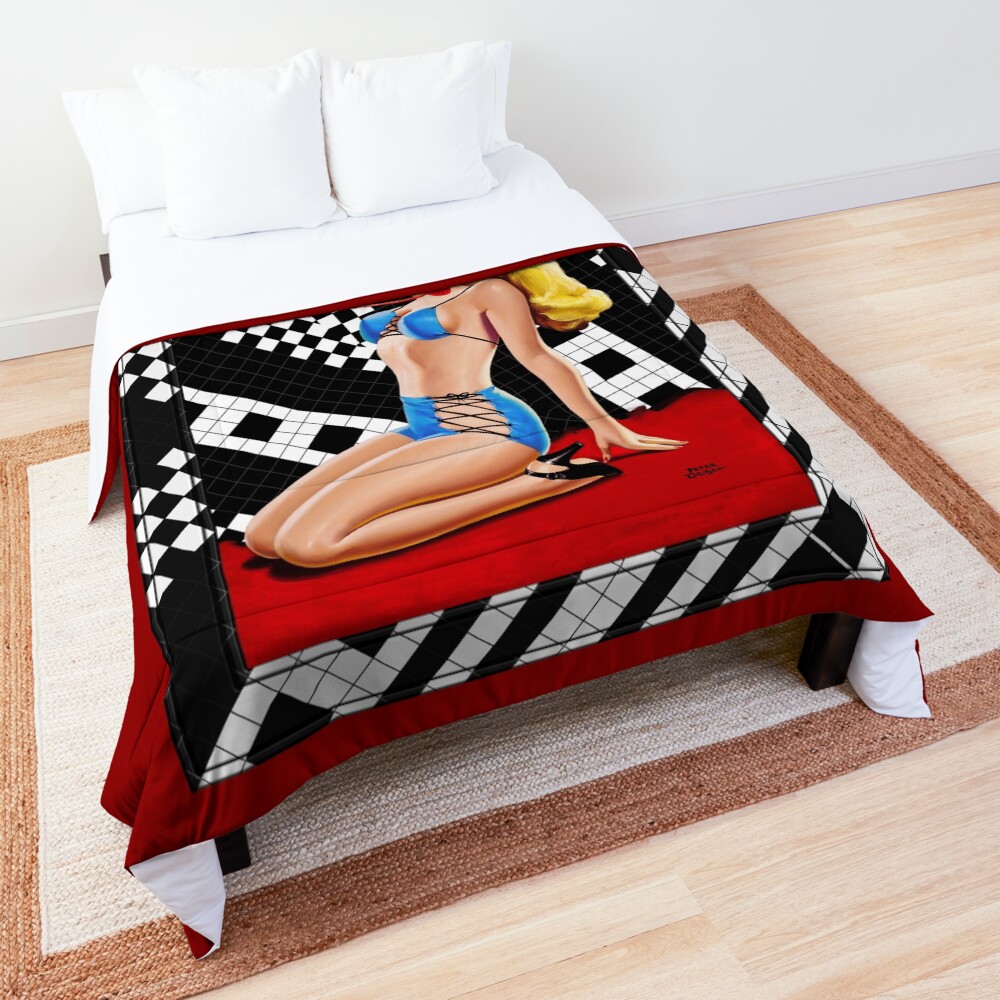
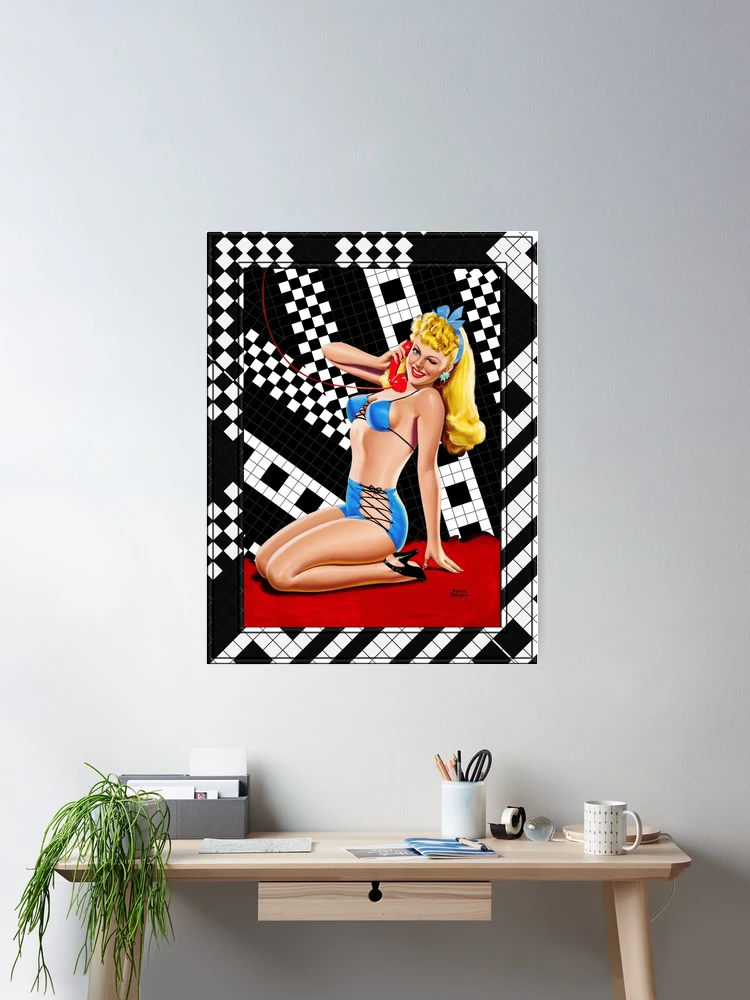
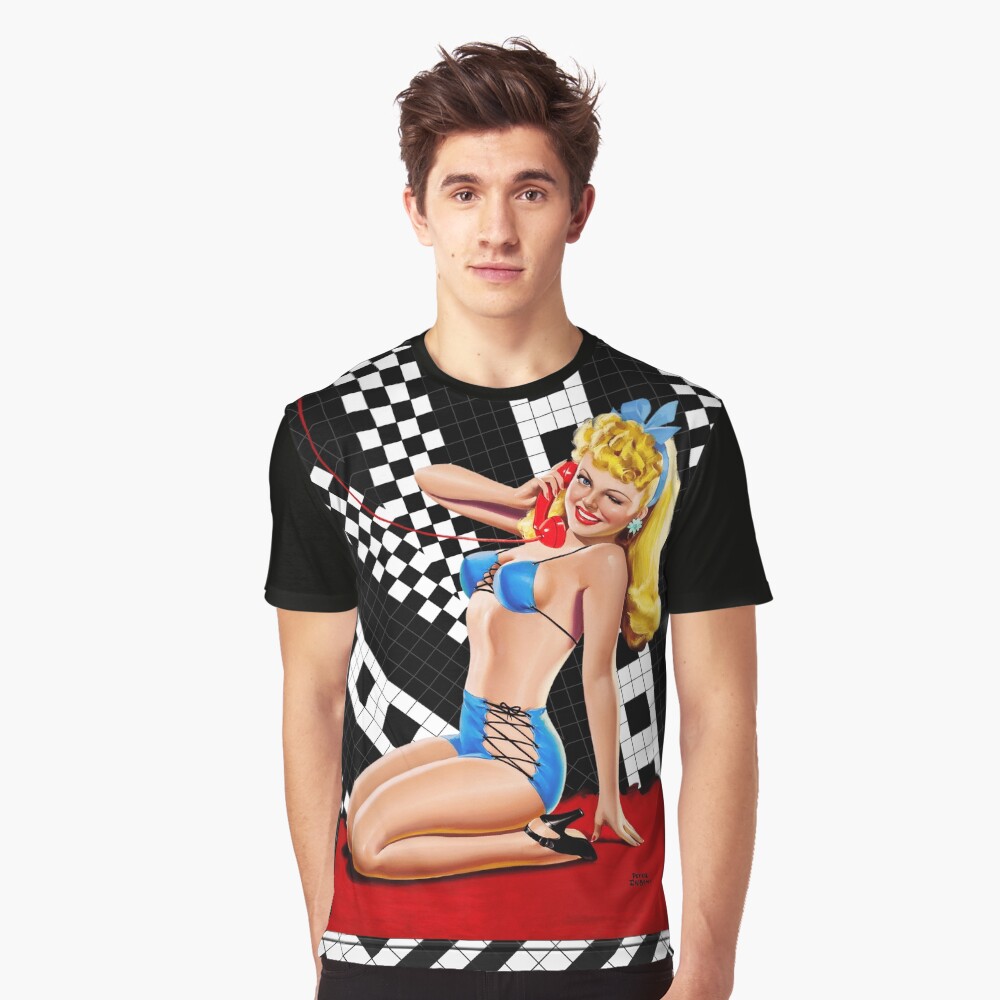
Yn it hert fan “The Red Hotline” lies a playful and coquettish depiction of a young blonde woman. Her golden hair cascades in carefully stylized waves, adorned with a large, cheerful blue bow that complements her swimsuit. The bright smile on her face, coupled with her winking eye, exudes an inviting charm, drawing viewers into the narrative. She holds a bright red telephone receiver, which lends the artwork its name and serves as a pivotal object within the composition.
The subject is dressed in a light blue bikini with black lace detailing. The high-waisted bottoms, characteristic of 1940s and 1950s fashion, are secured with crisscrossed laces, adding a touch of suggestive allure without compromising the overall playfulness of the scene. Her slender figure, accented by the pose, kneeling on a red carpet with one hand on the ground and the other holding the phone, demonstrates Driben’s skillful portrayal of anatomy and movement.
Background and Surrounding Objects
De eftergrûn fan “The Red Hotline” is a dazzling geometric checkerboard pattern, útfierd yn sterk swart en wyt. Dizze grafyk, hast optyske yllúzje-lykas design jout in modernistyske tsjinstelling ta it sêfte, froulike figuer op 'e foargrûn. De abstrakte eftergrûn ropt in gefoel fan enerzjy en frijmoedigens op, it fersterkjen fan de dynamyske kwaliteit fan 'e komposysje.
It reade telefoansnoer slingert boartlik oer it frame, it ûnderwerp te ferbinen mei in ûnsichtbere beller en in gefoel fan narrative yntriges ynjeksje. De telefoan sels, in libbene read, stiet skerp út tsjin de monochrome en blauwe eleminten, fungearret as sawol in fisueel as tematysk anker.
De reade loper ûnder de frou tsjinnet in dûbeld doel. It frames har pose wylst it tafoegjen fan in waarm, útnoegjend toan foar de komposysje. Dizze patch fan read balansearret de koelere toanen fan har klean en bûn werom nei de telefoan, it meitsjen fan in gearhingjend kleurskema.
Styl en technyk
It wurk fan Driben ferbyldet de Gouden Ieu fan pin-up keunst, in tiidrek doe't yllustrators ferovere in idealisearre, faaks brutale ôfbylding fan froulikens. Syn styl wurdt definiearre troch fette kleuren, skjinne linen, en in heech nivo fan Poalsk dat herinnert de glossy advertinsjes en tydskrift covers fan syn tiid.
Yn “The Red Hotline,” Driben's gebrûk fan ljocht en skaad is subtyl, mar effektyf. De glossy glâns op 'e telefoan en de veters fan' e swimpak foeget in gefoel fan tekstuer en realisme ta, wylst de sêfte skaden lâns de bochten fan 'e figuer har trijediminsjonaliteit ferbetterje. De oandacht fan de keunstner foar detail - lykas de krekte werjefte fan har glossy swarte hakken as de subtile hichtepunten yn har hier - lit syn technyske feardigens sjen.
Tema en stimming
It tema fan “The Red Hotline” is lichtsinnich en boartlik, woartele yn it optimisme en brutale humor dy't mid-ieuske pin-up keunst karakterisearre. De telefoan bringt in elemint fan ferhalen yn, sjoggers útnoegje om it petear dat plakfine foar te stellen. Is se flirten mei in frijer? Diele in laitsje mei in freon? De dûbelsinnigens makket in ferskaat oan ynterpretaasjes mooglik, it tafoegjen fan djipte oan 'e skynber ienfâldige sêne.
De stimming is sûnder mis leuk en flirterich, dochs bliuwt it binnen it ryk fan ûnskuldige ûntsnapping. De pin-ups fan Driben rûnen faak de line tusken suggestiveness en heil, in lykwicht dat se yn har tiid rûnom populêr en tagonklik makke. “The Red Hotline” is gjin útsûndering, offering a playful fantasy that never veers into vulgarity.
Materiaal en Medium
While the specific medium of this piece isn’t detailed here, Driben was known for his work in gouache and oil paints. These mediums allowed him to achieve the vibrant colors and smooth finishes seen in “The Red Hotline.” The level of precision in the lines and shading suggests that this artwork was originally created as an illustration, likely intended for print in a magazine, calendar, or poster.
Kulturele kontekst en legacy
“The Red Hotline” reflects the cultural zeitgeist of its era. Created during a time when pin-up art was at its peak, it embodies the idealized femininity and playful sensuality that appealed to audiences in the mid-20th century. Driben’s works were part of a broader movement that celebrated beauty, glamour, and the allure of the everyday woman.
As stikje pin-up keunst, “The Red Hotline” draacht de erfenis fan in sjenre dat de moade beynfloede, reklame, en populêre kultuer. Hjoed, it stiet as in nostalgyske oantinken oan in ferline tiidrek, wurdearre sawol foar syn estetyske kwaliteiten as syn histoaryske betsjutting.
Konklúzje
“The Red Hotline” troch Peter Driben is in masterlik foarbyld fan mid-ieuske pin-up keunst. It boeiende ûnderwerp, fet design, en libbene útfiering showcase de keunstner syn talint en kreativiteit. Driben's fermogen om boartlikens te kombinearjen mei technyske presyzje soarget derfoar dat dit keunstwurk in bliuwend ikoan fan har sjenre bliuwt. It vangt in momint yn 'e tiid doe't glamour en sjarme waarden fierd, it oanbieden fan sjoggers in hearlike blik yn 'e wrâld fan vintage yllustraasje.
Dit is in remastered digitale keunst âlde masters reproduksje fan in byld yn it iepenbier domein dat is beskikber as in metal print online.
Oer The Artist
Info hjirûnder Fan Wikipedia.org
Peter Driben waard berne yn Boston, en hy studearre oan de Vesper George Art School foardat hy ferhuze nei Parys yn 1925. Wylst it nimmen fan lessen oan 'e Sorbonne yn 1925, hy begûn in rige fan tige populêre pinne-en-inkt tekeningen fan de stêd syn showgirls.
Yn maart fan 1934 Driben makke syn earste bekende pin-up dy't de omslach wie fan La Paree Stories; en by 1935, hy produsearre covers foar Snappy, Pep, New York Nights, Frânsk Night Life en Caprice.
Doe't Driben's populariteit yn 'e lette tritiger jierren fierder tanimme, makke hy mear covers foar oare tydskriften, ynklusyf Silk Stocking Stories, Film Merry-Go-Round en Real Screen Fun.
Driben's karriêre wreide út yn reklame doe't hy yn 'e let nei New York ferhuze 1936. Hjir makke hy orizjinele trijediminsjonale die-cut finsterskermen foar Philco Radios, Cannon Bath Handoeken, en de Weber Baking Company.
Miskien is syn meast ferneamde wurk de orizjinele posters en publisiteitskeunstwurk foar The Maltese Falcon. Peter Driben wie ek in nauwe freon fan útjouwer Robert Harrison, en yn 1941 hy waard kontraktearre om covers te produsearjen foar Harrison's nije tydskrift Beauty Parade.
Fan dêrút gong Peter hûnderten omslagen foar dy publikaasje en foar de oare sân titels dy't Harrison lansearje soe – Flirt, Flústerje, Peeking, Knypeagje, Eyeful, Giggles, en Joker.
Driben soe faaks wol seis of sân fan syn covers elke moanne publisearre hawwe. Driben's wurk foar Harrison fêstige him as ien fan 'e meast erkende en suksesfolle pin-up- en glamour-artysten fan Amearika. Krekt foardat hy begon te wurkjen foar Harrison, Driben troude mei de keunstner, aktrise en dichter, Louise Kirby.
Yn 1944 hy waard de ûngewoane kâns oanbean, foar in pin-up artyst; dat soe de art director wurde fan 'e New York Sun, in post er behâlden oant 1946. Yn de oarloch, syn populêre skilderij fan Amerikaanske soldaten dy't de flagge ophieze by Iwo Jima soarge foar in flinke hoemannichte media-oandacht.
Yn 1956, Driben en Louise ferhuze nei Miami Beach, dêr't er syn pensjoenjierren trochbrocht mei it skilderjen fan portretten (ynklusyf ien fan Dwight D. Eisenhower) en oare keunstwurken, dy't waarden organisearre yn suksesfolle útstallings troch syn frou. Driben stoar yn 1968, Louise yn 1984.