

Too Hot
Too Hot c1904 by British Painter Arthur John Elsley (1860 – 1952); a painter of the late Victorian and Edwardian periods known for his idyllic genre scenes of playful children and their pets.
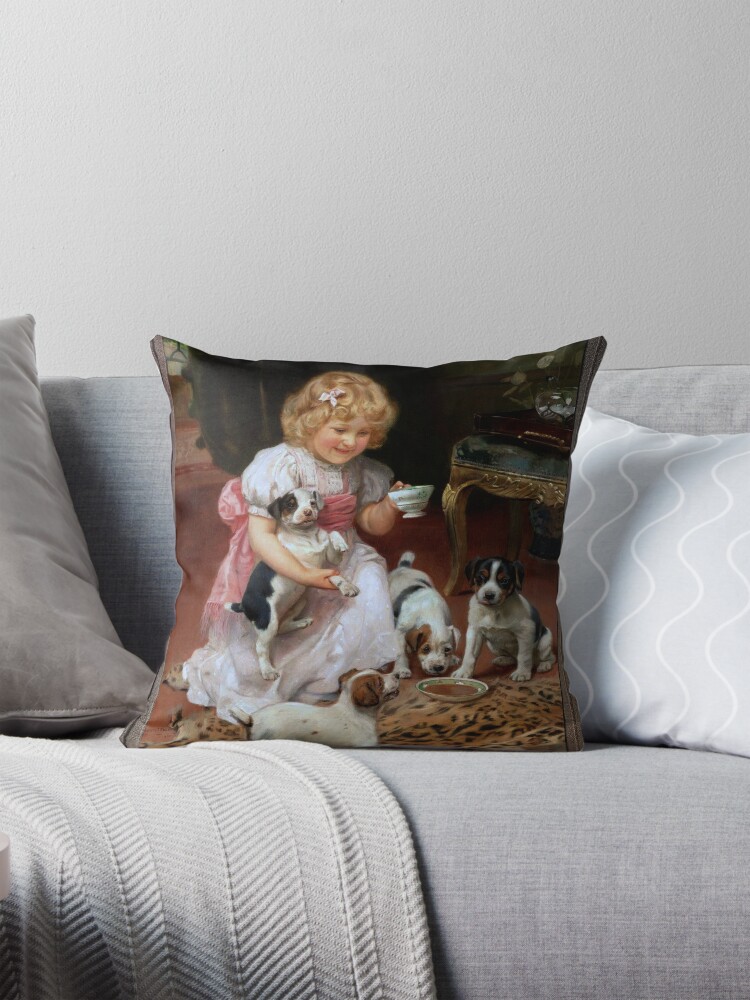
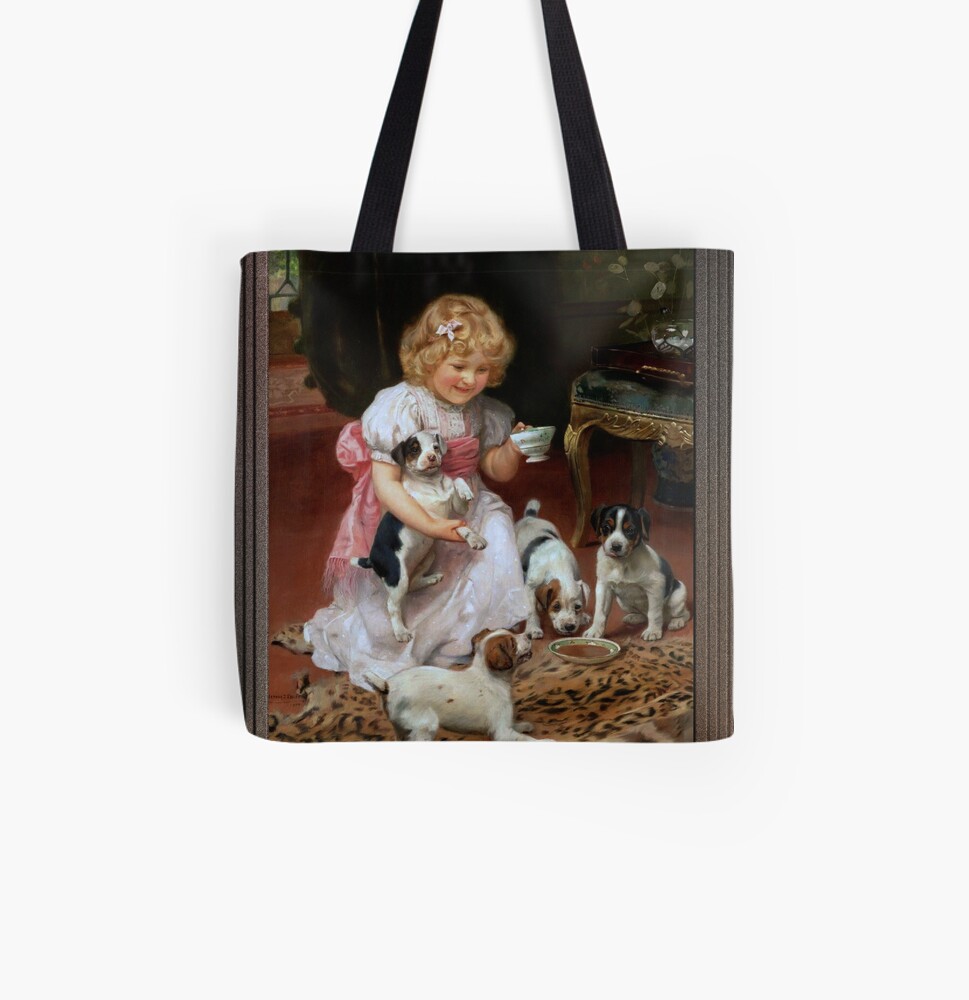
The artwork, “Too Hot,” painted by the British artist Arthur John Elsley in 1904, presents a delightful and heartwarming scene filled with tender affection and innocence. This piece captures the essence of childhood joy and the uncomplicated connection between a young girl and her playful puppies. Set in a comfortably furnished interior, the painting evokes a sense of nostalgia and the pure pleasures of childhood.
The central figure in the composition is a young girl, likely around six or seven years old, dressed in a soft, flowing pale pink dress. The dress, delicately adorned with frills and lace, speaks to the elegance and simplicity of the period’s fashion. Her blonde hair, styled in loose waves and secured with a small ribbon, frames her cherubic face, which is illuminated with a gentle smile that reveals her delight in the company of the puppies.
The girl holds a teacup, raised delicately with both hands, as though offering it to one of the playful dogs. This simple action gives the viewer a sense of the girl’s nurturing nature and the bond she shares with the animals around her.
Beneath her, on the floor, a group of four small puppies, their coats a mix of white with patches of brown and black, are playfully scattered across the soft, fur rug. The puppies, lively and curious, are engaged in their own playful activities, either nuzzling the girl’s lap or reaching for a small bowl of food placed before them. The puppies’ antics are captured with remarkable detail, their expressive faces and fluffy bodies radiating a sense of liveliness.
One of the puppies is perched in the girl’s arms, its little paws reaching upward as if seeking more attention. Another puppy appears to be drinking from the food bowl, its posture indicating both eagerness and contentment. The presence of these animals introduces a dynamic contrast to the calm demeanor of the child, amplifying the lighthearted tone of the painting.
The background of the artwork is equally important in setting the scene. The rich, warm tones of the room suggest a comfortable, middle-class domestic environment. Behind the girl, large windows with soft, filtered light hint at a garden or courtyard outside. The natural light streaming in suggests a late afternoon or early evening, contributing to the serene atmosphere.
The room is tastefully decorated, with elegant furnishings such as an ornate wooden side table and a small shelf adorned with a delicate vase holding a few sprigs of greenery. These elements suggest the family’s affluence and attention to detail in creating a cozy home environment.
The choice of setting, the use of soft lighting, and the realistic depiction of the textures of the girl’s dress, the puppies’ fur, and the luxurious fabric of the rug all work together to create an inviting, intimate scene. Elsley’s technique in rendering the textures—whether it’s the soft frill of the girl’s dress, the plush softness of the rug, or the glossy sheen of the puppies’ fur—demonstrates his mastery of classical painting techniques.
Every detail, from the rich hues to the meticulous attention to the anatomy of the puppies, is executed with a high degree of skill. The artist captures the natural world with a lifelike quality, yet the overall effect of the painting is one of idealized beauty.
The mood of the painting is overwhelmingly positive, evoking a sense of contentment, innocence, and warmth. The child’s expression, a mixture of gentle happiness and affection, conveys an emotional depth that draws the viewer in. Her quiet enjoyment of the moment, surrounded by her playful companions, creates an atmosphere of carefree joy.
The presence of the puppies adds an element of motion and life, emphasizing the vibrancy of youth. The combination of the child’s placid joy and the puppies’ playful energy balances the composition, providing a sense of harmony between stillness and movement.
The theme of innocence and childhood play is central to Elsley’s work, as he frequently focused on depicting young children in their most natural, carefree states, often with animals. This theme of a child’s bond with nature and animals is a recurring motif in his oeuvre, reflecting the Victorian ideal of childhood as a time of pure joy and untainted beauty. The artist’s choice to place a child in the company of animals also suggests themes of companionship, trust, and the nurturing relationship between humans and the natural world.
In terms of style, Elsley’s painting can be classified as part of the Victorian and Edwardian realism tradition. His works often featured highly detailed, lifelike renderings, with an emphasis on capturing the momentary beauty of everyday life.
The attention to detail in the textures and light in “Too Hot” speaks to his commitment to realistic portrayal while maintaining a certain softness and idealization typical of the period. The atmosphere created by Elsley is one of warmth, tranquility, and familial love, achieved through his technical skill and his deep understanding of human emotion.
The choice of materials, likely oil on canvas, allows Elsley to create depth and texture, enhancing the realism of the piece. The soft gradations of light and shadow on the girl’s face and the puppies’ fur are achieved through careful layering of paint, creating a sense of three-dimensionality. The painterly quality of the piece, with its smooth, fluid brushstrokes, contributes to the overall harmony and beauty of the composition.
In conclusion, “Too Hot” by Arthur John Elsley is a timeless portrayal of youthful innocence, companionship, and the joy of childhood. The artist’s keen eye for detail, the emotional depth captured in the child’s expression, and the playful vitality of the puppies all contribute to the painting’s enchanting atmosphere. It is a perfect representation of a bygone era, capturing the essence of a simpler, more carefree time through the lens of childhood and animal companionship.