

Zadní pohled na ležící Venuši v doprovodu Cupida s harfou
Ležící Venuše za doprovodu Cupida s harfou c1817 od italského sochaře Antonia Canova (1757 – 1822), neoklasicistní sochař, který se proslavil svými mramorovými sochami; a považován za největšího z neoklasicistních umělců.
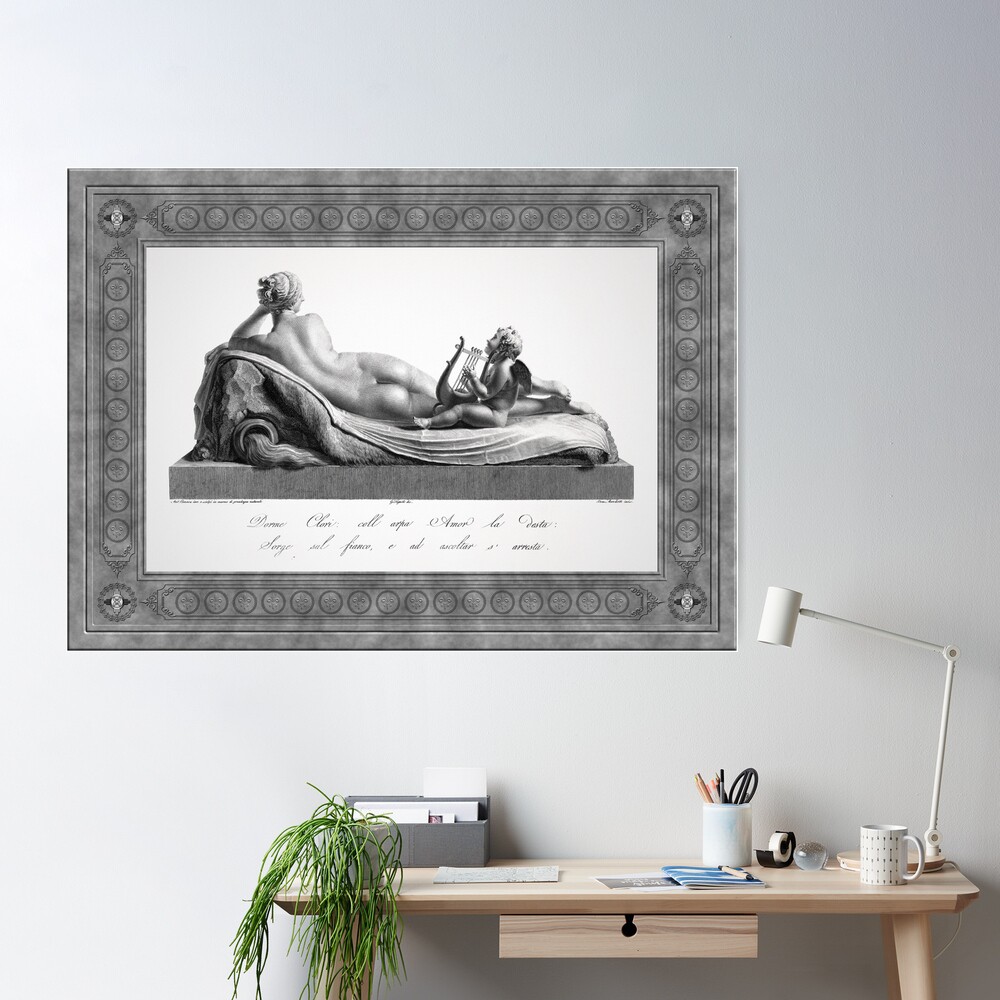
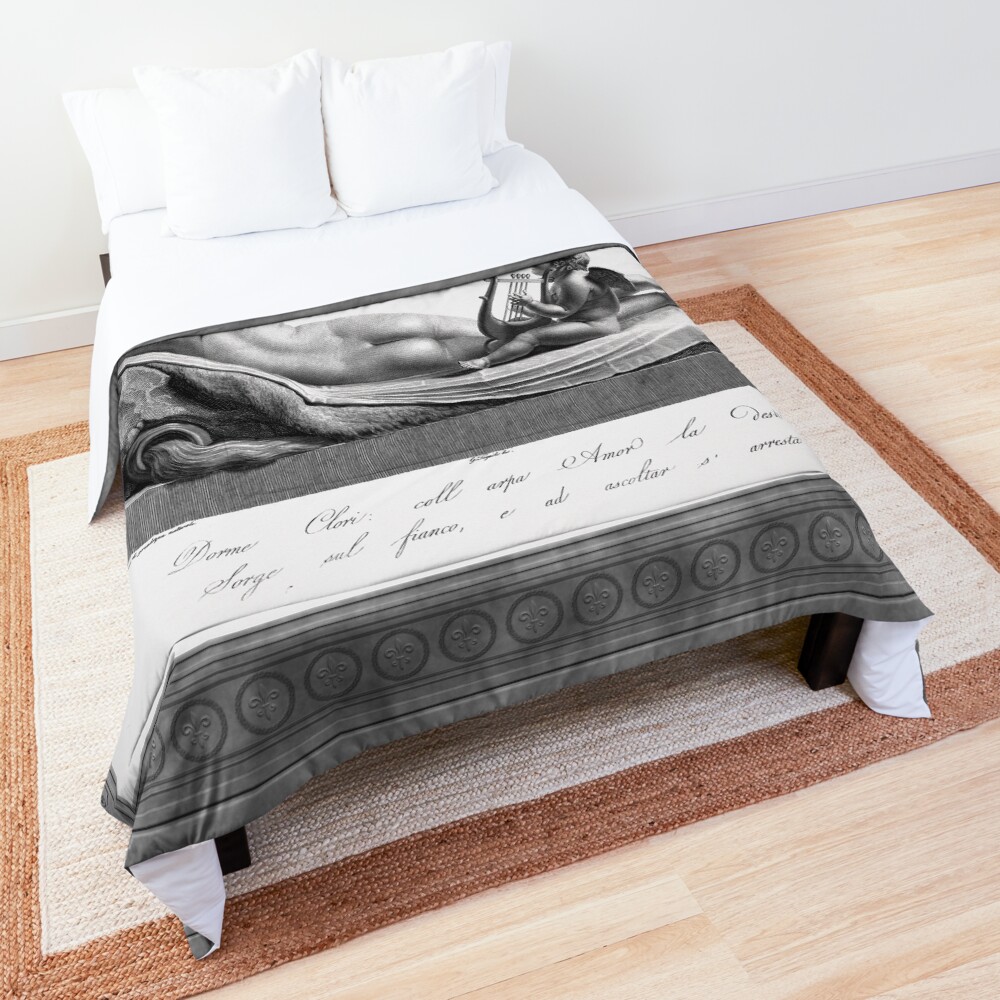
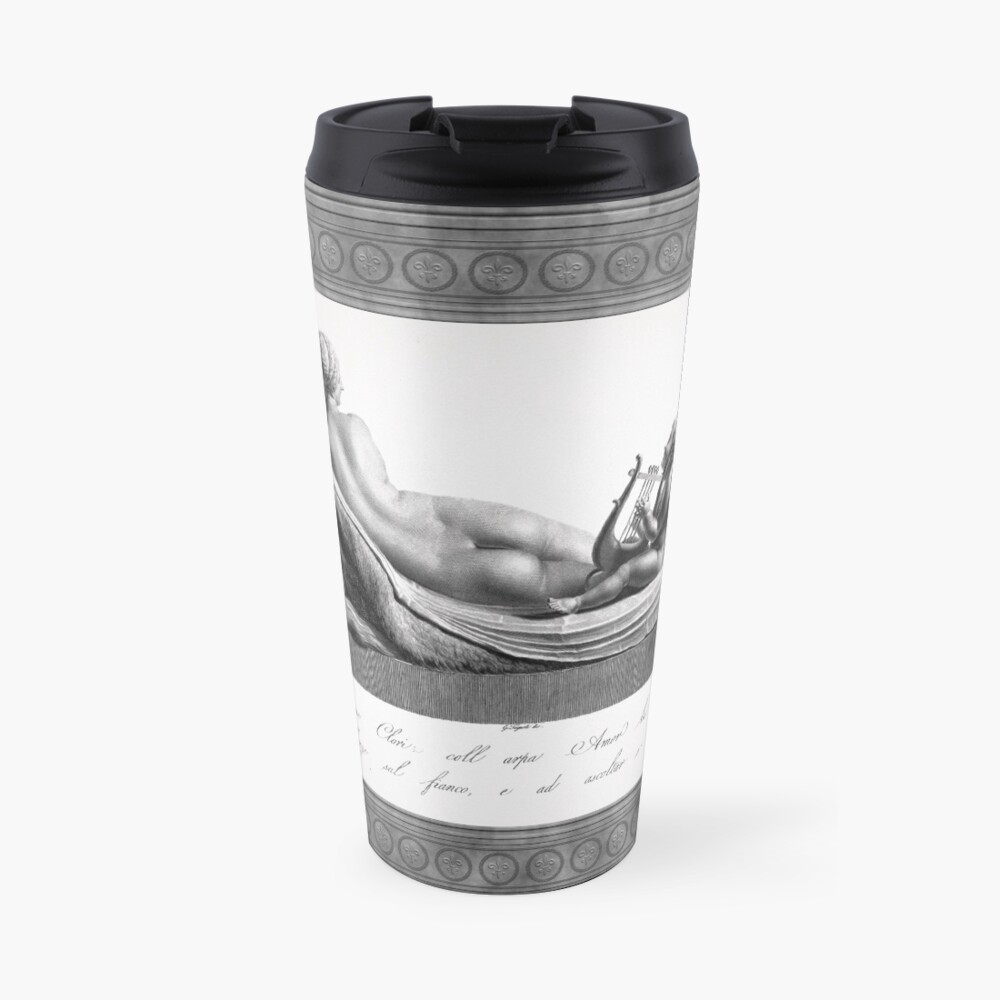
Toto je krásná rytina od italského rytce Domenica Marchettiho (1780 – 1844) která vychází ze sochy Antonia Canovy, a připravil ji italský zprostředkovatelský kreslíř Giovanni Tognolli (1786 – 1862).
Má krásné detaily a světelné efekty dodávají rytině úžasný pocit hloubky; nejen struktury ložního prádla, ale z Venuše (římská bohyně lásky) a jejího syna Cupida (římského boha lásky/touhy) který vedle ní hraje na harfu.
Venus Reclining doprovázená Cupidem With A Harp je retušovaná digitální umělecká reprodukce starých mistrů obrázku ve veřejné doméně, který je dostupný online jako tisk na plátno.
Pro nákup použijte tento odkaz Ozdobný majetek použitý k vytvoření rámu v tomto kusu; balíček obsahuje 400 prvky krásně navržených ozdob.
Níže uvedené informace jsou odvozeny z Wikipedia.org
Antonio se narodil Pietro Canova, řezač kamene, a Maria Angela Zardo Fantolini v 1757 v tehdejším městě Possagno v Benátské republice.
Benátská republika nebo Benátská republika byla suverénní státní a námořní republika v částech dnešní Itálie (hlavně severovýchodní Itálii) který existoval pro 1100 let od 697 AD až do 1797 INZERÁT.
Soustředí se na lagunové komunity prosperujícího města Benátky, to zahrnovalo četné zámořské majetky v moderním Chorvatsku, Slovinsko, Černá Hora, Řecko, Albánie a Kypr.
Když byly Antoniovi čtyři roky, zemřel mu otec, ao rok později se jeho matka znovu provdala a v důsledku toho byl svěřen do péče dědečka z otcovy strany Pasina Canova, který byl kameníkem a majitelem lomu; as well as a sculptor in the late Baroque style who specialized in producing altars with statues and low reliefs.
This pairing is what led Antonio into the art of sculpting, and at the age of nine he created two small shrines out of Carrara Marble, which still exist today and by the age of ten he was making clay models and carving marble.
Ve věku 13 he began an apprenticeship with the prominent Neoclassical 18th century Italian sculptor Giuseppe Bernardi (1694 – 1773), also known as Torretto; and this would last for tow years.
Afterwards Antonio began working and studying under Italian sculptor Giovanni Ferrari (174 – 1826), and during this period he was provided with his own sculpting shop within a monastery by some of the local monks
v 1775 Antonio began a project to produce statues of Orpheus and Eurydice for the garden of Senator Giovanni Falier for which he was commissioned; and completed the project by 1777.
These pieces are a great example of the style of the late Rococo period; a year later were exhibited for the Feast of the Ascension in Piazza S. Marco, where they were widely praised, which won him fame among the Venetian elite.
v 1779 Antonio opened a studio at Calle Del Traghetto at S. Maurizio and was commissioned by Procurator Pietro Vettor Pisani to produce his first marble statue of a depiction of Daedalus and Icarus.
v 1780 he traveled to Rome spending most of his time studying and sketching the works of Michelangelo; pak dovnitř 1781 he Venetian ambassador to Rome, Girolamo Zulian (1730 – 1795) hired him to produce a sculpture of Theseus and the Minotaur.
Girolamo is considered to have had significant impact to the fame that Antonio would have in his career; and at his palace he turned some of the rooms in his palace into a studio for Antonio.
When he completed the work on Theseus and the Minotaur; which depicts the victorious Theseus sitting on the lifeless body of the Minotaur, the reaction of early spectators of the work, were that it was a copy of a Greek original; but were shocked to learn that it was a contemporary work.
From this point forward Antonio’s fame grows and between 1783 na 1785, he arranged, složený, and designed a funerary monument dedicated to Clement XIV for the Church of Santi Apostoli, which was completed in 1787; which secured his position as the preeminent living artist of his time.
He would continue to create great sculpture masterpieces until his death in 1822 ve věku 65.