

A Fairy Is Made Of Most Beautiful Things
Sophie Gengembre Anderson’s (1823 – 1903) painting A Fairy Is Made of Most Beautiful Things captures the delicate, ethereal beauty of an enchanting fairy, seamlessly blending the artist’s penchant for mythological themes with her trademark Romantic style. The artwork evokes a deep sense of wonder, where the boundary between the magical and the real is ever so thin. With its dreamlike quality and intricate detailing, Anderson creates a scene that pulls viewers into an almost mythical world.
The subject of the painting is a young fairy, her delicate features and expressive eyes captivating the viewer. The fairy, set in a lush natural environment, is positioned in a graceful, gentle pose, holding a small object in her hands. The fairy’s golden locks cascade down her shoulders, framing her soft, youthful face. She is adorned with a crown made of colorful butterflies, a motif that suggests the lightness and freedom associated with both the insect and the fairy realm. Her wings, though delicate and finely detailed, have a subtle translucence, hinting at the airy nature of her existence. These elements combine to create a fairy whose innocence and grace are strikingly portrayed.
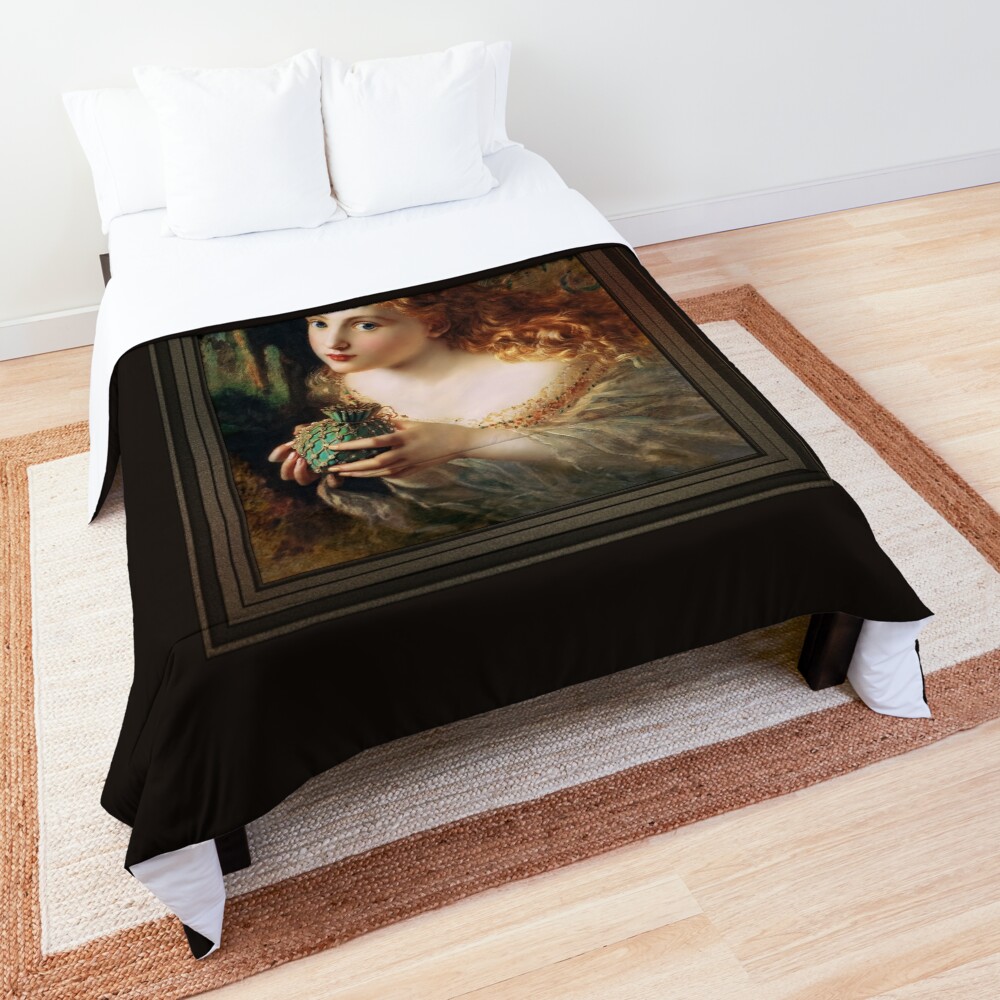
Table of Contents
The Setting and Surrounding Details
The setting of the artwork is equally as significant as the subject, blending the fairy’s delicate form with a rich, lush background. A shadowy, dark terrain envelops the scene, with hints of foliage and rocks. The depth of the natural world is contrasted with the fairy’s glowing presence, enhancing her almost otherworldly appearance. Anderson has masterfully rendered the fairy’s surroundings, ensuring the environment complements the mystical quality of her character.
The fairy is positioned against a rock or stone formation, which could symbolize a threshold between the earthly and the ethereal. This connection is emphasized by the fairy’s tender grasp on a small, intricately designed object she holds—likely a precious artifact that suggests both beauty and fragility. It is draped in elaborate patterns, beads, and fine detailing, which suggests that it is an object of importance, perhaps a talisman or magical item that further connects her to her world.
The Artistic Style and Technique
Sophie Gengembre Anderson was known for her exquisite attention to detail, and A Fairy Is Made of Most Beautiful Things is a prime example of her mastery. Her Romantic style is apparent in the softness of the figure’s portrayal, as well as the emphasis on idealized beauty. The realism with which she paints the fairy’s hair, facial features, and intricate costume speaks to the artist’s technical prowess. Anderson’s choice of color further enhances the dreamlike quality of the painting. The soft pastel shades of the fairy’s attire blend seamlessly with the vibrant butterflies that adorn her crown, creating an overall sense of harmony and balance.
The soft, almost luminous quality of the skin and delicate highlights on the fairy’s face give her an angelic aura. The artist’s delicate brushwork brings out the soft glow of the fairy’s complexion and emphasizes the fragile, ethereal nature of her character. Anderson’s meticulous technique in portraying textures—such as the intricate folds in the fairy’s clothing and the shimmering, iridescent wings—highlights her skill in rendering both the material and immaterial elements of her subject.
The Themes and Mood
The overall mood of the painting is one of reverence and admiration for beauty and innocence. The fairy’s youthful gaze, combined with her serene expression, evokes a sense of purity and delicate grace. This portrayal is in keeping with the Romantic movement, which often idealized the natural world, the supernatural, and the innocence of childhood. The painting invites viewers to imagine a world of fantasy, where such mythical beings live in harmony with nature, untouched by the harsh realities of the human world.
The use of butterflies, symbols of transformation and freedom, also speaks to themes of metamorphosis and the fleeting beauty of life. These creatures are often associated with spiritual growth and liberation, adding a layer of depth to the fairy’s character. The fairy’s interaction with these butterflies—both adorning her crown and fluttering around her—suggests that she is a part of a greater, interconnected world.
While the overall tone of the painting is gentle and whimsical, there is an undercurrent of mystery, particularly in the object the fairy holds in her hands. This item, intricately beaded and carefully held, could represent an important relic or key to a magical world, adding an element of intrigue to the otherwise peaceful scene.
The Materials and Techniques
The artist employed oil paints on canvas to achieve the soft yet vibrant hues in A Fairy Is Made of Most Beautiful Things. Anderson’s use of oil paints allows for the fluid, almost translucent effect of the fairy’s wings, as well as the soft blending of tones in her face and clothing. The fine details, such as the butterfly crowns and the texture of the object the fairy holds, are expertly rendered to provide a lifelike yet fantastical element to the composition.
Anderson’s ability to blend light and shadow effectively enhances the three-dimensionality of her figures, allowing the viewer to feel as though they are peering into a three-dimensional world. The light sources seem to emanate softly from the fairy herself, enhancing her otherworldly, almost divine quality.
Conclusion
In A Fairy Is Made of Most Beautiful Things, Sophie Gengembre Anderson brings to life a mystical and enchanting world, where the natural and supernatural intertwine. Through her meticulous technique and thoughtful use of symbolism, Anderson invites the viewer into a world of pure beauty, innocence, and mystery. The fairy, with her butterfly crown, delicate wings, and ethereal presence, serves as both a symbol of innocence and a reminder of the fragile yet beautiful nature of existence. The rich, detailed landscape and the fairy’s interaction with her surroundings further solidify the fantastical theme of the painting, making it a captivating work that continues to resonate with viewers.
A Fairy Is Made Of Most Beautiful Things cUnknown by French-born British Painter Sophie Gengembre Anderson (1823 – 1903); who specialized in Neoclassic and Italian genre painting of women and children, generally in rural settings.
Take the Fair Face of Woman, and Gently Suspending, With Butterflies, Flowers, and Jewels Attending, Thus Your Fairy is Made of Most Beautiful Things
This is a retouched digital art old masters reproduction of a public domain image that is available for sale as an online art print.