

Veronica Veronese c1872
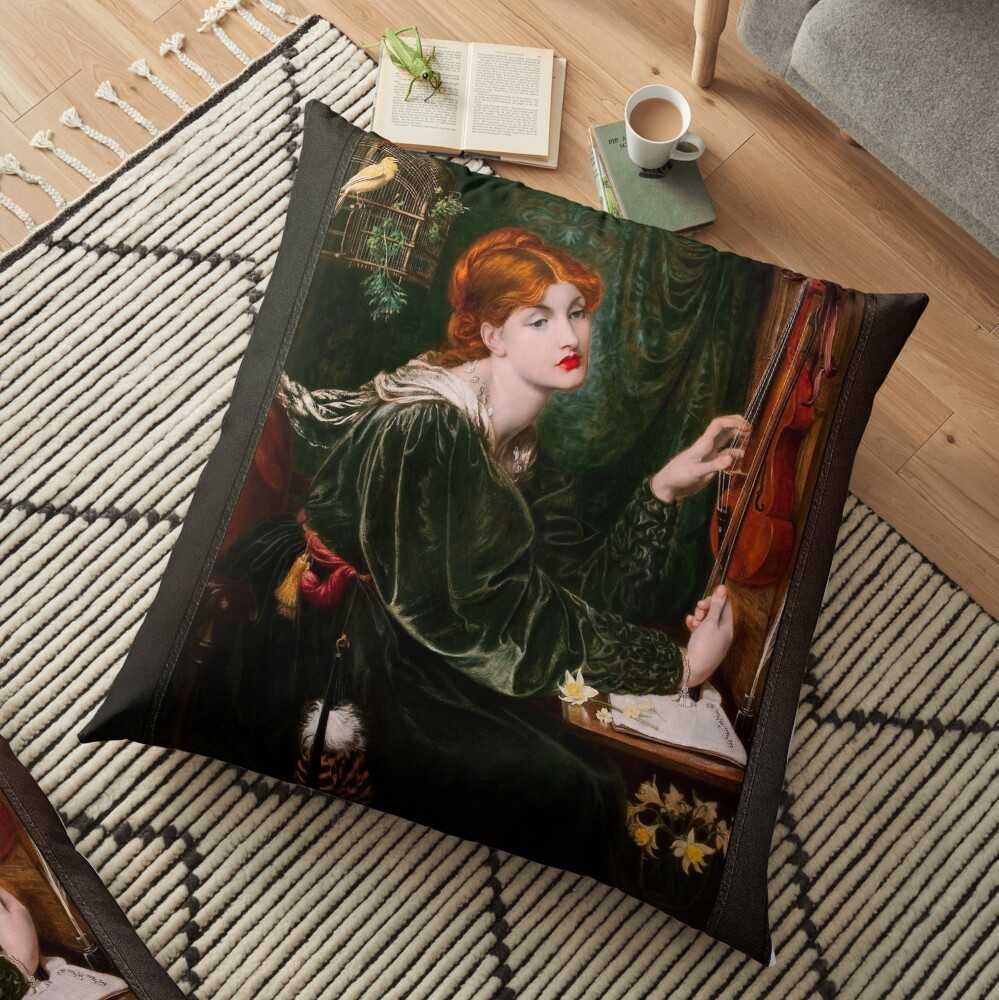
“Veronica Veronese,” air a chruthachadh a-steach 1872 le peantair Eadailteach-Breatannach Dante Gabriel Rossetti, na eisimpleir iongantach de ealain Bhictòrianach a tha a’ taisbeanadh stoidhle comharraichte Rossetti, dòigh-obrach a bha a’ ceangal phrionnsapalan Ro-Raphaelite ri eileamaidean pearsanta samhlachas agus romansachd. Anns an dealbh tha boireannach òg, Veronica, air a nochdadh le dian, bòidhchead cha mhòr ethereal, a’ nochdadh maighstireachd an neach-ealain ann a bhith a’ taisbeanadh an dà chuid doimhneachd corporra agus faireachail anns na cuspairean aige. Tha comas Rossetti air beatha agus aithris a thoirt a-steach don chuspair ri fhaicinn ann an eadar-chluich seòlta an t-solais, inneach, agus samhlachas anns an sgrìobhadh.
Clàr-innse
Cuspair an obair-ealain: Veronica Veronese
At the center of this artwork is the figure of Veronica Veronese, a woman of aristocratic bearing, dressed in sumptuous, dark green velvet. The style of her gown, along with the intricacies of the fabric’s folds, reveals Rossetti’s skill in portraying rich, luxurious textures. The deep green of her attire stands in contrast to her porcelain-like skin, a tha, combined with her delicate facial features, gives her a statuesque, yet graceful quality. The soft curls of her auburn hair frame her face, and her expressive gaze adds to the mood of wistfulness and contemplation that pervades the scene.
The posture of Veronica suggests both elegance and restraint, as she sits poised with one hand lightly resting on a violin. The violin, like many other objects in the piece, serves as a symbol of culture and refinement, connecting the viewer to the intellectual and emotional world of the subject. The inclusion of a small yellow bird in a cage—resting on the left side of the painting—introduces an additional layer of symbolic meaning. Birds, often depicted in Rossetti’s works, can represent themes of freedom, cugallach, or a connection to the natural world. Anns a 'cho-theacsa seo, it likely emphasizes the tension between the subject’s quiet, controlled presence and the potential for release or escape.
Rudan agus stuthan
Ri aghaidh na deilbh, several subtle elements complement the figure of Veronica and contribute to the overall mood of the piece. Near the bottom of the frame, a small pot of daffodils rests delicately on a wooden surface, their bright yellow petals stark against the darker background. Daffodils are often associated with themes of rebirth and the fleeting nature of life, further reinforcing the melancholic yet optimistic undercurrent of the painting. These flowers are painted with meticulous detail, highlighting Rossetti’s commitment to the depiction of natural beauty and his characteristic attention to the symbolic language of flowers.
A few other objects populate the space, such as a violin stand and musical sheets, which are placed on a nearby table. The sheet music is an important symbol of Veronica’s cultivated nature and her connection to the arts. The act of playing music or creating art was often imbued with notions of intellectual and emotional refinement during the Victorian era, and Rossetti emphasizes these traits through the objects that surround his subject.
Cruth-tìre agus suidheachadh
Cùl-fhiosrachadh a “Veronica Veronese” consists of lush, dark green drapery, which frames the figure in an intimate yet enclosed space. This dark, rich backdrop contrasts with the vividness of the subject’s skin and the colorful elements of the still life in the foreground. An dùmhail, velvety fabric of the curtains wraps around the figure, lending the setting a sense of privacy and introspection, as though the viewer is peering into a quiet, personal moment in time. The dark green of the curtains also reinforces the feeling of a hidden or secretive space, amplifying the tone of isolation and quiet contemplation.
The lushness of the drapery, with its deep folds and detailed textures, also highlights Rossetti’s skill in capturing the opulent aspects of the Victorian world. The use of this fabric echoes the richness of the subject’s attire, linking the two and underscoring the idea of a noble, refined lifestyle. The scene is composed so that there is a clear distinction between the subject’s personal space and the objects that serve as symbols of her character and status.
Stoidhle ealain agus dòighean-obrach
“Veronica Veronese” is a prime example of Rossetti’s refined Pre-Raphaelite style, air a chomharrachadh le dathan soilleir, Thoir aire do mhion-fhiosrachadh, and an almost dreamlike quality. His use of color—particularly the rich greens, dearg domhainn, and delicate skin tones—creates an ethereal effect that gives the figure of Veronica a sense of otherworldliness. The smoothness of her skin contrasts with the fine detail of the fabric and the surrounding objects, emphasizing the idealized and somewhat unattainable beauty of the subject.
Tha obair bhruis Rossetti anns an dealbh seo mionaideach agus a dh’aona ghnothach, ach tha e a’ cumail bogachd a leigeas leis a’ chuspair nochdadh cha mhòr coltach ri beatha. An inneach ann an aodach an dreasa, eileamaidean nàdarra leithid na flùraichean, agus tha taisbeanadh fìnealta na fìdhle a’ sealltainn sàr-mhathas Rossetti ann a bhith a’ measgachadh reul-eòlas le fo-shruthan samhlachail agus faireachail na h-obrach..
Faodar faireachdainn an deilbh a mhìneachadh mar aon de introspection sàmhach, le Veronica air a ghlacadh ann am mionaid aonaranachd. Tha am faireachdainn melancholic air àrdachadh leis an t-sealladh aice a tha beagan air a sheachnadh, a bheir sealladh air neach a tha air chall ann an smuain, 's dòcha a' beachdachadh air iom-fhillteachd a' ghràidh, ealain, no beatha fèin. A h-aodann bàn, air a dhealbhadh le beairteas an aodach agus an solas bog, a’ toirt làthaireachd cha mhòr ethereal dhi. Chithear an t-eun sa chèidse mar mheafar airson beachdan an neach-ealain fhèin air braighdeanas boireann, an dà chuid a thaobh dùilean sòisealta agus bacadh faireachail.
Cuspairean agus Mood
Tha prìomh chuspair an deilbh a’ dol timcheall a’ bheachd air boireannachd agus beatha a-staigh a’ bhoireannaich san dealbh.. Bhiodh obair Rossetti gu tric a’ sgrùdadh eadar-ghearradh bòidhchead, bhuadhan, agus bròn, agus a-steach “Veronica Veronese,” tha na h-eileamaidean sin eadar-fhighte le cuspair aonaranachd agus cnuasachadh sàmhach. Tha an cuspair air leth bhon t-saoghal a-muigh, gidheadh bha i air a suidheachadh, tha nàdar fìnealta a’ toirt a-mach mothachadh air gràs agus urram a tha a’ nochdadh gu bheil smachd aice air a dàn fhèin.
Tha fo-shruth de mhiann ann cuideachd ann am faireachdainn a’ phìos, le samhlachas seòlta an eun agus flùraichean a’ nochdadh an dà chuid faireachdainn de mhiann airson saorsa agus mothachadh air neo-sheasmhachd beatha. Tha an dòigh anns an do làimhsich Rossetti a chuspair anns an dealbh seo na eisimpleir den ùidh a th’ aige ann a bhith a’ sealltainn boireannaich a tha aig aon àm air leth freagarrach agus domhainn daonna., a’ nochdadh an dà chuid neart agus so-leòntachd.
Co-dhùnadh
Dante Gabriel Rossetti “Veronica Veronese” a’ glacadh brìgh eireachdas Bhictòrianach, agus e cuideachd a’ dol a-steach do na sreathan saidhgeòlach agus samhlachail a tha a’ comharrachadh mòran den obair aige. Tha an dealbh na ghrèis-bhrat beairteach de dhath, inneach, agus brìgh, a’ nochdadh chan e a-mhàin maighstireachd teignigeach an neach-ealain ach cuideachd an tuigse dhomhainn aige air beatha iom-fhillte a-staigh boireannaich. Tro bhòidhchead shocair Veronica, tha an dealbh a’ toirt cuireadh don neach-coimhead a-steach do shaoghal de ghrinn agus de dh’ inntinn, where the external grace of the subject contrasts with the quiet emotional depth that lies beneath.
Obair-ealain cùl-taic
Veronica Veronese c1872 by Italian-British Painter Dante Gabriel Rossetti (1828 – 1882); bàrd, dealbhadair, eadar-theangaiche agus co-stèidheadair a’ Bhràithreachais Ro-Raphaelite.
This is a companion painting to Lady Lilith that features one of Rossetti’s favorite model Alexa Wilding as Veronica Veronese that was sold to the shipping magnate Frederick Richards Leyland.
According to Uicipeid, the painting is suppose to represent the artistic soul in the act of creation”. This theme is expounded by the fictitious quote inscribed on the frame of the painting. Though the quote is attributed on the frame to “The Letters of Girolamo Ridolfi,” critics believe that Algernon Charles Swinburne (1837 – 1909) or Rossetti actually wrote it.
Suddenly leaning forward, the Lady Veronica rapidly wrote the first notes on the virgin page. Then she took the bow of her violin to make her dream reality; but before commencing to play the instrument hanging from her hand, she remained quiet a few moments, listening to the inspiring bird, while her left hand strayed over the strings searching for the supreme melody, still elusive. It was the marriage of the voices of nature and the soul – the dawn of a mystic creation.
Translation from the French by Rowland Elzea.
The symbolism in the painting includes the un-caged bird, which may represent “the marriage of the voices of nature and the soul” and overt flower symbolism. The camomile in the bird cage may represent “energy in adversity”, the primroses youth, and the daffodils reflection.
Jane Morris (1839 – 1914) lent the green dress in the picture. Bha an fhidheall mar phàirt den chruinneachadh de dh’ ionnsramaidean ciùil Rossetti, agus nochd an neach-leantainn cuideachd ann am Monna Vanna. Is dòcha gun deach am beagan bhàraichean de sgrìobhadh ciùil san làmh-sgrìobhainn fhaighinn air iasad bho Sheòras Boyce (1826 – 1897).
Is e seo ath-riochdachadh seann mhaighstirean ealain didseatach ath-leasaichte de ìomhaigh fearann poblach a tha ri fhaighinn mar chlò-bhualadh canabhas air-loidhne.
Tha fiosrachadh gu h-ìosal a’ tighinn bho Wikipedia.org
Rugadh Dante Gabriel Charles Dante Rossetti agus b’ e mac an sgoilear Eadailteach a bha às-imrich Gabriele Pasquale Giuseppe Rossetti agus Frances Mary Lavinia Polidori.
Bha triùir pheathraichean aig Dante a bha nam bàrd Cairistìona Rossetti, neach-breithneachaidh Uilleam Mìcheal Rossetti, agus an t-ùghdar Maria Francesca Rossetti.
Nuair a bha e na leanabh fhuair Dante foghlam aig an taigh agus nuair a dh’ fhàs e sean gu leòr chaidh e an uair sin gu Sgoil Colaiste an Rìgh faisg air an Strand ann an Lunnainn..
Ged a bha e ag amas air a bhith na bhàrd rè na bliadhnaichean colaiste aige; bha e cuideachd airson a bhith na pheantair, a’ nochdadh ùidh mhòr ann an Ealain Eadailteach meadhan-aoiseil.
Bho 1841 gu 1845 bha e na oileanach aig an Henry Sass Drawing Academy; bha e cuideachd clàraichte ann an Sgoil Àrsaidh an Acadamaidh Rìoghail gus 1848.
Às deidh dha an Acadamaidh Rìoghail fhàgail bha e na oileanach fon Pheantair Breatannach Ford Madox Brown (1821 – 1893).
Beagan ceangail às dèidh sin choinnicheadh e ri Uilleam Holman Hunt (1827 – 1910), às deidh an taisbeanadh aige den dealbh The Eve of St.Agnes, a sheall dàn leis a’ Bhàrd Breatannach Iain Keats (1795 – 1821).
Gu math coltach ris an dealbh aig Rossetti The Blessed Damozel bha e na aithris air Keats; a’ creidsinn gum faodadh Hunt cuid de na beachdan ealanta is litreachais aige a cho-roinn.
Còmhla bhiodh Rossetti agus Hunt a’ leasachadh feallsanachd na Bràithreachas Ro-Raphaelite a stèidhich iad còmhla ri John Everett Millais.